In 1999, Warren Ellis and Bryan Hitch shook the foundations of superhero comics with The Authority, a series where a group of cynical, all-powerful beings decide to impose their own global justice without asking permission from governments. Beyond its controversial political message, the work revolutionized visual narrative with the widescreen style, panels that mimicked cinematic scale, and an almost obsessive architectural and technological detail. This fusion of radical activism and visual technique set a precedent that resonates strongly today in digital art and virtual reality.
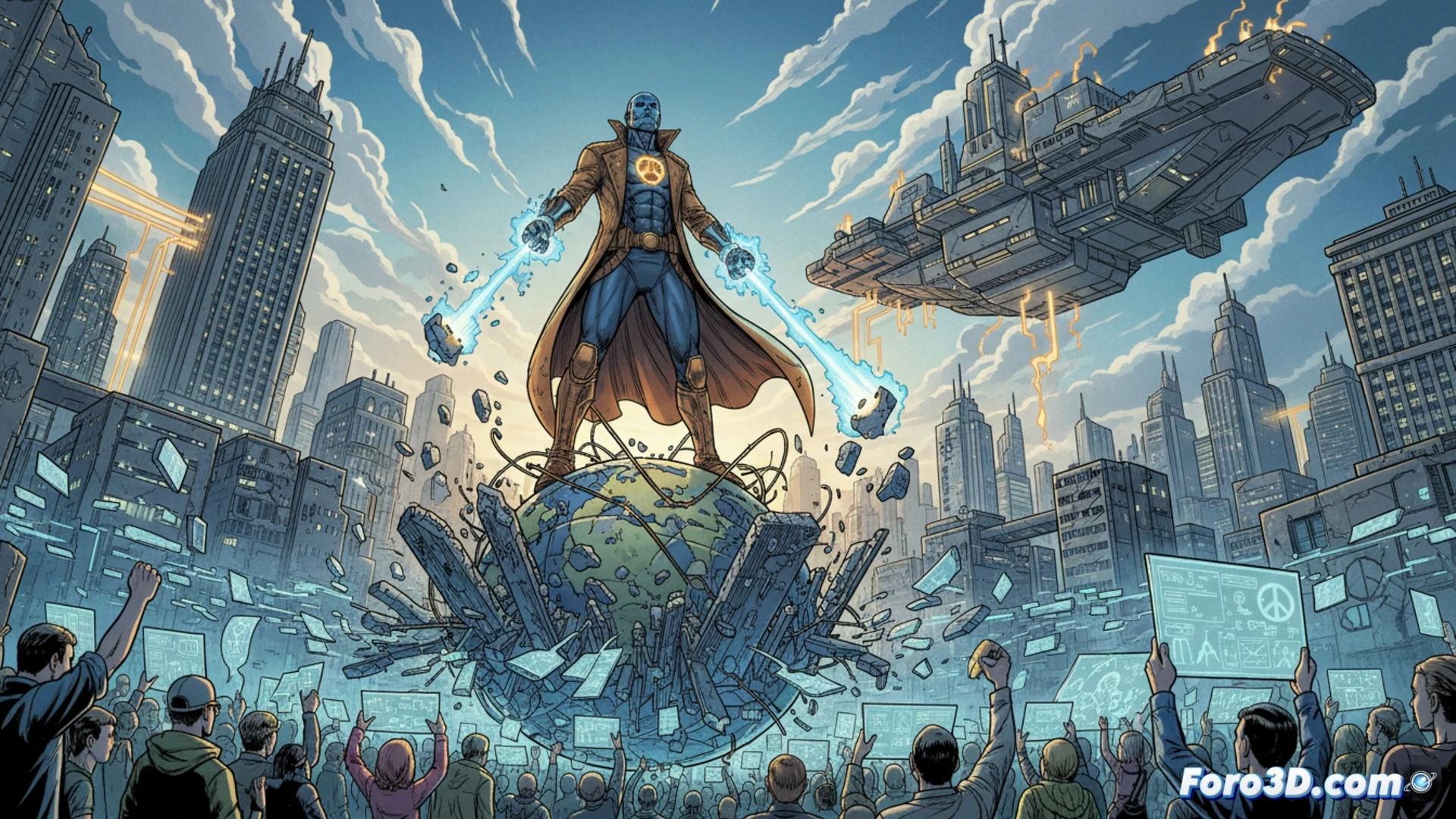
The Architecture of Power: Widescreen as a Tool for Protest 🏛️
Hitch's widescreen style was not mere aesthetic ornamentation, but a calculated narrative tool to convey the overwhelming scale of authoritarian intervention. Each panoramic panel, with its meticulously rendered backgrounds of cities, ships, and megastructures, placed the reader in the position of a helpless witness facing near-divine power. This architectural and technological detail, which required meticulous study of perspective and lighting, functioned as a visual reminder that the solution to global problems was not magical, but a matter of social and physical engineering. In contemporary digital art, this same technique is replicated in virtual reality installations that immerse the viewer in scenarios of climate crisis or mass surveillance, using scale and detail to generate immediate critical awareness.
From Page to VR Headset: The Evolution of Immersive Activism 🎮
The vision of global justice in The Authority, where a private group assumes planetary control, finds a disturbing echo in current digital artworks exploring algorithmic surveillance or geoengineering. While the comic used widescreen panels to show the coldness of a redesigned world, digital artists like Trevor Paglen or the Forensic Architecture platform employ hyper-realistic 3D models and architectural reconstructions to expose state crimes or abuses of power. The lesson is clear: visual meticulousness is not just beauty, but a political statement that, as in the comic, forces us to ask who has the right to redesign the world and at what cost.
How has the visual design of The Authority influenced the aesthetic of contemporary digital activism campaigns seeking to represent global justice?
(PS: at Foro3D we believe all art is political, especially when the computer freezes)