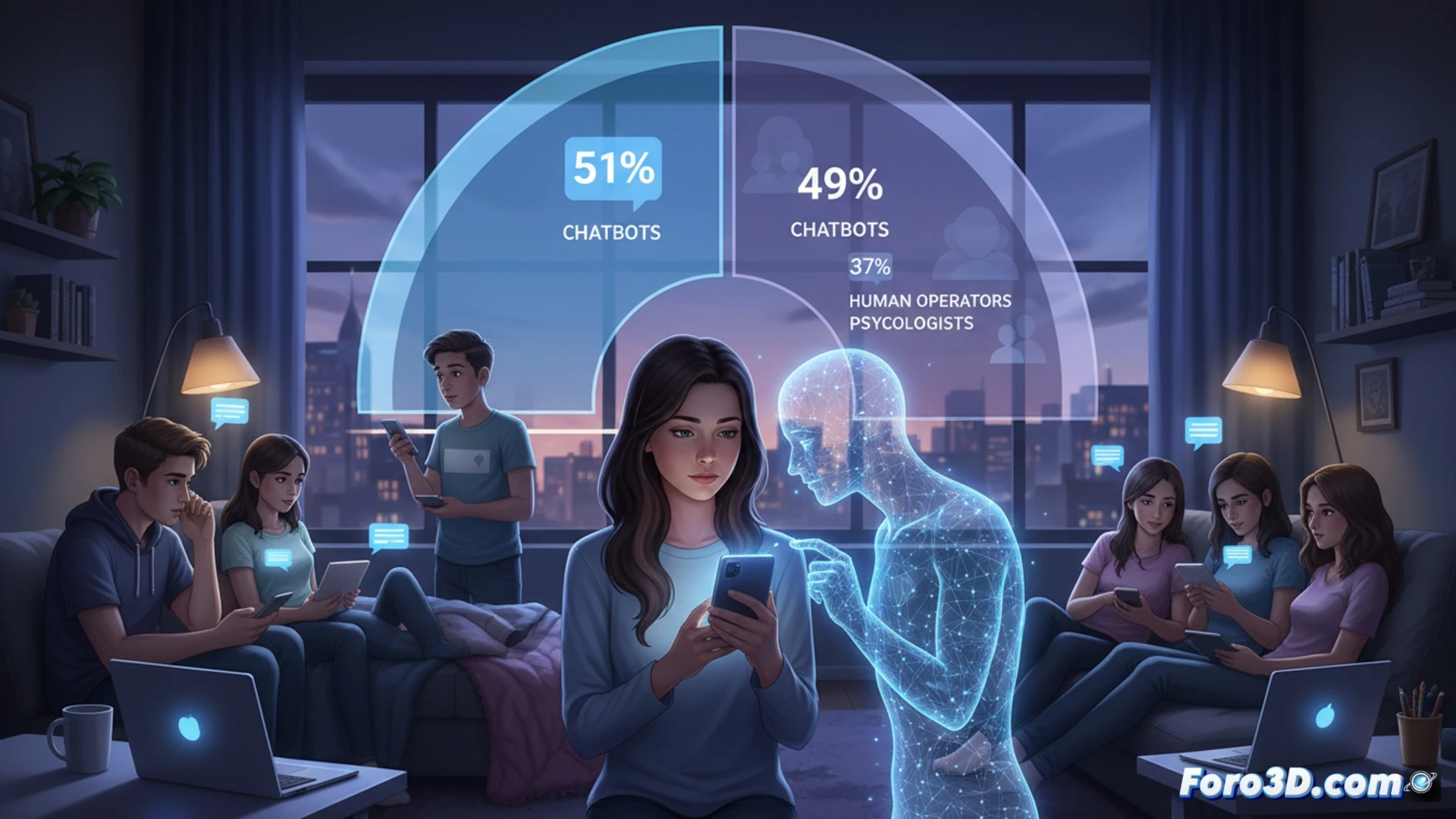
A study by Ipsos Bva, commissioned by the French authority Cnil, reveals that 51% of young people between 11 and 25 years old turn to artificial intelligence as a confidant. Half of the 3,800 respondents find it easier to talk about mental health with a digital interface than with a human professional. Only 49% have consulted human operators and 37% have consulted psychologists.
How language models process intimacy 🤖
Current chatbots use transformer architectures that analyze linguistic patterns without real emotional context. Lacking persistent memory between sessions, each conversation starts from scratch, which avoids biases but prevents therapeutic continuity. The Cnil warns that these systems are not designed to detect crises or refer to emergency services, leaving the user responsible for seeking professional help when necessary.
The best therapy: an algorithm that doesn't judge you or charge you 💬
So now you know, dear psychologists: your direct competition is not another colleague, but a line of code that is never late, doesn't look surprised, and will never charge you 80 euros an hour. The downside is that when the chatbot replies with a generic I understand how you feel, it might be time to ask whether it really understands or is just searching its database of stock phrases.