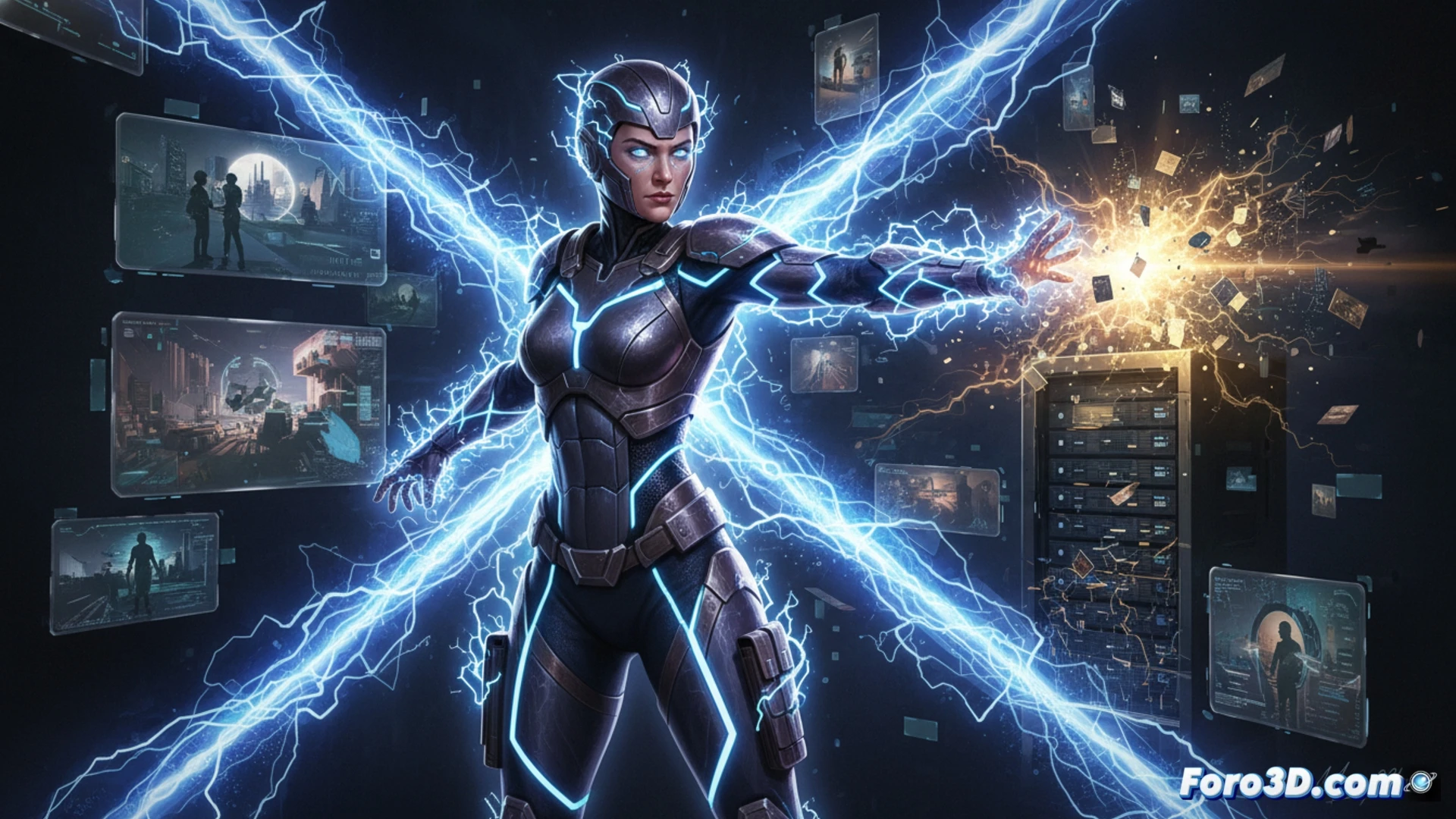
The character Jolt, created by Kurt Busiek and Mark Bagley, represents a unique case within the Marvel universe: a heroine whose bio-electric power is secondary to her function as the moral compass of the Thunderbolts. In 3D digital art, her figure becomes a perfect canvas for exploring narratives of redemption. Modeling her superhuman agility and the electrical arcs surrounding her allows artists to visually capture the conflict between chaos and ethics, a central theme in digital activism campaigns.
Modeling Techniques for the Moral Arc ⚡
To capture Jolt's essence in 3D, modeling must prioritize the fluidity of her movements and the lighting of her bioelectricity. Digital sculptors often use dynamic topology to simulate the elasticity of her suit, while sub-surface scattering (SSS) shaders recreate the internal glow of her energy. Facial expression is critical: a raised eyebrow or a slight smile conveys her role as the moral heart. On platforms like Blender or ZBrush, artists on forums such as Foro3D recommend using light particles (EEVEE or Unreal Engine) to represent her electrical discharges as an aura that changes color according to the character's emotional state, shifting from aggressive yellow to calm blue in scenes of redemption.
Electric Power as a Symbol of Social Change 🔥
In digital activism, Jolt functions as a visual icon of rehabilitation. Her bioelectricity is not only a weapon but a metaphor for the energy needed to change unjust systems. By rendering Jolt in virtual environments such as augmented reality galleries or charitable NFTs, artists can juxtapose her light against dark backgrounds representing oppression. Her agility symbolizes the ability to dodge moral obstacles, while her upright and open posture invites dialogue. This approach reinforces the idea that redemption is not a destination but a visual process that the 3D community can make tangible.
How can the representation of Jolt as a heroine whose bioelectricity symbolizes a second chance and personal redemption serve as a tool for digital activism to make visible and resignify narratives of social rehabilitation in marginalized communities?
(PS: digital political art is like an NFT: everyone talks about it but no one really knows what it is)