Since 1987, Hirohiko Araki has narrated the misadventures of the Joestar family, a saga spanning generations as they face vampires, assassins, and cosmic entities. The core of the action lies in the Stands, psychic manifestations with varied abilities. Visually, the work stands out for its evolution towards a high-fashion aesthetic, strident colors, and poses that defy human anatomy. It is not an ordinary manga, but a manual on how to dress while tearing your enemy in two.
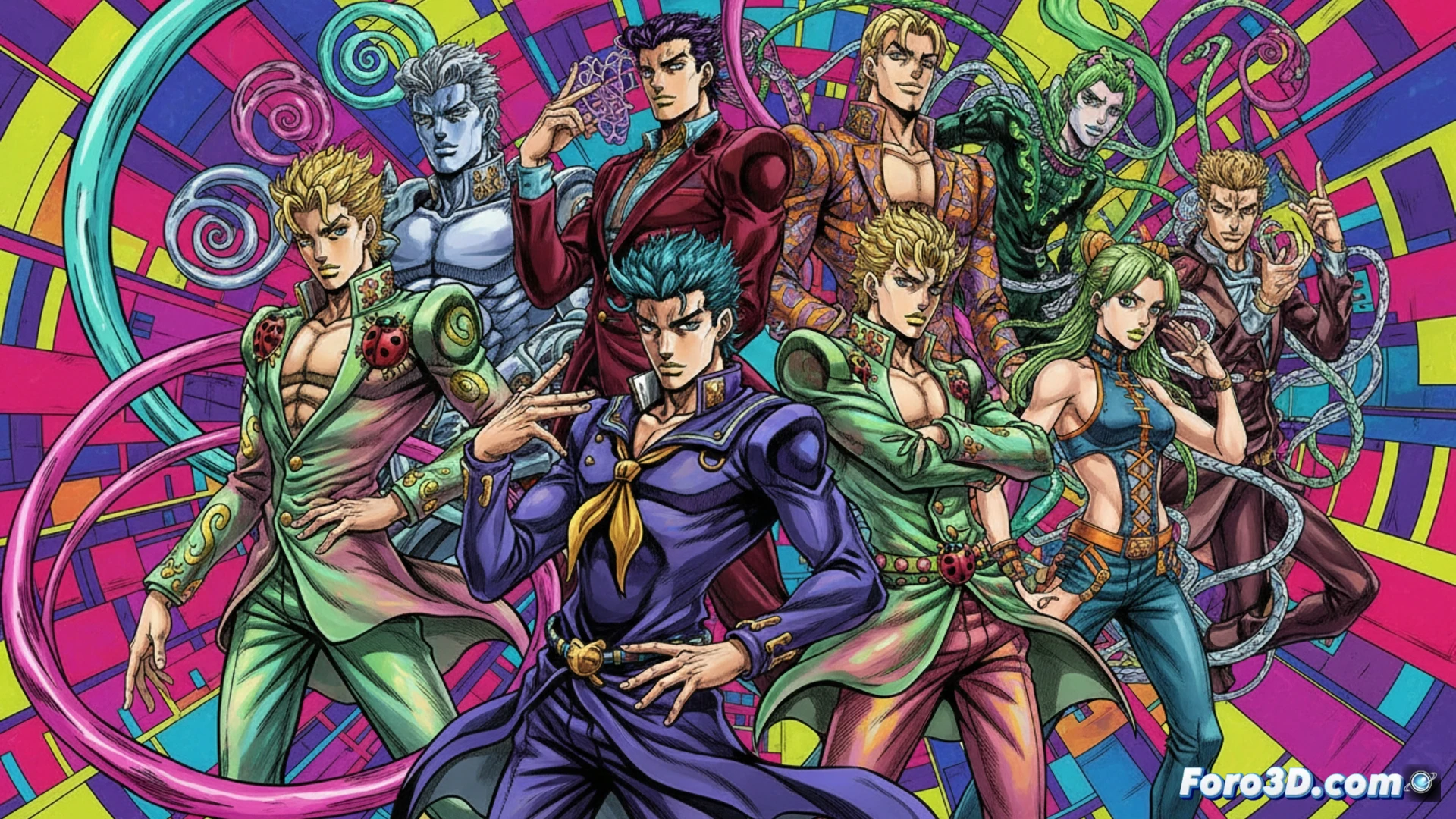
The technical engine behind the impossible poses 🎨
Araki developed a drawing method based on references from fashion magazines and classical sculptures. The figures are stylized with elongated limbs and torsos twisted beyond realism, relying on curved action lines. Color, applied with acrylics and later digitally, uses palettes that change per scene to reflect emotions or atmospheres. The backgrounds include fabric textures, geometric patterns, and onomatopoeia integrated into the art. This system, although chaotic, allows each panel to have an immediate visual impact without relying on animation.
How to explain JoJo without getting weird looks 🤷
You try to summarize the plot: a muscular boy stops time to punch a vampire while 80s music plays. Your listener nods, but then you add that the main villain has a Stand that grants any gift in exchange for years of life. Or that in one part, a dog fights an assassin with a toy boat. At that point, the conversation veers off to safer topics, like the weather. JoJo is not explained, it is experienced. Or abandoned with dignity.