Joe the Barbarian, a work by Grant Morrison and Sean Murphy, is not your typical children's comic. It is an exercise in visual engineering where hypoglycemia is transformed into a heroic quest. The premise is simple: Joe, a diabetic boy, suffers a hypoglycemic shock and must cross his house, now a fantasy world made up of his toys, to reach the kitchen. Murphy's artwork, with its angular and detailed inking, is the true protagonist, making a simple hallway feel like a hellish gorge.
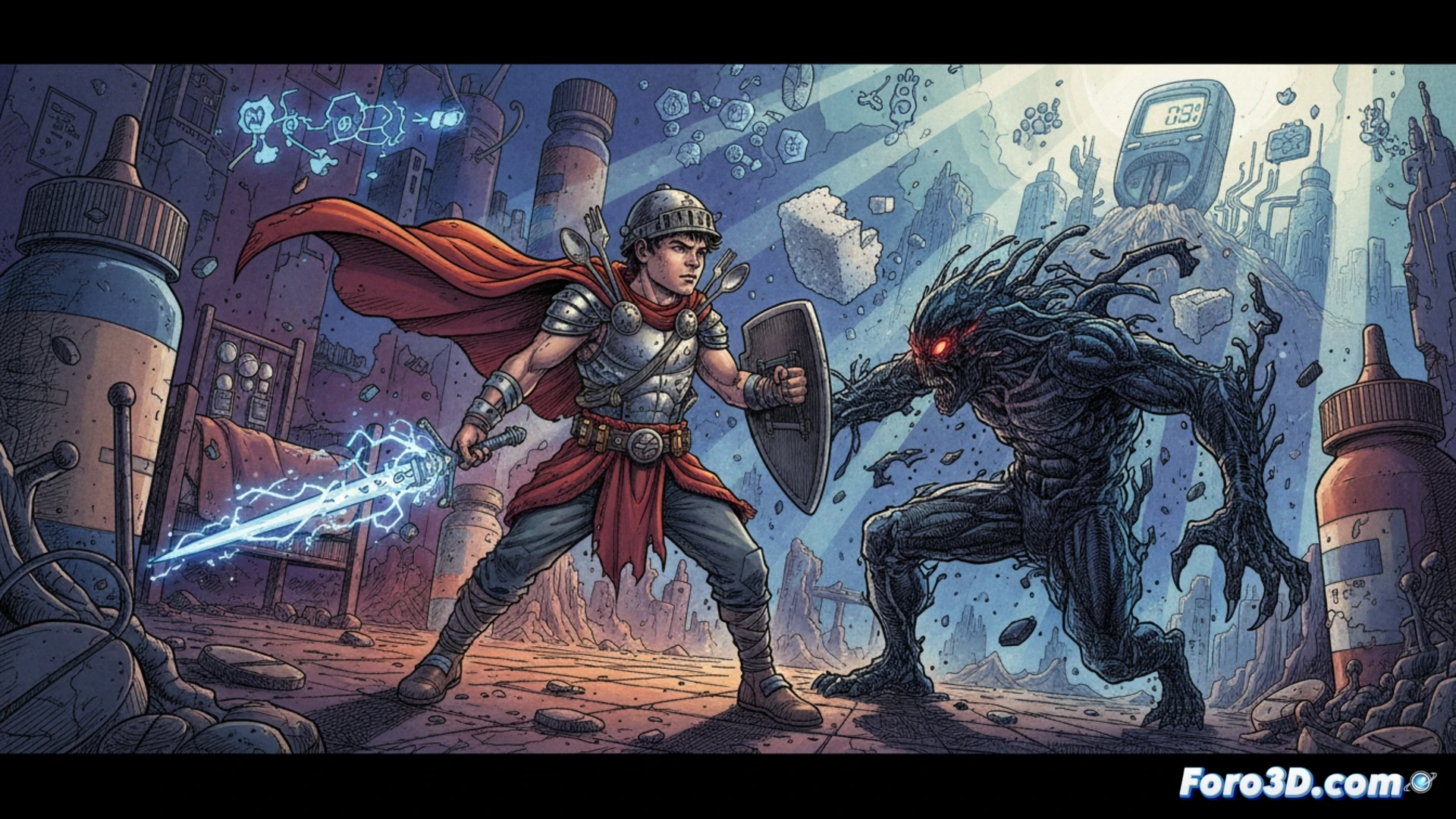
Forced Perspective and Tectonic Inking: Murphy's Visual Grammar 🎨
Sean Murphy applies techniques reminiscent of 3D modeling and the forced perspective of video game cinematics. His inking is not smooth; it is brittle, almost tectonic, creating hard shadows that give volume to tiny objects like plastic soldiers or building blocks. Each panel is composed like a high-definition render, where dramatic lighting turns an insulin syringe into a divine spear and a cookie into a shield. This action comic aesthetic, combined with an almost obsessive level of detail in the backgrounds, anchors the reader in the protagonist's distorted perception, where the danger is real and tangible.
The Panel as a Tool for Immersive Activism ⚔️
The true power of Joe the Barbarian lies in its ability to generate empathy without resorting to pamphleteering. By using epic fantasy and detailed art to represent a medical crisis, the comic functions as an emotional simulator. The reader doesn't just understand diabetes; they feel it through the visual language. This fusion of high-quality sequential art with a social cause is a model of digital activism: no explanatory text is needed when a Murphy panel, with its aggressive inking and impossible perspective, can make an internal struggle feel like a battle for the fate of the world.
Can the 3D inking technique transform the representation of a chronic illness like diabetes into a symbol of epic resistance within digital activism?
(PS: pixels also have rights... or at least that's what my latest render says)