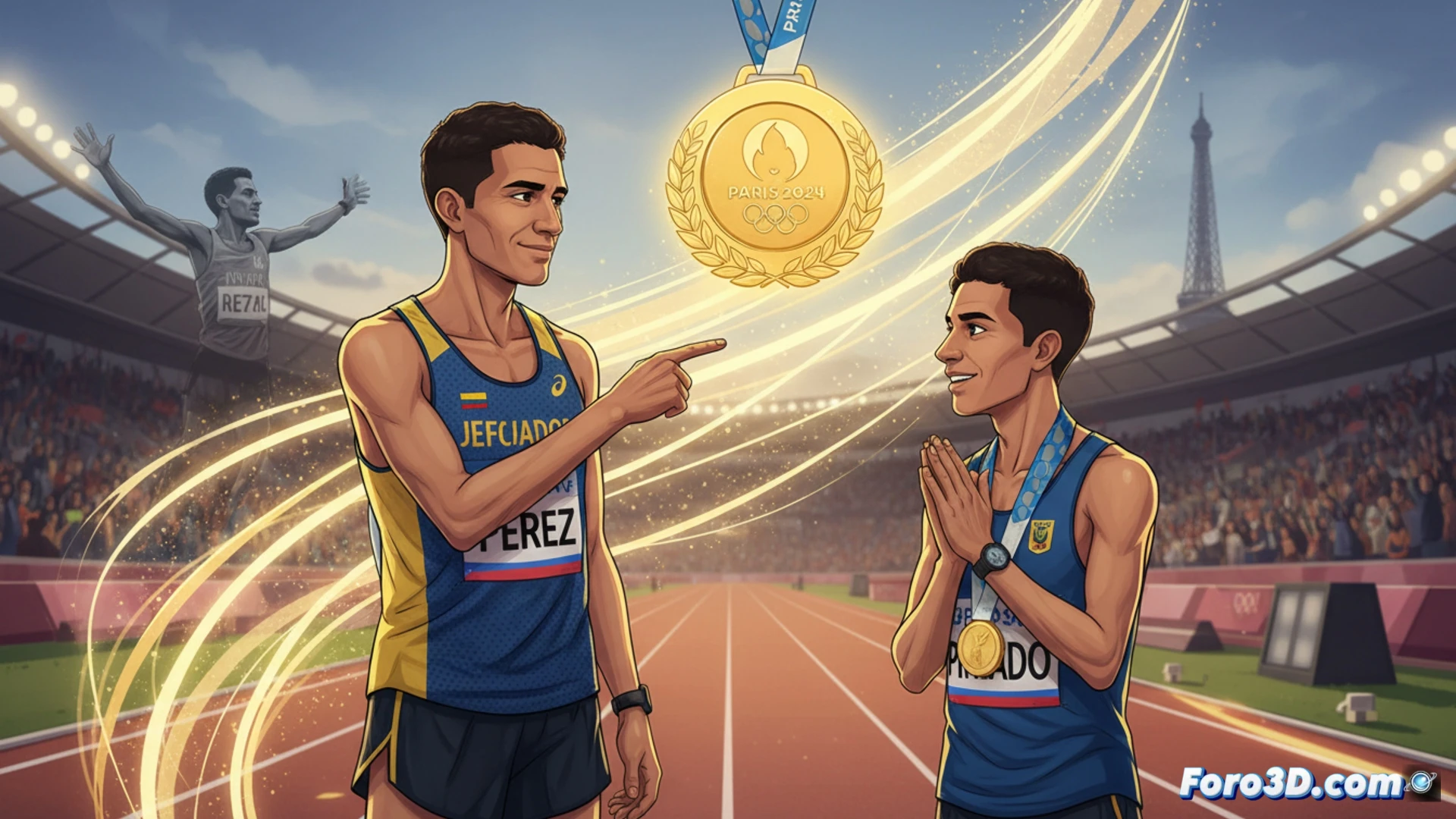
Ecuador's two-time Olympic champion, Jefferson Pérez, visited Madrid as an ambassador for the Madrid Marcha race. During his stay, he recounted how his career inspired Daniel Pintado, who won gold at Paris 2024. The story demonstrates that talent combined with discipline can motivate others to achieve extraordinary goals. Individual effort generates a positive social impact that transcends generations.
The race walking technique that evolved with data and biomechanics 🏃
Race walking has incorporated pressure sensors in insoles and 3D video analysis to optimize the stride. Athletes use wearables that measure cadence and hip angle, preventing loss of contact with the ground. Pérez applied these methods in a rudimentary way in his time; today, Pintado has access to predictive models that adjust his technique in real time. Technology does not replace sacrifice, but channels it with precision.
Walking without GPS: when the only map was willpower 🗺️
Jefferson Pérez trained in the Andes with no company other than the wind and a wristwatch. Today, race walkers use apps that remind them even when to go to the bathroom. Pintado, with his gold medal, should be grateful that his idol didn't have TikTok; otherwise, he might have gotten distracted watching cat videos instead of breaking records. Technology helps, but the hunger for glory remains analog.