Global companies in Japan face a $25 billion bill from the conflict with Iran, and the figure keeps rising. Iran's control of the Strait of Hormuz drives up energy prices, breaks supply chains, and blocks trade routes. Manufacturers and shipping companies absorb these costs, which end up in consumers' pockets.
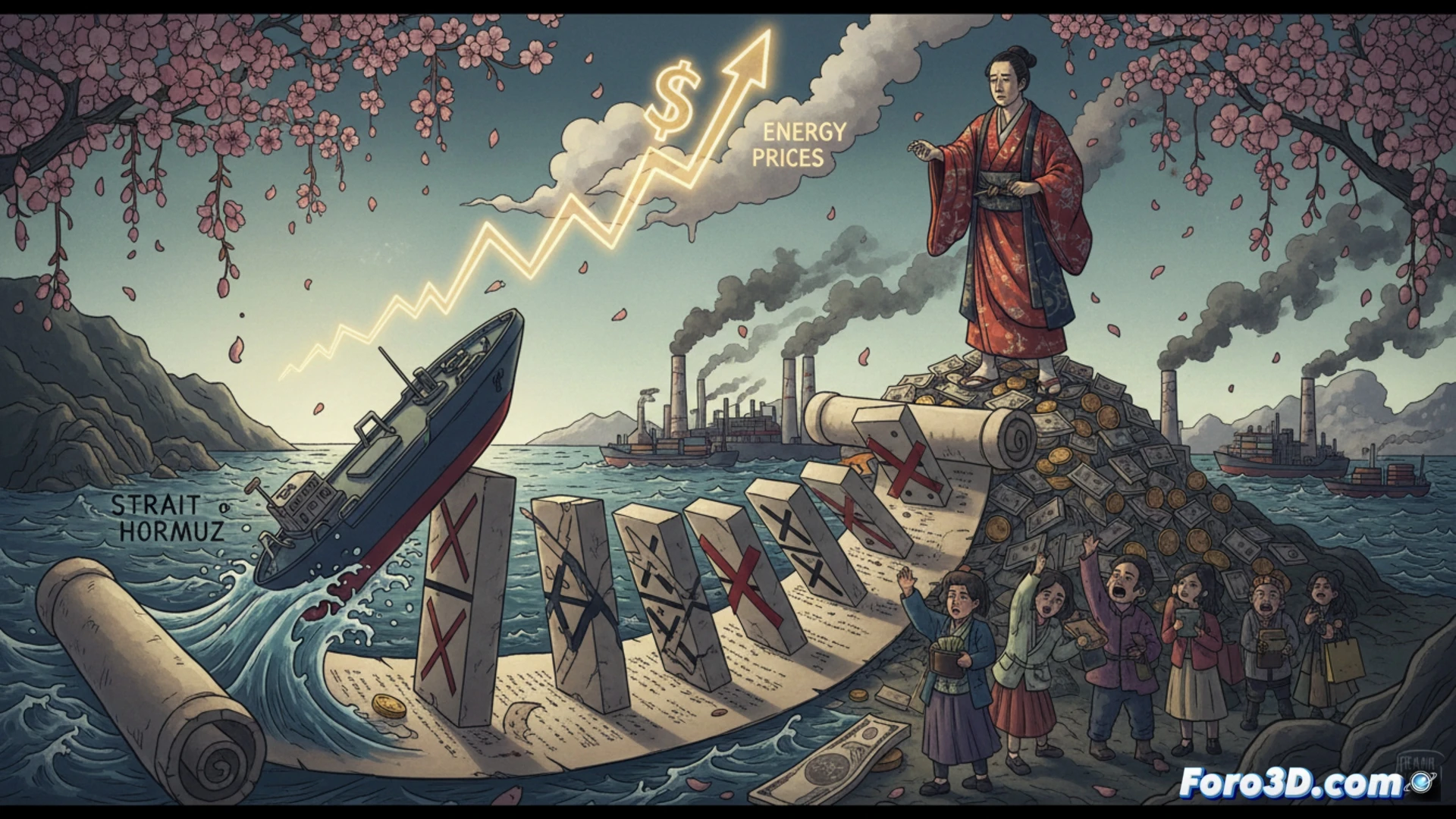
Smart logistics collides with the Strait of Hormuz 🚢
Supply chains, optimized with inventory management systems and predictive routes, fail when maritime traffic stops. Algorithms cannot bypass a physical bottleneck. Japanese companies like Toyota and Mitsubishi resort to alternative routes via the Cape of Good Hope, adding 10 days of travel and a 20% extra cost. Technology does not replace geopolitics.
Iran sells us oil and electricity bills 💡
While Japanese executives calculate losses, Iran rubs its hands together. Every barrel that does not pass through Hormuz is a perfect excuse to raise prices. Shipping companies, with nervous laughter, charge war insurance that looks like Netflix subscriptions. Japanese consumers, meanwhile, turn off the heating and fondly remember when the only global drama was the price of instant ramen.