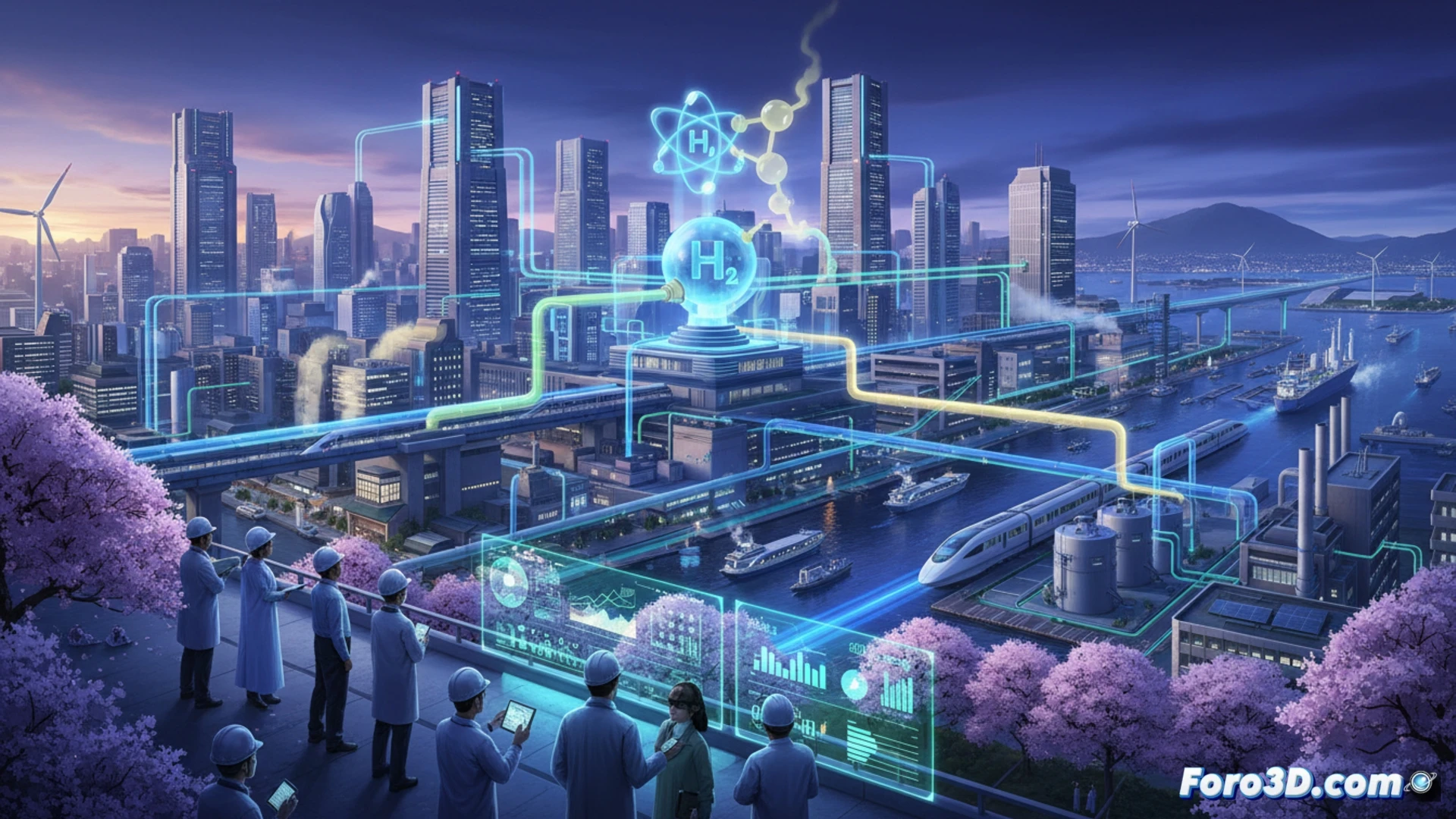
Japan has set its sights on hydrogen as a cornerstone of its future energy strategy. With the goal of reaching twelve million tons annually by 2040, the country is exploring ammonia as a transition fuel. This move aims to reduce dependence on fossil fuels and advance toward decarbonization, although the path is full of technical and logistical challenges.
Ammonia: the technical bridge to clean hydrogen 🌱
Ammonia, a compound of nitrogen and hydrogen, offers a practical solution for hydrogen storage and transport. Unlike pure hydrogen, ammonia liquefies at higher temperatures and requires less energy to handle. Japan plans to use it in power plants and as maritime fuel, burning it directly or decomposing it to extract hydrogen. However, its combustion generates nitrogen oxides, which forces the development of capture systems to avoid polluting emissions.
The smell of ammonia: the new Japanese perfume 😅
Sure, because nothing says clean future like a fuel that smells like window cleaner. Japan is preparing for its power plants to smell like industrial cleaning product, while engineers dream that ammonia won't end up being the gas that drives tourists away from Tokyo. At least the neighbors will know when the heating turns on. Of course, if anyone asks about the smell, let them say it's the aroma of the energy transition.