In 1970, Osaka showed the world a future of video calls and automated cities. Two years later, Tokyo materialized that vision with the Nakagin Capsule Tower, a block of 140 metal capsules designed by Kisho Kurokawa. Each ten-square-meter module promised efficient shelter for urban workers. The Metabolist movement, which viewed buildings as living organisms, found its most radical emblem here.
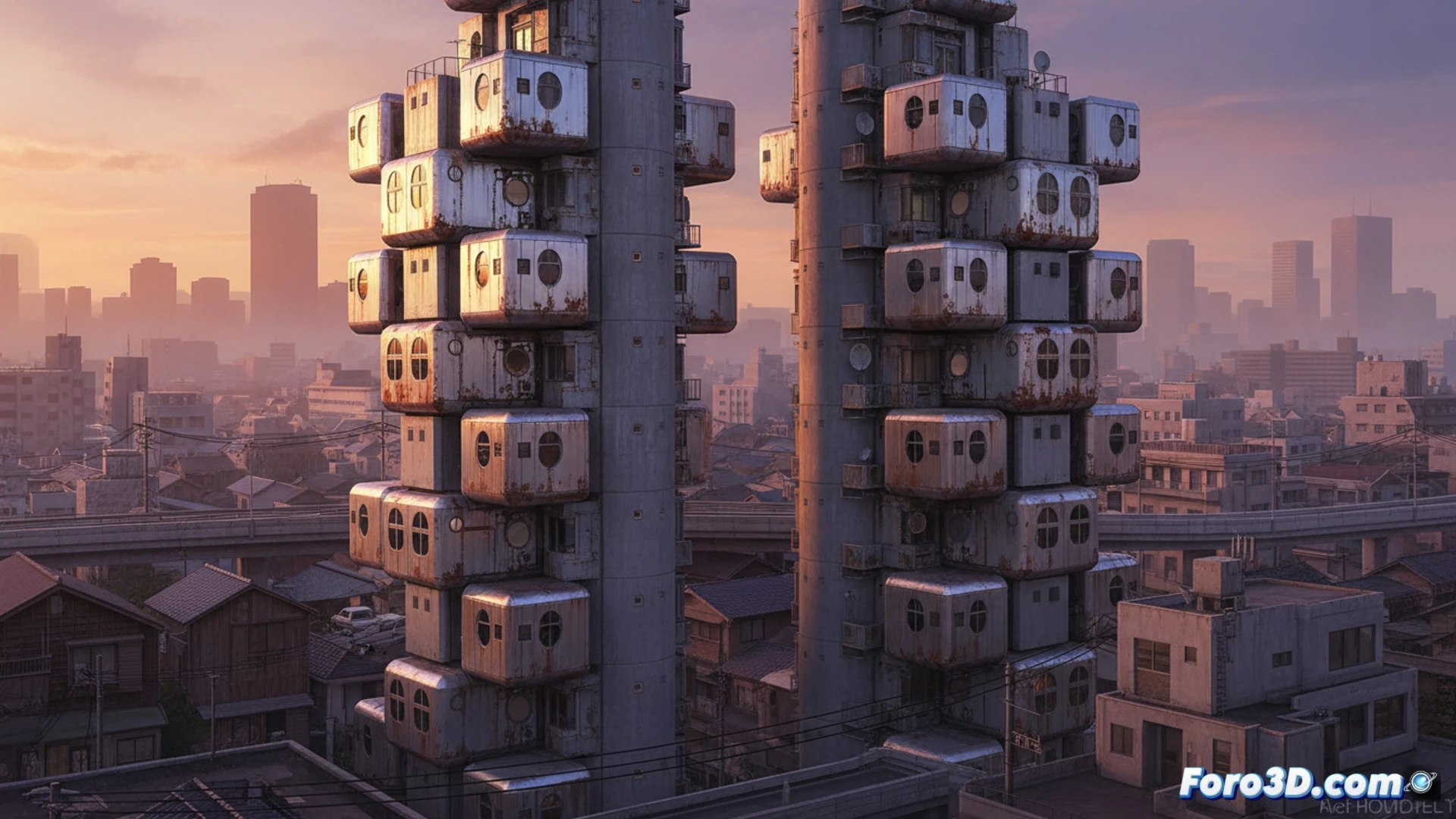
Ten-meter capsules: Kurokawa's radical minimalism 🏗️
Each capsule, prefabricated and bolted to two concrete towers, contained a built-in bed, bathroom, desk, and a tube television. Kurokawa conceived the pieces as replaceable every 25 years, allowing the structure to be updated without demolition. The design used galvanized steel panels and circular porthole windows. The idea was to offer minimal but self-sufficient housing for office workers who needed a place near the center without paying huge rents.
The future promised replacement; reality brought leaks 💧
Of course, the capsule replacement never happened. By 2010, the metal parts showed rust, pipes burst, and the replacement system turned out to be more expensive than building from scratch. Owners preferred selling the capsules to curious tourists rather than investing in maintenance. In the end, the tower that was supposed to evolve like a living organism ended up being a block of apartments with more history than future.