The Israeli Ministry of Foreign Affairs described the mission of the Sumud Flotilla as a provocation without humanitarian aid, linking it to Turkish groups such as Mavi Marmara and IHH, the latter designated as a terrorist organization. Israel warned that it will not allow the violation of the naval blockade of Gaza and urged participants to turn back. The flotilla reported that the attack occurred in international waters and that they lost contact with 23 vessels.
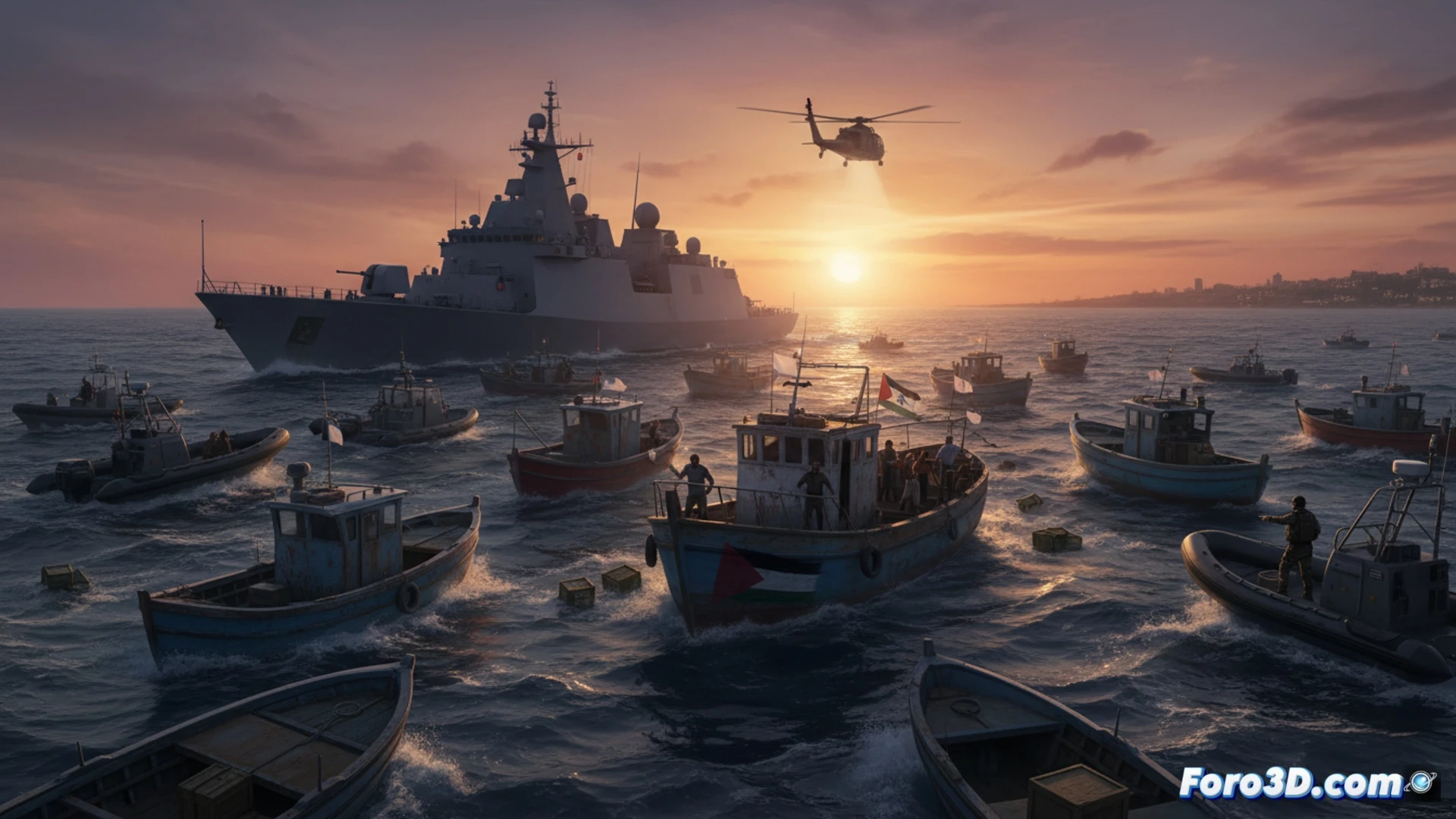
How satellites track flotillas on the high seas 🛰️
Current satellite technology allows intelligence agencies to monitor vessels in real time. Systems such as AIS (Automatic Identification System) and synthetic aperture radars can detect small fleets hundreds of kilometers from the coast. Israel uses Heron drones and surveillance aircraft to intercept communications. The loss of contact with 23 ships suggests that activists used low-frequency radio equipment or turned off their transponders to evade tracking, a common tactic in naval blockade operations.
The flotilla that lost itself on GPS 🧭
Losing contact with 23 vessels in the Mediterranean is not easy, unless the navigators are using a map from the last century or relying on a toy GPS. Israel, with its fleet of satellites and spy planes, likely knew where each boat was before the activists themselves did. The irony is that a mission denouncing the maritime blockade ends up demonstrating that its navigation skills need as much rescue as the aid it claims to carry.