Co-founder of Studio Ghibli, Isao Takahata was a director who did not seek a fixed visual style, but rather to tell stories from social realism. While Miyazaki soared with his fantastical worlds, Takahata immersed himself in the harshness of war in Grave of the Fireflies or in the visual experimentation of The Tale of the Princess Kaguya. His legacy is an invitation to look at animation from another perspective, more grounded and daring.
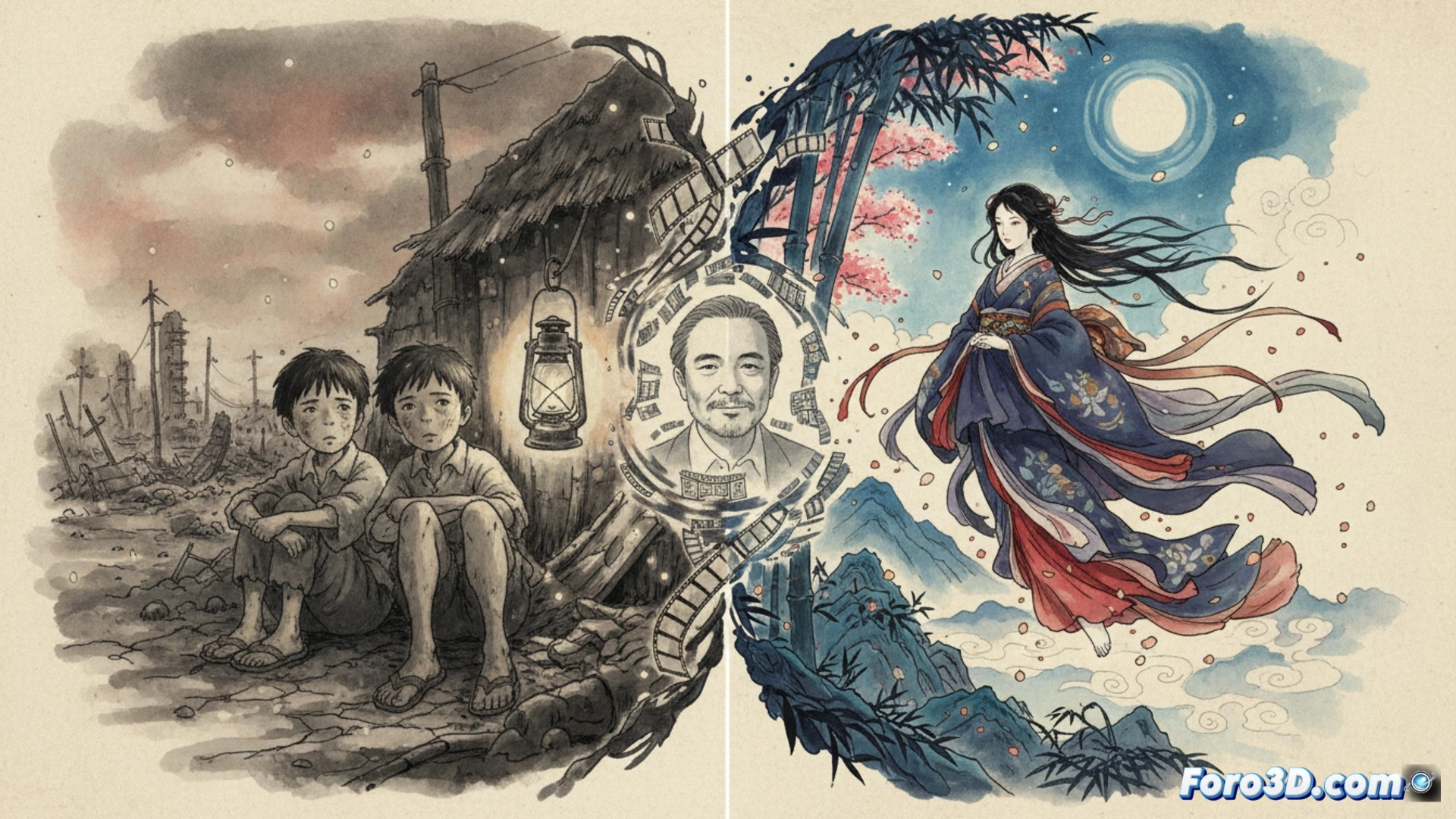
Avant-garde techniques: watercolor and uncompromising animation 🎨
Takahata broke technical molds by using animation with a watercolor appearance in The Tale of the Princess Kaguya, a process that involved loose strokes and vibrant backgrounds to evoke traditional Japanese painting. In Only Yesterday, he used a realistic color palette and meticulous attention to everyday details, such as the movement of leaves or the texture of clothing. These technical decisions, far from seeking spectacular effects, prioritized emotional authenticity over commercial gloss.
Takahata vs. Miyazaki: when realism wins without magic ⚔️
While Miyazaki sold us floating worlds and magical creatures, Takahata reminded us that a scene of a girl eating candy during war could be more impactful than any dragon. His trick was simple: you don't need spells if you show real life with rawness. Sure, that doesn't sell as many Totoro plushies, but at least it doesn't fool anyone with cheap happy endings. Social realism is also a business, just a sadder one.