Iron Lad, the teenage version of Kang the Conqueror created by Allan Heinberg and Jim Cheung, represents one of the most powerful metaphors of youth resistance in comics. By fleeing his predetermined future and founding the Young Avengers, Nathaniel Richards embodies the struggle against imposed narratives. In the niche of digital art, this character offers fertile ground for exploring how 3D modeling and rendering can visually translate concepts of rebellion and self-determination.
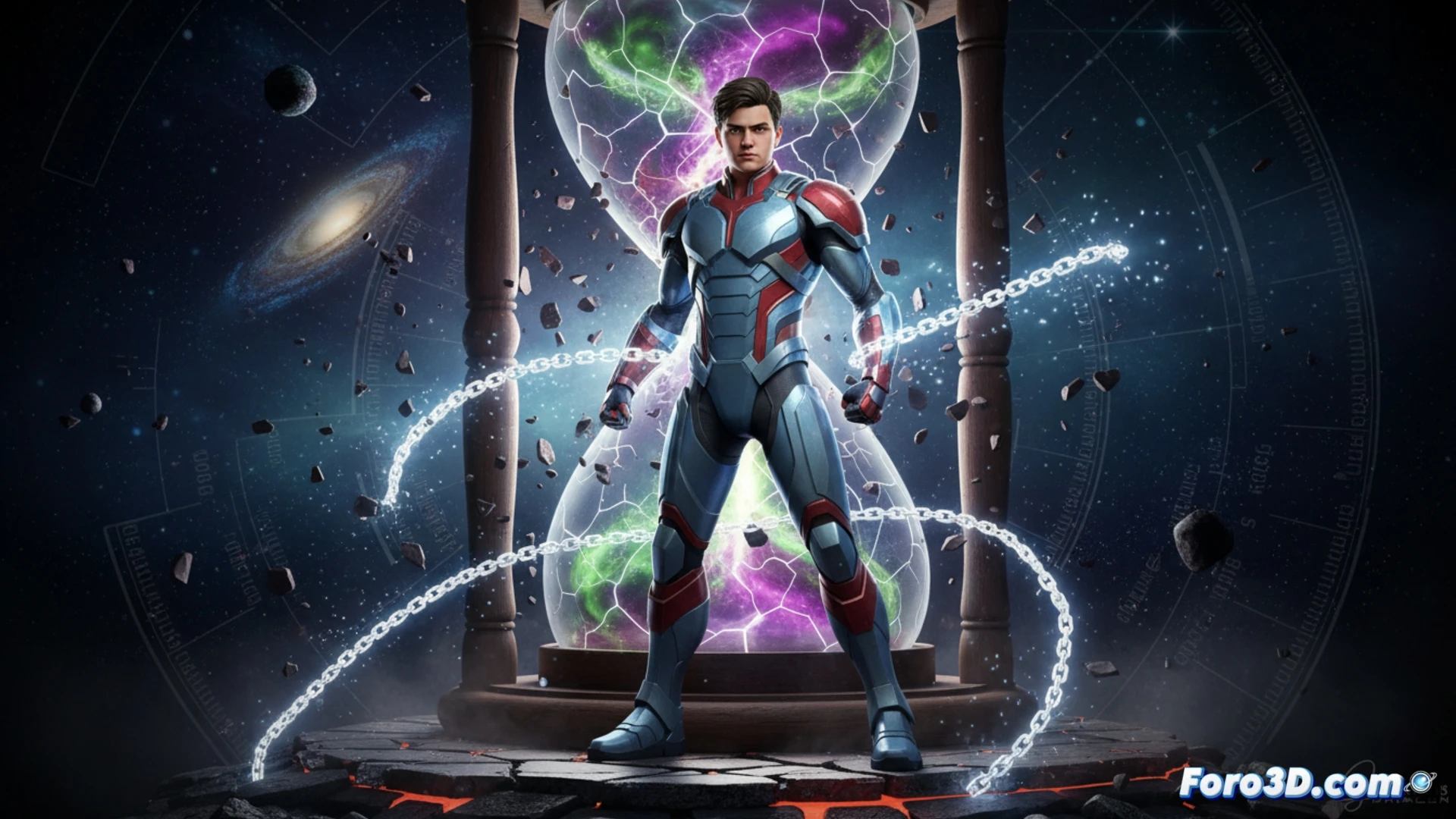
Rendering techniques for Kang's armor 🛡️
From a technical perspective, recreating Iron Lad's armor in 3D involves an in-depth study of Cheung's original design. The key is to work with non-destructive geometry to maintain the mechanical details of his helmet and metal plates. For rendering, a PBR (Physically Based Rendering) shader with a satin finish that reflects the character's characteristic blue light is recommended. Three-point lighting, with a warm main source and a cool fill, helps contrast his facial youth with the coldness of the technology he wields. Tools like Blender or ZBrush allow sculpting cracks and wear in the metal, symbolizing the internal conflict between his heritage and his choice.
Visual narrative of a rejected future ⏳
The true power of Iron Lad in digital activism lies in his symbolism: a young man who rejects a written destiny. By modeling his key scenes, such as the moment he abandons Kang's timeline, artists can use visual composition to emphasize the break. For example, a render with depth of field that blurs the background (the dark future) while focusing on the character in the foreground (the present of choice) works as an allegory. These images, shared in art communities, inspire young creators to use 3D technology to tell stories of social change, demonstrating that code and polygons are also tools of liberation.
How can 3D modeling of Iron Lad, as a symbol of resistance to destiny, inspire new forms of digital activism that challenge predetermined narratives in contemporary culture
(PS: digital political art is like an NFT: everyone talks about it but no one really knows what it is)