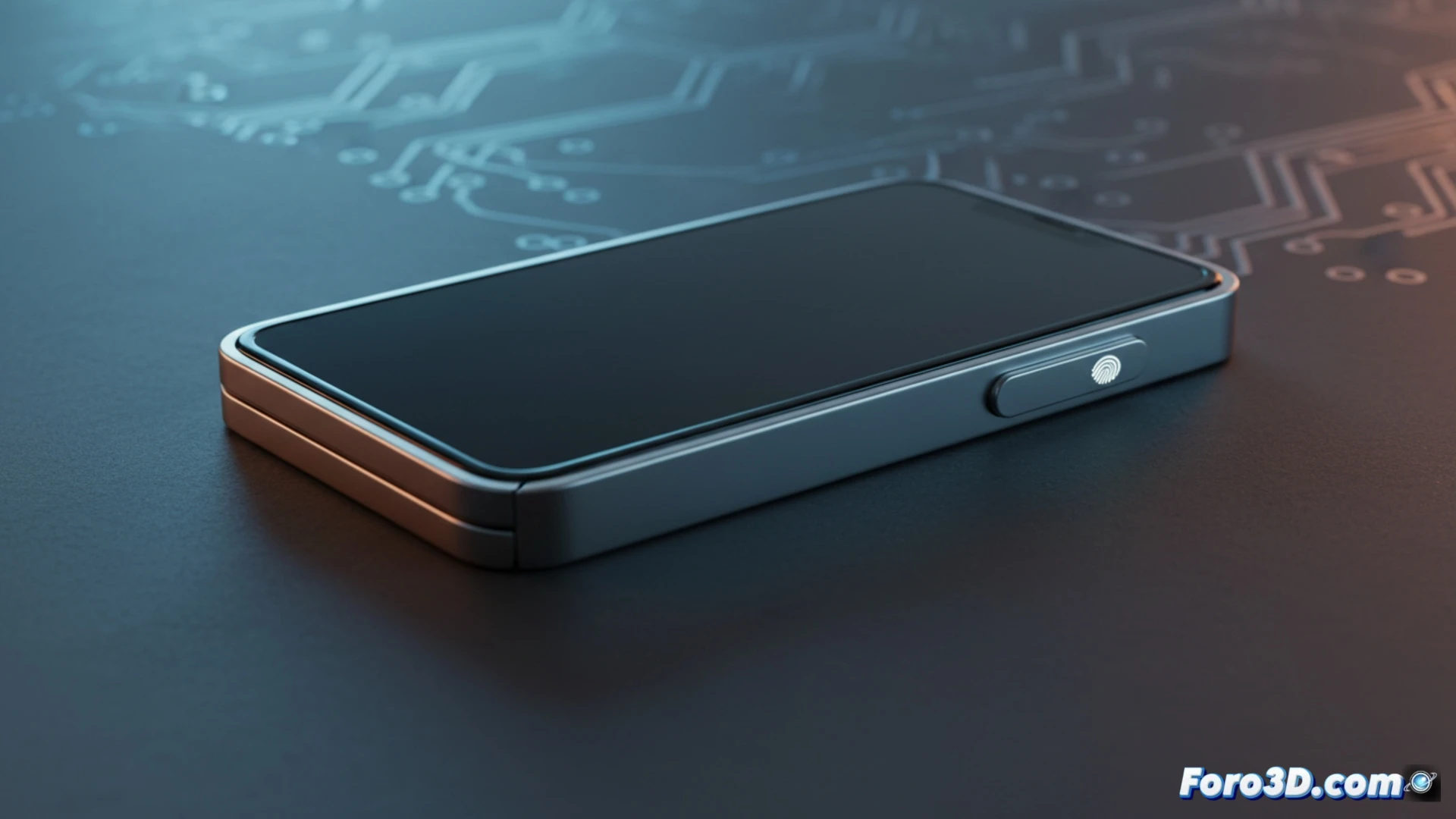
Apple's long-awaited foldable iPhone, which some call the iPhone Ultra, would arrive this year with a significant change to its unlocking system. According to leaker Mark Gurman, the device would do away with the Face ID module to integrate Touch ID into the power button. The main reason is that the phone, with an estimated price of $2,000, would be too thin to house the facial recognition sensors.
Thinness as a technical limit for sensors 📏
Apple's decision responds to physical limitations of the foldable design. The components needed for Face ID, such as the dot projector and infrared camera, require internal space that the ultra-thin chassis cannot offer. Instead, the company resorts to side-mounted Touch ID, a technology already proven on the iPad Air and iPad mini. Although functional, this change implies stepping back to an authentication method that Apple had set aside since the iPhone X.
Paying $2,000 to go back to 2017 💸
So Apple's big innovation for its most expensive phone is... resurrecting the touch home button. For $2,000, you'll get a phone that folds but will ask for your finger like an iPhone 6. Cupertino's engineers have achieved what seemed impossible: making a futuristic device technologically less advanced than an eight-year-old model. At least, when you lose it between the sofa cushions, you won't have to worry about finding it; the fingerprint won't be there anymore.