Hiroya Oku, creator of Gantz, brings us in Inuyashiki a visual feast that challenges the boundaries between traditional 2D and modern 3D. The series, which narrates the transformation of an elderly man and a teenager into living weapons, is a perfect case study for the VFX niche. The integration of 3D modeling with traditional drawing is not only advanced but sets a new standard for representing urban destruction and mechanical detail in anime, approaching the realism of a Hollywood blockbuster. 🎬
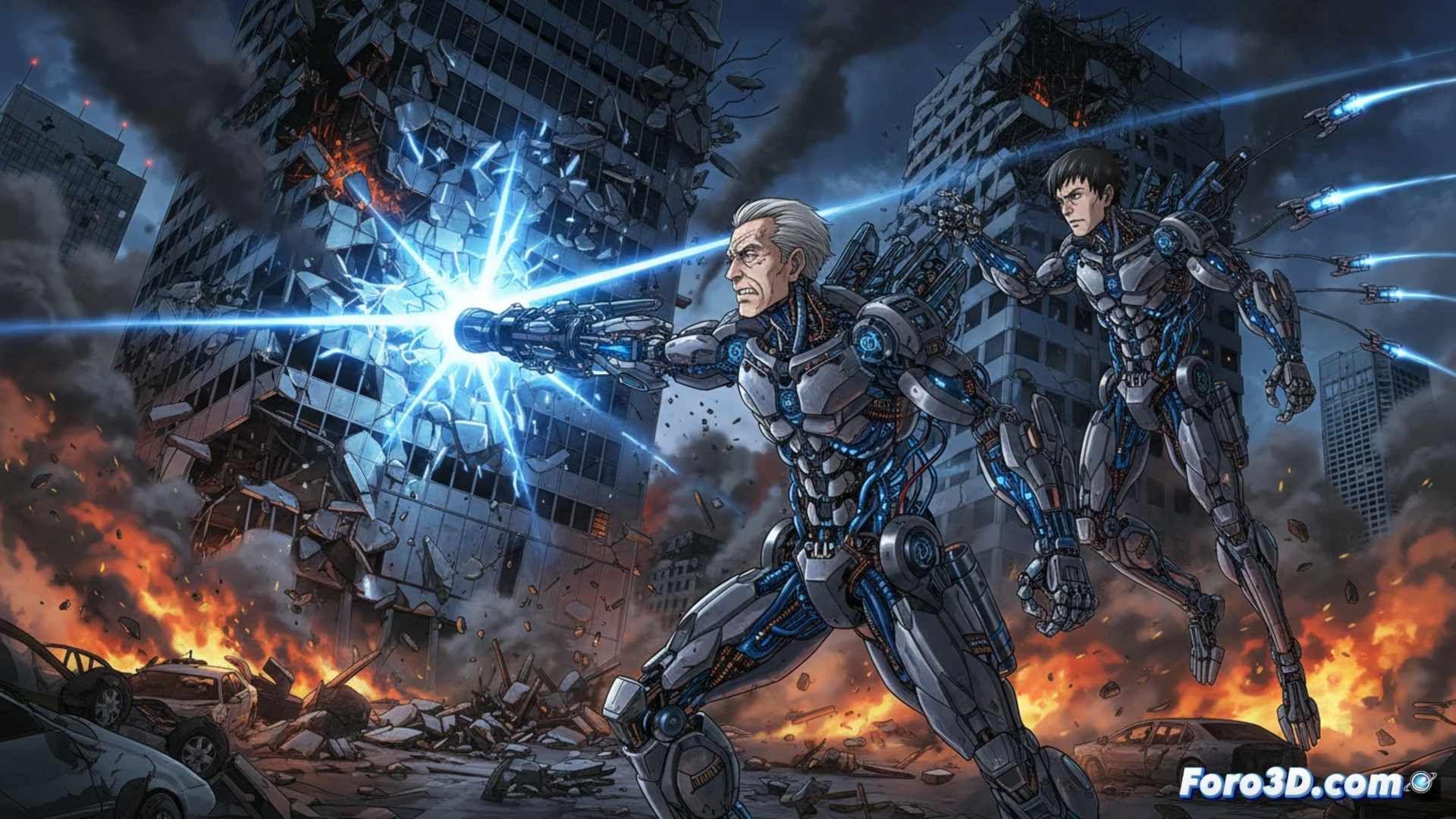
Machinery modeling and destruction simulation in Inuyashiki ⚙️
The secret to the realism in Inuyashiki lies in the fusion of techniques. To recreate the mechanical anatomy of the protagonists, Oku's team used a 3D modeling process reminiscent of character rigging in Houdini or Blender. The weapons that sprout from their bodies are not simple drawings; they are precisely textured 3D assets, with metallic reflections and particle systems that simulate smoke and sparks. For urban destruction, fracture simulations (RBD, Rigid Body Dynamics) were applied, allowing buildings to collapse with believable physics. The magic lies in how these 3D elements integrate with the 2D lineart, using lighting layers and motion blur that eliminate the feeling of separate pieces, achieving a continuous visual flow that is the envy of many VFX studios in film.
VFX lessons: From anime to the professional workflow 💡
Inuyashiki demonstrates that VFX does not understand media, but intention. For a visual effects professional, the work is a lesson in how to optimize resources. Instead of rendering complete environments in 3D, Oku opts for detailed 2D backgrounds where he inserts key 3D elements (vehicles, debris, weapons), a technique similar to camera projection in Blender. This reduces rendering costs and maintains the expressiveness of the drawing. The series reminds us that, whether in a triple-A video game or a film, well-executed 2D/3D integration is the most powerful tool to sell an illusion, and that experimentation with software like Houdini to simulate urban catastrophes can elevate an entertainment project into a technical work of art.
What do you think about this advancement?