Into the Radius 2 positions itself as a technical benchmark within the virtual reality horror and survival genre. The title, developed on Unreal Engine 5, fully exploits the engine's capabilities to immerse the player in a photorealistic post-apocalyptic environment. The key to its visual impact lies in three pillars: the rendering of spatial anomalies, dynamic lighting, and complex particle effects, elements that elevate immersion to levels rarely seen in the medium.
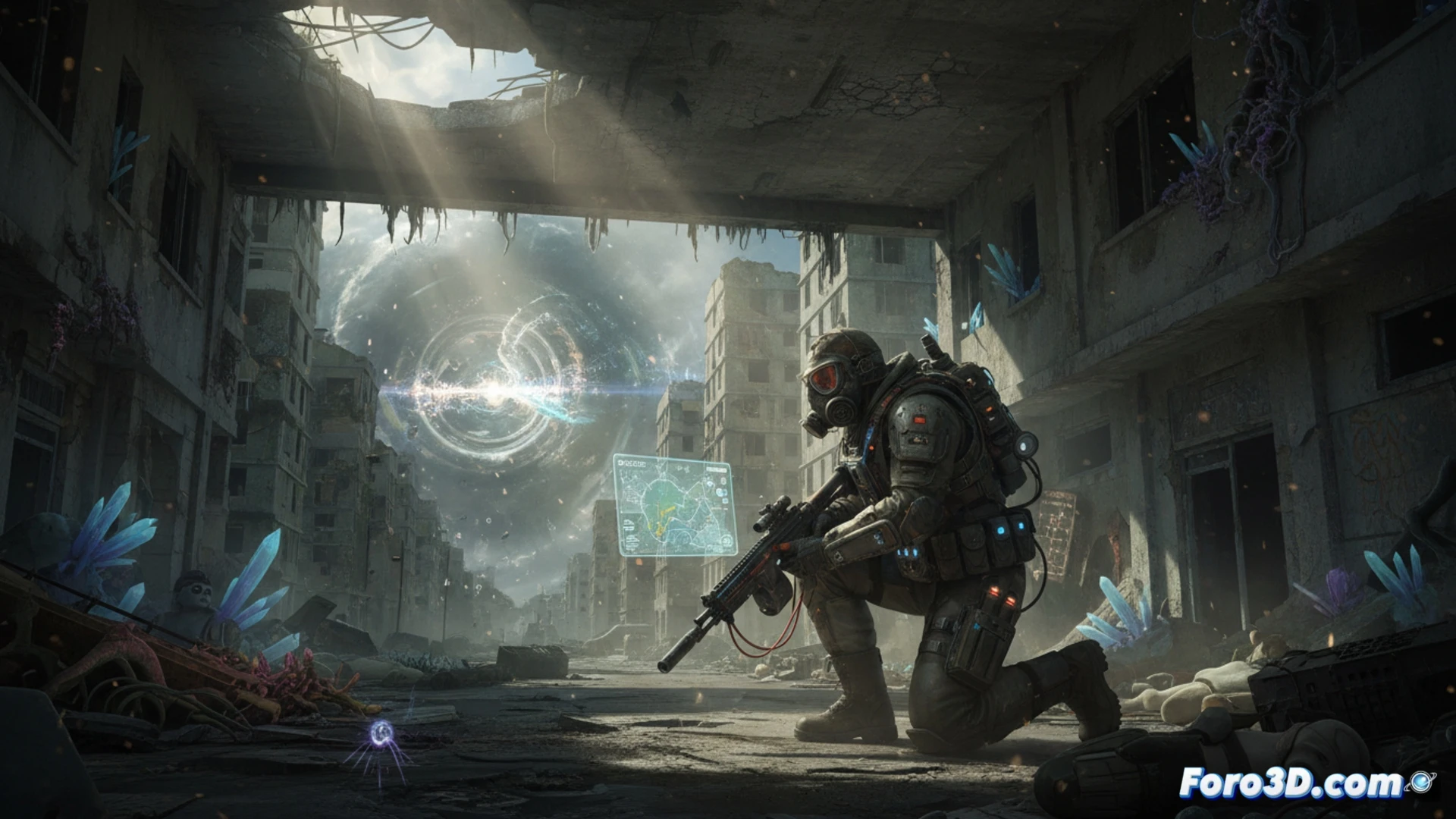
Real-time rendering of anomalies and particles 🎮
From a technical standpoint, the game uses UE5's Lumen system to manage dynamic global illumination that reacts in real-time to the player's movements. This is crucial for horror, as shadows and reflections change organically, eliminating the feeling of a static environment. Additionally, the rendering of spatial anomalies relies on the Niagara system to generate volumetric particles that distort spatial perception. Unlike titles such as The Walking Dead: Saints & Sinners, which use more traditional methods, here the particle density and interaction with light create an oppressive and tangible atmosphere. The use of Quixel Megascans for texturing the environment and Blender for prop modeling ensures that every surface, from cracked asphalt to dead vegetation, maintains a level of detail that withstands the close inspection required by VR.
Sensory immersion and the design of uncertainty 🧠
The impact on the user experience goes beyond the visual. The combination of dynamic lighting and particle effects not only beautifies the scene but also functions as a game design tool. In Into the Radius 2, light is not mere decoration; it is a survival resource that the player must manage. The anomalies, rendered with an almost tactile realism, generate constant uncertainty. This approach demonstrates that, in the Virtual Reality niche, technical realism is not an aesthetic end, but a means to build a horror narrative that feels physical, achieving fear that transcends the screen and settles into the user's real space.
As a developer, what specific technical challenges did you face when optimizing Unreal Engine 5's photorealism for VR in Into the Radius 2, especially in horror scenarios with dynamic lighting and vast open environments, without sacrificing the stable frame rate necessary to prevent motion sickness in the user?
(PS: Virtual reality is great until you try to lean on a table that doesn't exist.)