On May 8, Meta removed end-to-end encryption (E2EE) from direct messages on Instagram, a measure that contradicts its historical stance on privacy. Although the company justifies the decision by citing low voluntary adoption, the background reveals a direct tension between digital compliance obligations and pressure from agencies such as Interpol or the FBI. This move not only affects user trust but also raises serious questions about compliance with regulations like the European GDPR or the California CCPA.
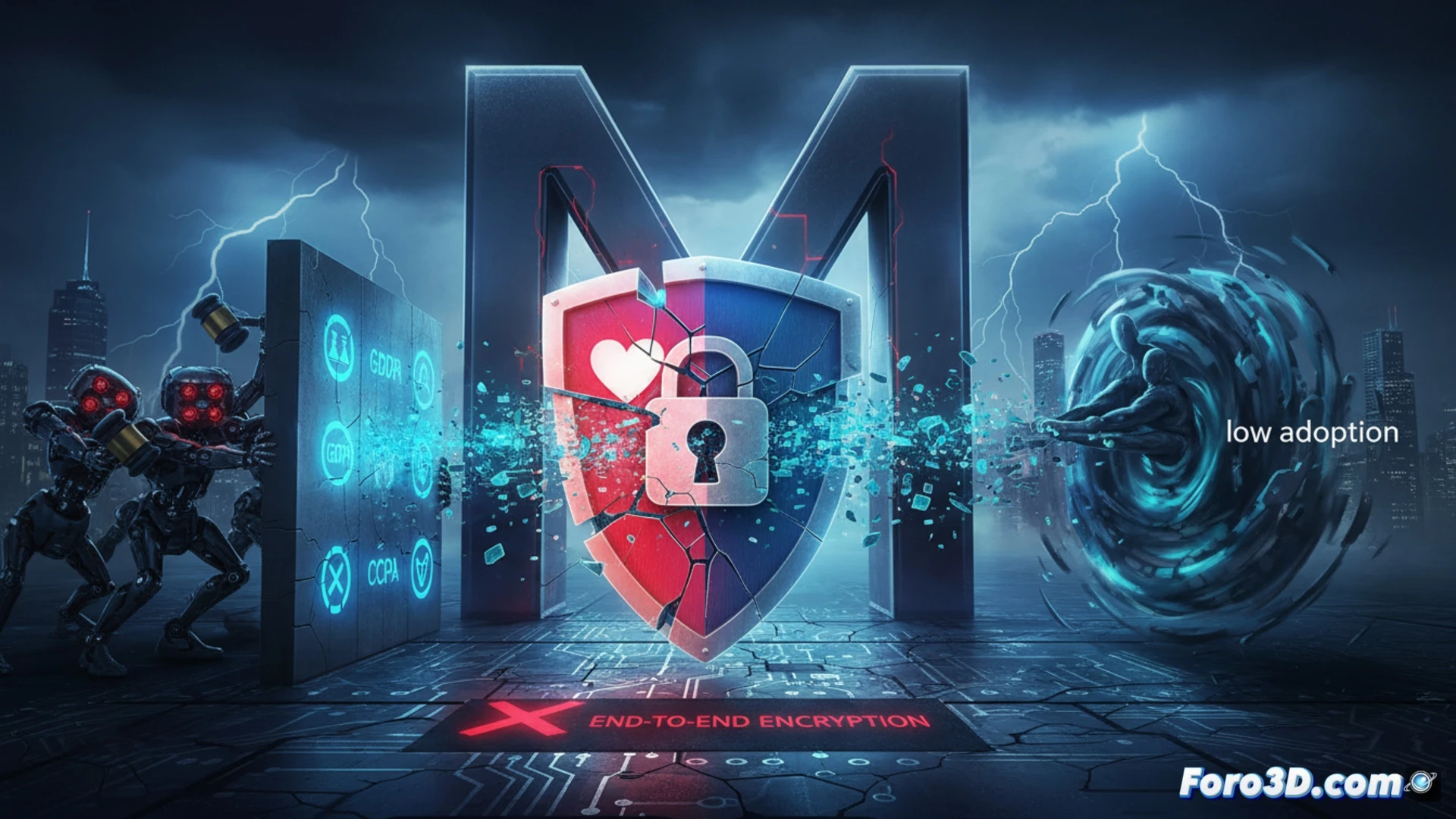
Technical analysis of the data flow without E2EE 🔒
From a compliance perspective, the removal of E2EE transforms Instagram's security architecture. Without this encryption, messages travel unprotected on Meta's servers, allowing access by authorized third parties (law enforcement) or unauthorized ones through vulnerabilities. For a risk analyst, this means that data from vulnerable users, such as activists or journalists, is exposed. Visualizing the flow in a 3D diagram, we would see how the message travels from the sender to Meta's central server (without end-to-end encryption) and then to the receiver, with clear interception points in the cloud infrastructure. This directly clashes with the GDPR's data minimization principle, which requires the company to store only what is strictly necessary, and with the obligation to notify security breaches immediately.
Showcase privacy or surveillance strategy? 🕵️
Meta has always sold privacy as a pillar, especially on WhatsApp. However, removing E2EE on Instagram reveals a strategic contradiction: the company yields to police pressure to facilitate investigations, but in doing so, it breaks its own promise of confidentiality. For compliance departments, this is a red alert: if Meta cannot guarantee encryption across all its platforms, its status as a secure data processor weakens. European data protection agencies have already opened cases, and the risk of multi-million dollar sanctions under the GDPR grows exponentially. The decision is not only technical but redefines the balance between public security and digital rights.
How does the removal of end-to-end encryption on Instagram impact the regulatory compliance of companies using the platform for commercial communications under the General Data Protection Regulation?
(PS: SCRA is like autosave: when you fail, you realize it existed)