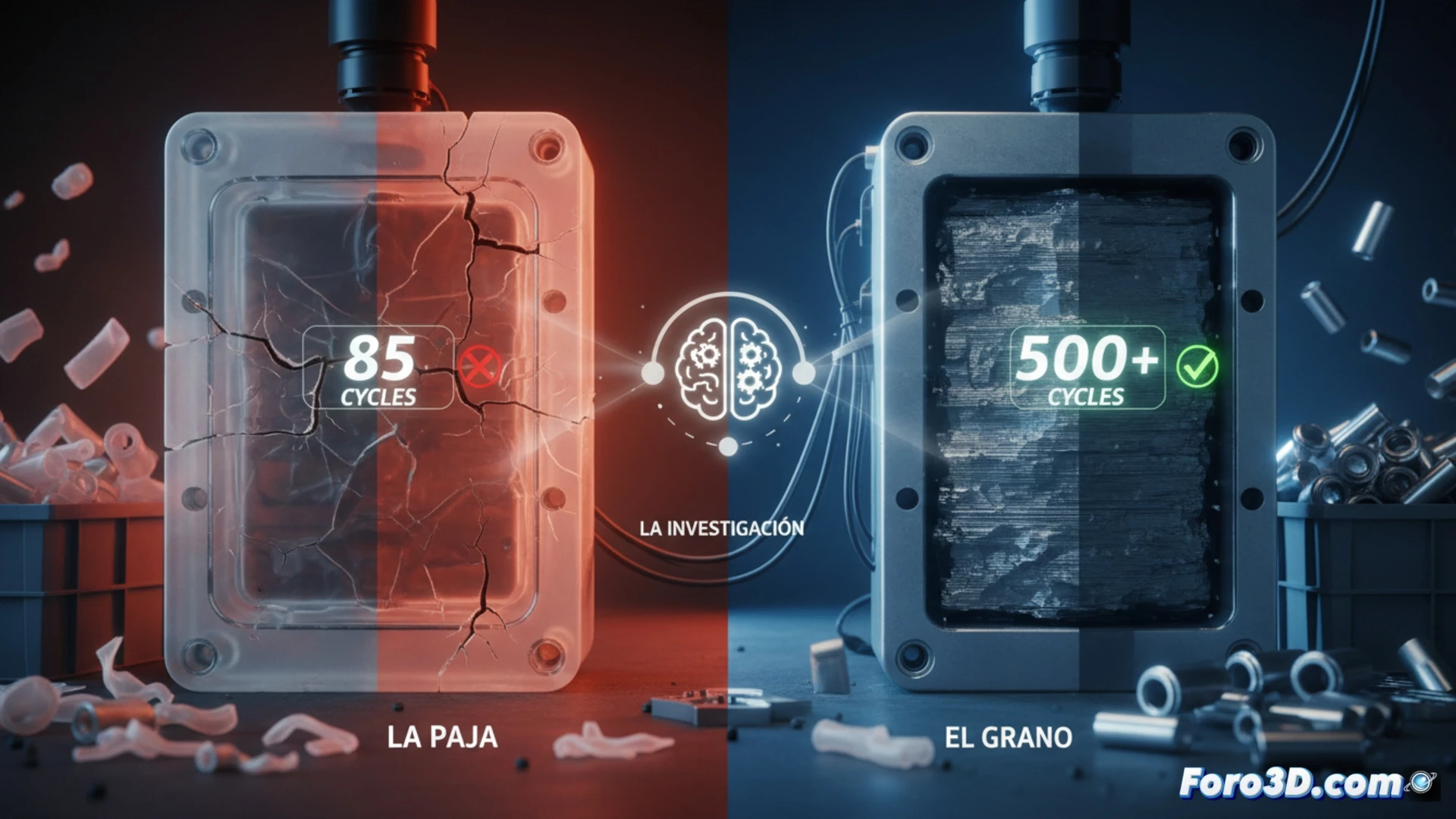
A study from the University of Navarre has analyzed the performance of inserts manufactured using additive techniques for injection molds. The research reveals that success depends on the process, material, geometry, and molding parameters. The results show notable differences between technologies, from 85 cycles for photopolymerization to over 500 cycles for laser sintering in metal powder.
Metal vs. Polymer: Durability and Thermal Dissipation 🔥
Inserts made by laser powder bed fusion exceeded 500 injection cycles, showing resistance and adequate heat dissipation capacity for series production. In contrast, those made by material jetting achieved 116 cycles, and photopolymerization ones, 85. However, surface roughness remains a common weak point, requiring post-processing. Material extrusion is relegated due to its surface finish and risk of delamination.
Roughness: That Little Big Problem Nobody Wants to Polish 😅
Because yes, you can have a metal insert that withstands 500 cycles like a champ, but its surface looks like sandpaper. The good news is that post-processing exists; the bad news is that nobody includes it in the initial budget. And material extrusion, poor thing, comes with delamination and a finish like expired yogurt. In the end, technology advances, but manual polishing remains the unsung hero of the story.