Nightdive Studios has once again demonstrated its mastery of video game preservation with the release of The Thing: Remastered. Using its proprietary KEX Engine, the team has carried out a deep reverse engineering process on the original 2002 code to extract and rewrite its rendering systems. The result is a version that respects the classic gameplay while offering per-pixel lighting, improved specular mapping, and a 144 FPS rate at native 4K resolution, something unthinkable on the hardware of the time. 🎮
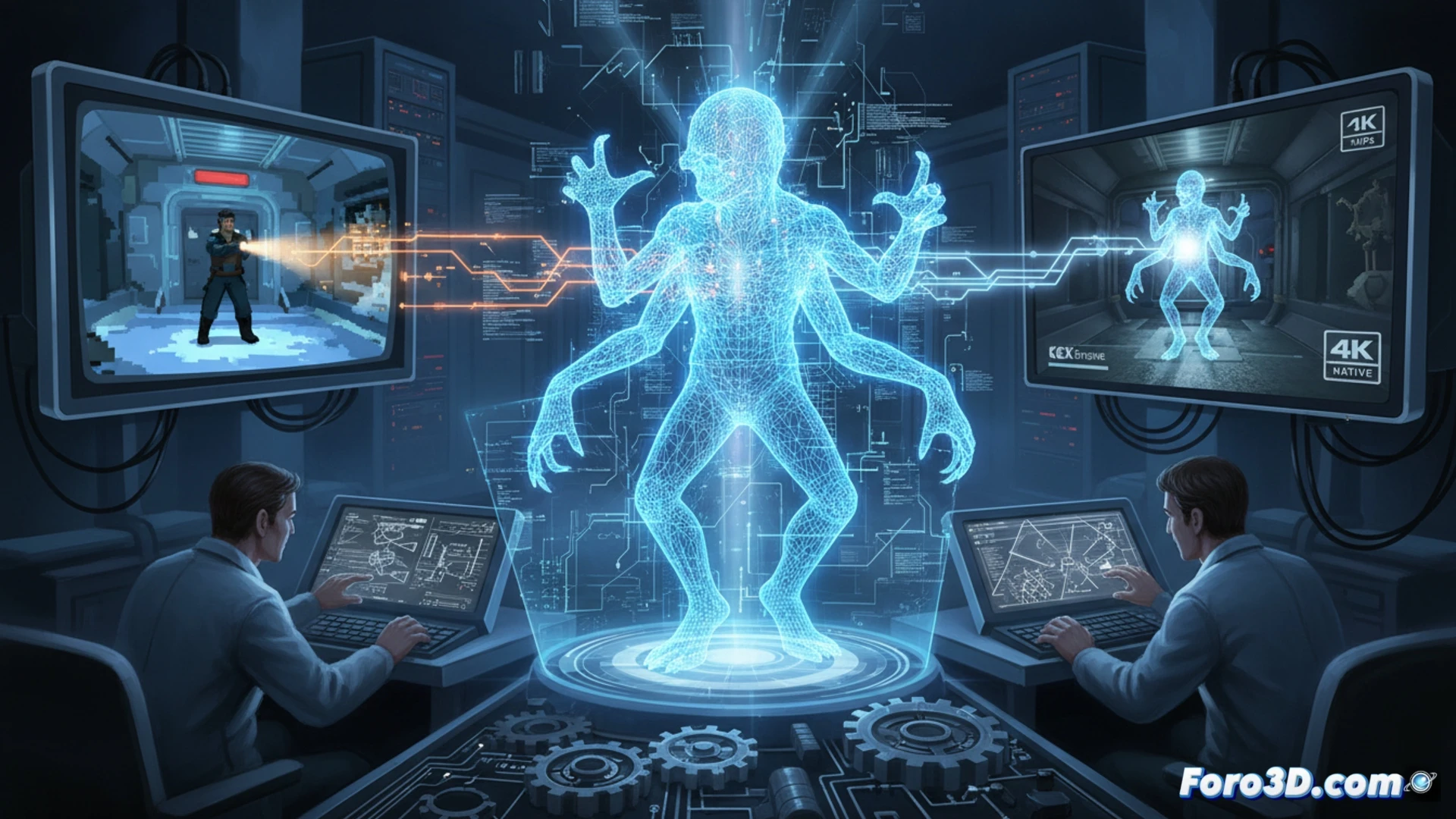
KEX Engine: Disassembling the Original Source Code 🔧
The KEX Engine functions as a reengineering platform that decompiles the original binary and reconstructs its graphics pipeline. In the case of The Thing, Nightdive applied retro-analysis techniques to identify the static lighting routines of the 2002 engine and replace them with modern shaders. This allowed for the implementation of dynamic per-pixel rendering without altering the original geometry or animations. Specular mapping is now calculated in real-time using normals extracted from the original assets, improving the texture of snow and blood effects without needing to replace the models. The engine also optimizes modern GPU usage to maintain a stable 144 FPS, even in the most creature-heavy scenes.
The Paradox of Remastering a Technical Classic 🧊
What's fascinating about this project is that the original The Thing was already a technical milestone in 2002 for its trust system and volumetric flashlight lighting. Nightdive has not only preserved those achievements but has enhanced them without betraying the original design. The lesson for developers is clear: well-executed reverse engineering allows an old engine to breathe on new hardware without falling into the trap of an empty visual remake. Here, technology serves the memory of the game, not the other way around.
Considering that Nightdive Studios has used its KEX engine to restore The Thing, what specific reverse engineering techniques did they apply to the original code to reconstruct the complex trust and fear systems between characters without access to the original source code?
(PS: a game developer is someone who spends 1000 hours making a game that people complete in 2)