The rupture of the perimeter joint in an infinity-edge pool located on the rooftop of a skyscraper released hundreds of cubic meters of water onto the public roadway. The accident, which occurred during a day of variable wind, caused structural damage to the building and multiple vehicles. The 3D forensic analysis of the incident allows us to understand the chain of mechanical and dynamic failures that led to the disaster, offering critical lessons for the design of aquatic infrastructure at height.
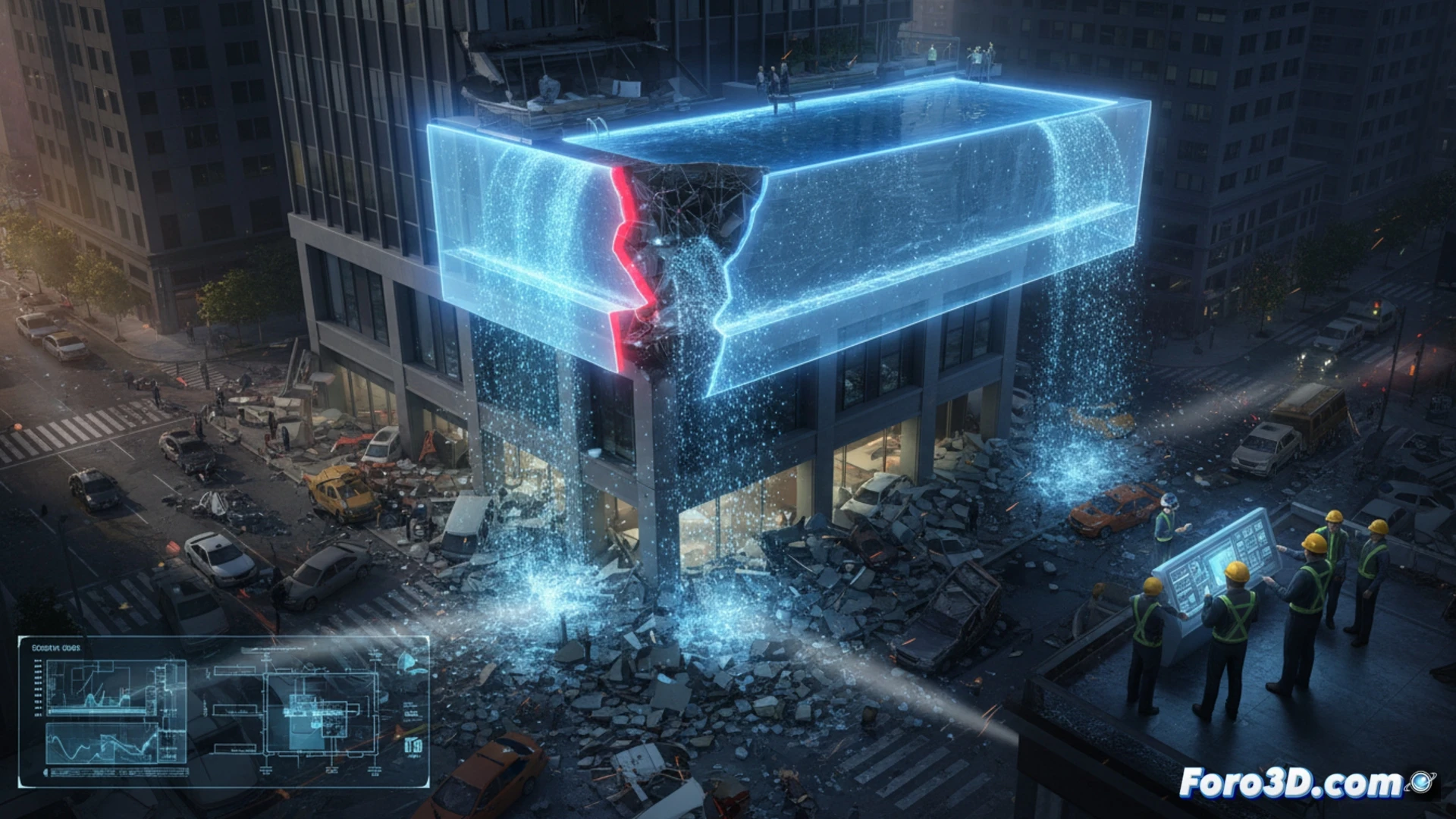
Coupled simulation of hydraulic load and structural deformation 💧
The forensic team used Tekla Structures to model the pool basin and evaluate the elastic deformation of the structural glass panel anchors under water pressure and wind load. The calculations revealed that the flexible joint, subjected to cyclic fatigue from gusts, lost its sealing capacity. Ansys Fluent simulated the dynamics of the falling water: the flow descended forming a vertical curtain that impacted the facades, generating additional pressures on the lower anchors. RealityCapture digitized the post-collapse state, allowing a comparison of actual deformations with model predictions, confirming that the failure originated at the connection between the overflow edge and the load-bearing structure.
Lessons for the design of elevated pools 🏗️
The incident demonstrates that infinity-edge pools on skyscrapers require redundant joint design and coupled wind-water dynamic analysis. 3D simulations with tools like Tekla Structures and Ansys Fluent must include scenarios of extreme gusts and material fatigue. Documentation with RealityCapture facilitates forensic inspection, but prevention requires over-dimensioning anchors and providing emergency drainage systems on the public roadway. The catastrophe underscores that aesthetics should not compromise safety in elevated infrastructure.
What variables would you consider to model this disaster?