The arrival of Indiana Jones and the Great Circle on Nintendo Switch 2 has sparked an intense graphical debate across platforms. This comparison pits the hybrid console against the Xbox Series S and PS5, showing that the use of DLSS allows Nintendo's console to offer a sharper image than Microsoft's, albeit at the cost of shadows and other details. The performance, locked at 30 fps compared to the 60 fps of its rivals, is the price to pay for a conversion that many describe as competent and almost miraculous for a current-generation title.
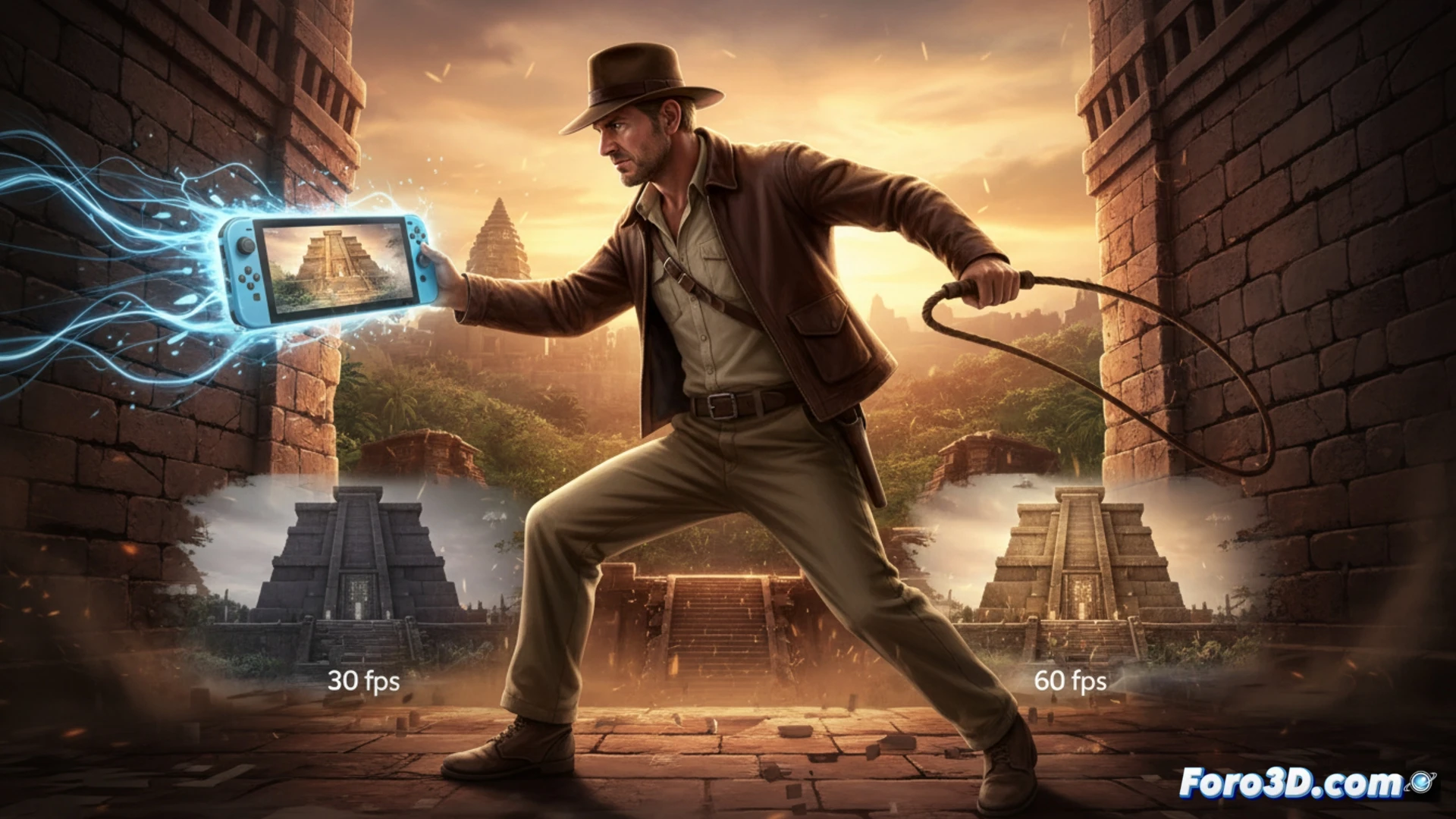
DLSS and compromises: how Switch 2 competes in sharpness 🎮
The trick lies in AI upscaling. While the Xbox Series S opts for dynamic resolutions without advanced reconstruction, Switch 2 uses DLSS to achieve superior definition in motion. The result is a more stable and defined image, albeit with lower-resolution shadows, simpler textures, and less complex lighting. The 30 fps lock is consistent, with no noticeable drops, ensuring smoothness in an adventure that prioritizes narrative and exploration over frantic action. The conversion shows that Nintendo's hardware, with the right software, can deliver surprises.
30 fps to search for the ark calmly, no rush 🏺
30 fps might sound like heresy in mid-2025, but Indiana Jones was always more about strolling through temples than sprinting in multiplayer. If you survived the 12 fps of Temple of Doom on the Atari 2600, this is a luxury. That said, when the whip cracks at 30 frames per second, one wonders if the lost ark isn't also losing frames along the way. At least the image is so sharp that you can even count the dust motes on Dr. Jones' fedora.