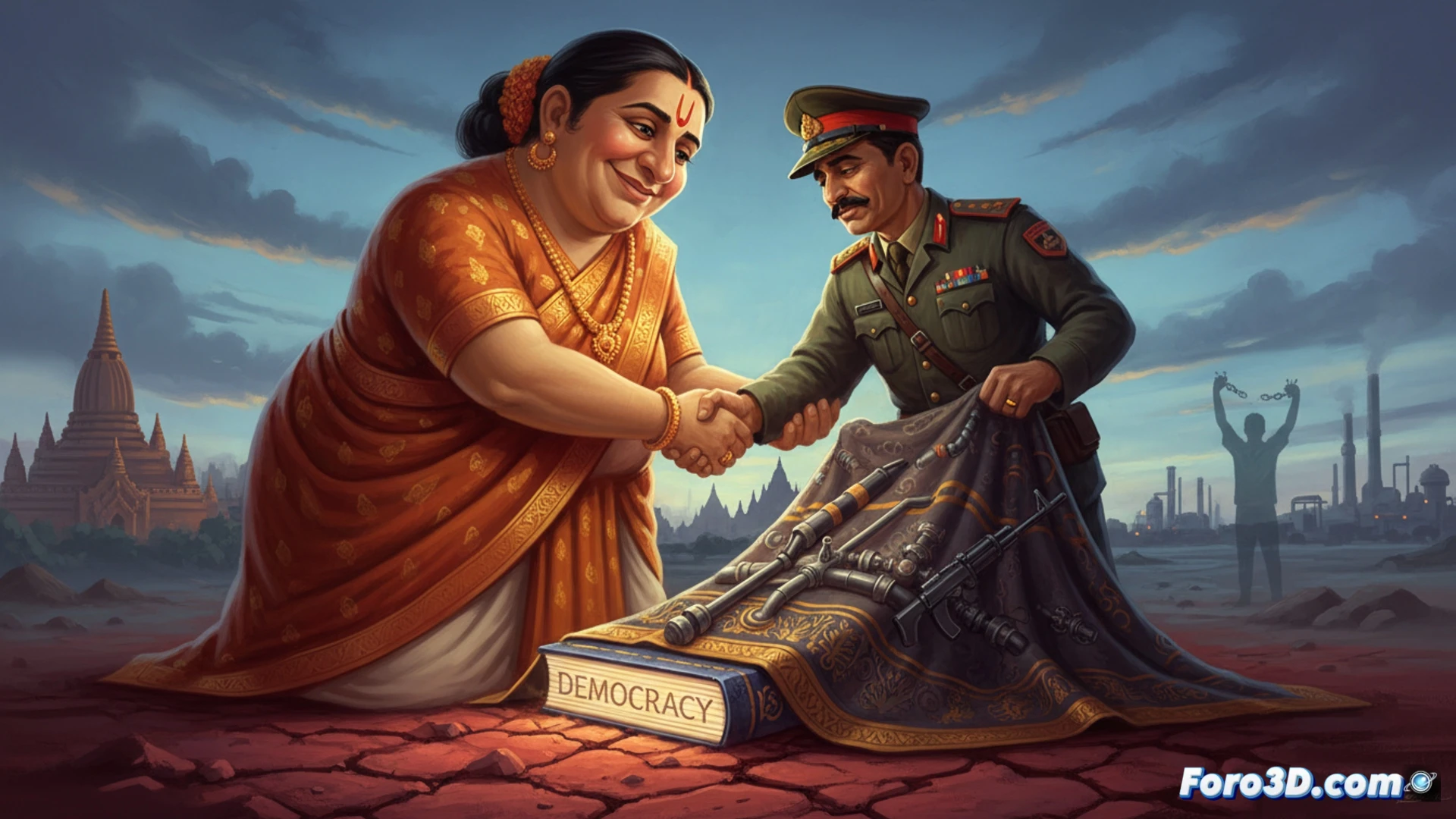
While New Delhi preaches democracy at international forums, its foreign policy towards Myanmar reveals an evident contradiction. The prioritization of strategic relations with the military junta, ignoring human rights violations, normalizes authoritarian impunity. India negotiates gas and weapons with those who carried out a coup, contradicting its own declared values.
The technological paradox of pipeline diplomacy 🛢️
The India-Myanmar-Thailand gas pipeline project advances while the junta uses energy revenues to finance its repression. India deploys engineers and technicians in Burmese territory, modernizing infrastructure that sustains the military regime. This technical cooperation contradicts any attempt at democratic pressure: each kilometer of buried pipe is a vote of confidence for the generals who bombed civilian villages.
Political realism: when values are only for brunch 🥂
The solution is simple: for India to condemn the coup and speak only with civilians. But of course, that would mean giving up lucrative contracts and energy stability. It is easier to preach democracy from the podium while signing checks with the junta. After all, consistency is a luxury few countries can afford, especially when gas is at stake.