In Sound Mind is an independent title that demonstrates Unity's potential for psychological horror. The game not only frightens but disorients through reality distortions, particle effects, and neon lighting that changes drastically between levels. We analyze the technical flow that enables these transitions without breaking immersion or performance.
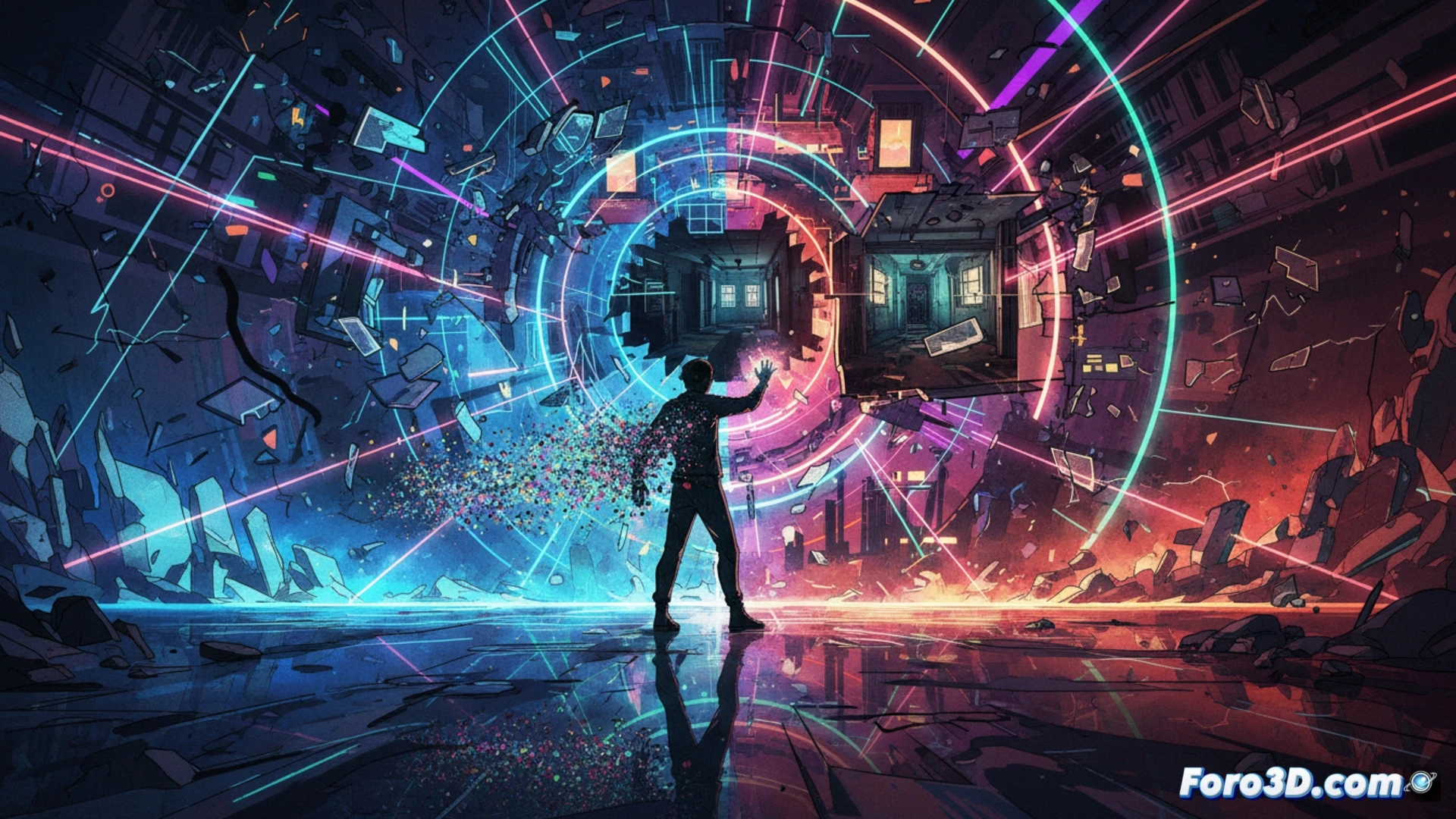
Technical Workflow: Unity, Blender and Photoshop 🛠️
The game's pipeline combines Blender for modeling organic and distorted environments, with Photoshop for textures that reinforce visual psychedelia. In Unity, the team implements custom shaders for the neon effect and particle systems that react to the player's mental state. The key lies in the radical art direction changes between worlds: each level loads a new set of assets and materials, ensuring the engine does not accumulate unnecessary memory. To maintain smoothness, dynamic LODs and real-time texture compression are prioritized, preventing visual distortion from saturating the GPU.
Lessons for Independent Developers 💡
In Sound Mind demonstrates that psychological horror does not require an AAA engine or an exorbitant budget. The key lies in artistic coherence and intelligent optimization: using particle effects as a narrative element, not just decorative, and planning transitions between levels so that performance does not suffer. For any small team, this game is a case study on how Unity can be as flexible as it is terrifying when its asset and shader system is mastered.
What specific visual and sound distortion techniques implemented in Unity make the use of neon in In Sound Mind enhance the player's sense of psychological horror?
(PS: a game developer is someone who spends 1000 hours making a game that people complete in 2)