Orthopedics is moving toward the dynamic. 4D printing allows for the creation of smart splints that change shape when reacting to stimuli such as temperature or humidity. Unlike traditional static plaster casts, these new devices adjust to the patient's body during the recovery from bone or joint injuries, offering a more comfortable and personalized solution.
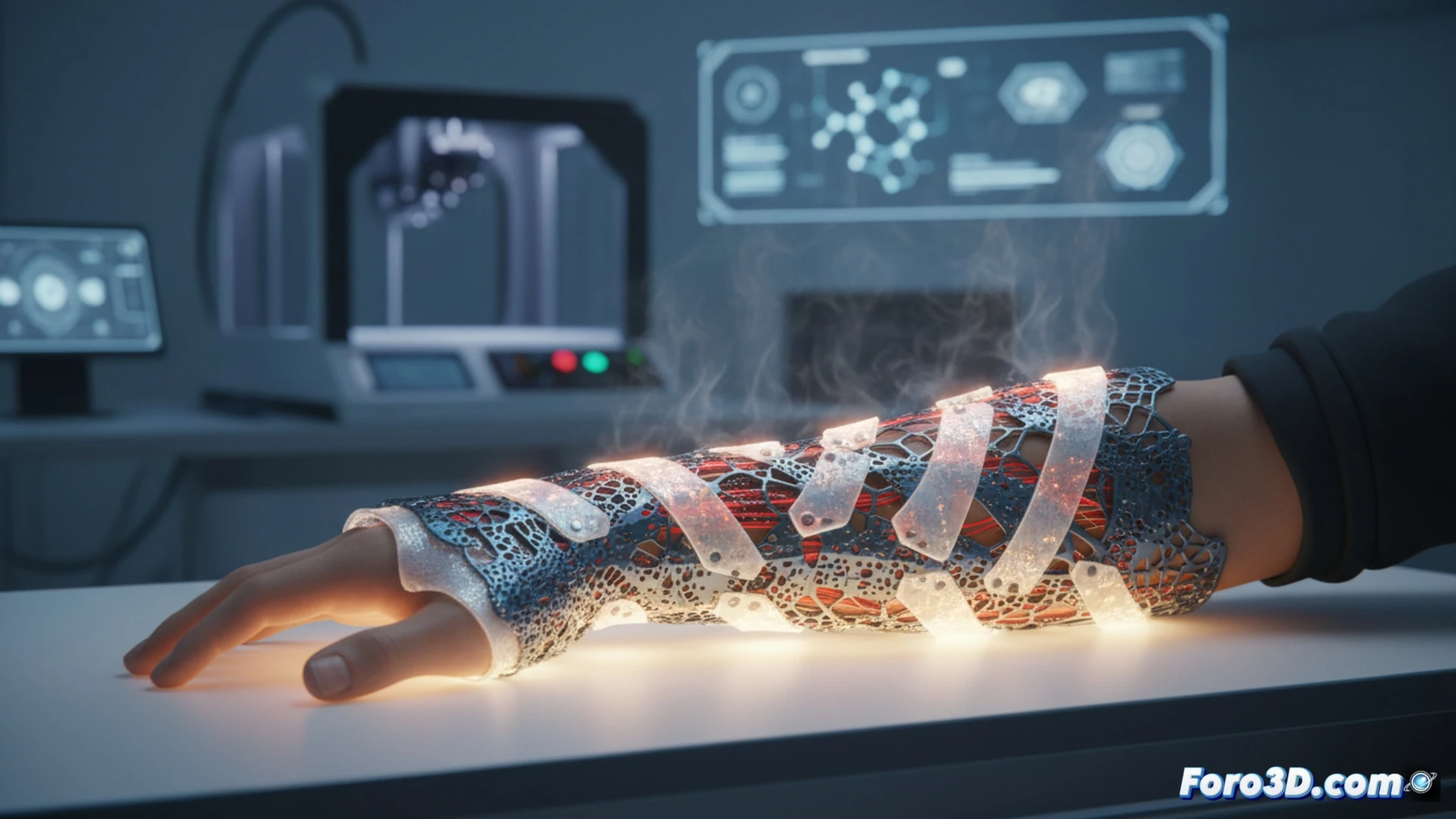
Materials that remember and react to the environment 🧬
The technology is based on polymers with programmed shape memory. By applying body heat or humidity variations, the material expands or contracts in a controlled manner. This allows the splint to apply the right amount of pressure at each stage of bone consolidation. The design is 3D printed with an initial pattern, and then time and environmental stimuli execute the changes. There is no electronics or sensors; the molecular structure itself responds.
Goodbye to the back scratcher and the smell of plaster 😅
Those who have worn a traditional cast know that itching is the law. With 4D printing, the splint loosens when the arm swells and tightens when the inflammation goes down. It almost seems to have more common sense than some doctors. Of course, if the material fails and shrinks from a flash of heat, you might end up with a designer tourniquet. Technology advances, but the risk of looking like a sausage is still there.