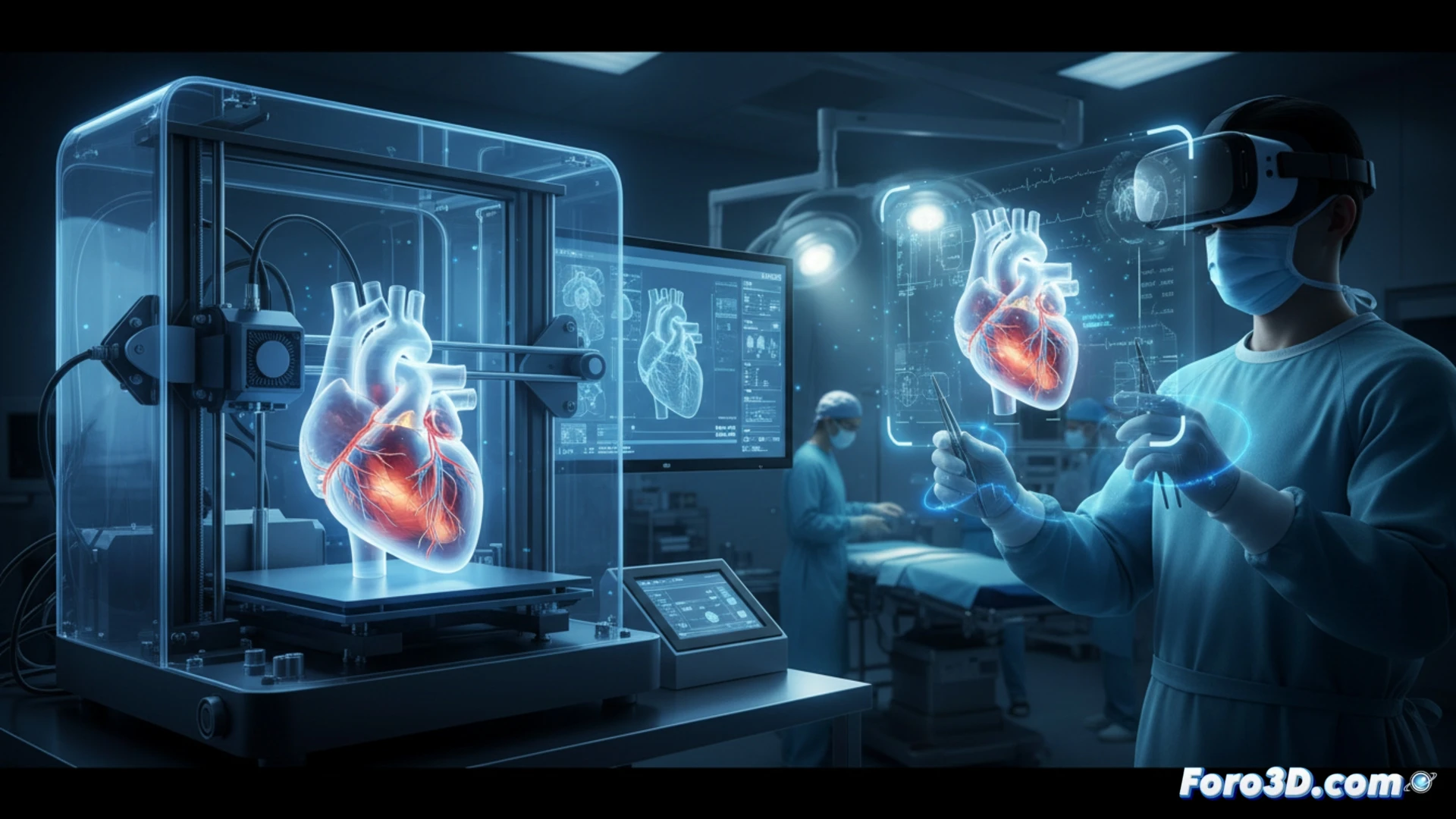
3D technology is transforming the surgeon's craft, allowing operations to be planned with precise anatomical models. For example, a cardiac surgeon can print a replica of a patient's heart to rehearse a complex repair before opening the chest. This reduces risks and time in the operating room.
Key programs and tools 🛠️
To create these models, programs like Mimics (Materialise) are used to segment medical images (CT or MRI) into 3D models. Then, Blender or Meshmixer allow editing and smoothing the geometry. Finally, the file is sent to a 3D printer with biocompatible resin. In virtual reality, software like Osso VR or Precision VR offers interactive simulations to practice incisions and sutures without risk to the patient.
3D Surgeon: now also a plumber 🔧
The funny thing is that, with these programs, the surgeon goes from being a scalpel artist to a digital plumber: measuring pipes (arteries), repairing leaks (aneurysms), and adjusting valves (heart valves). Sure, at least now they can make mistakes on the computer without the patient complaining. And if the printer fails, they can always blame the software instead of their hands.