Traditional 3D printing can be slow, but researchers at Tsinghua University have changed the rules. Their DISH method (digital incoherent synthesis of holographic light fields) creates millimeter-scale polymer structures in less than a second, according to an article in *Nature*. The key lies in projecting optimized light via holography through a high-speed rotating periscope.
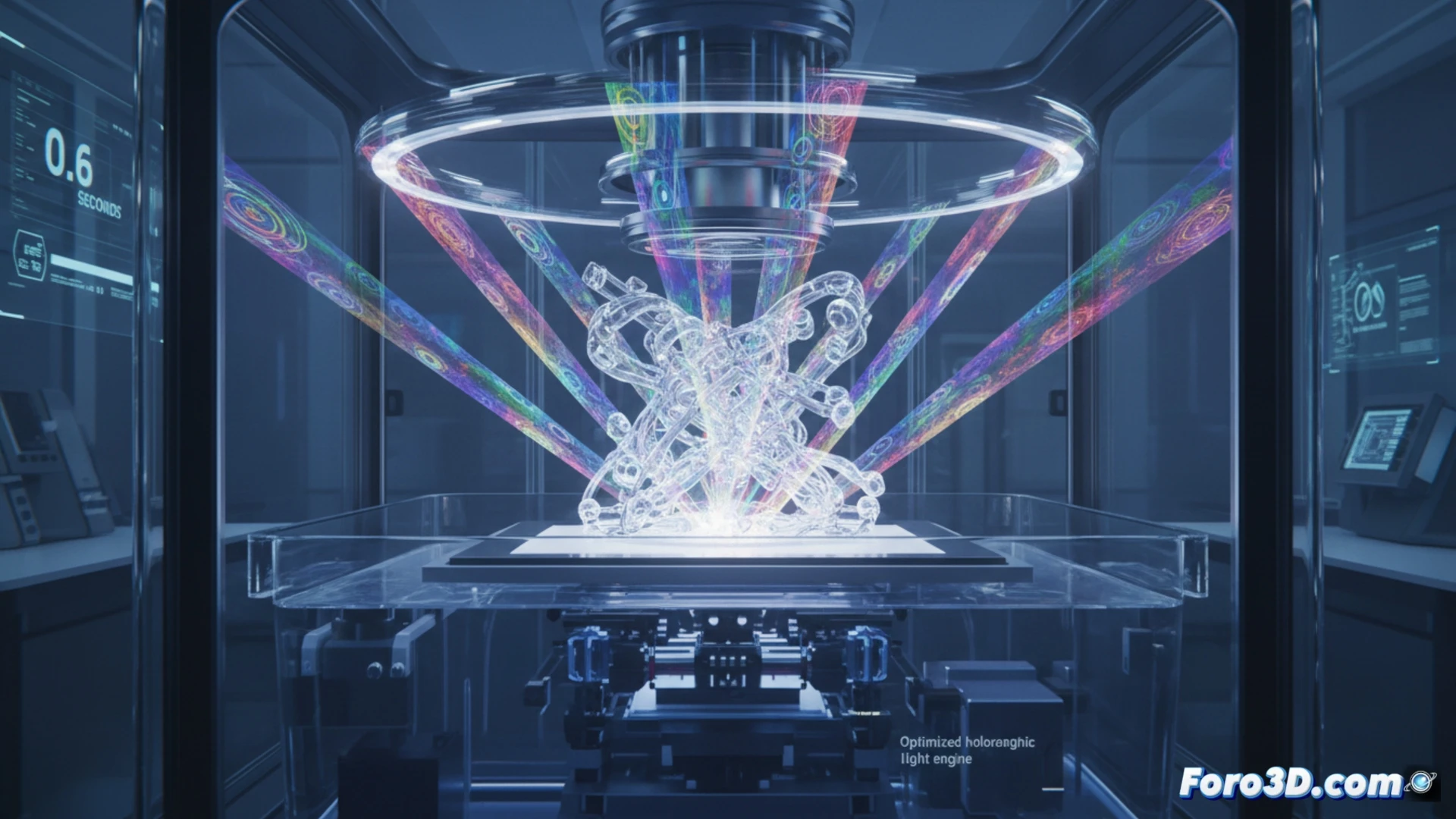
Rotating holography that eliminates resin movement 🌀
The DISH system uses a periscope that rotates at high speed to distribute holographic light evenly within the resin volume. Unlike other volumetric methods that rotate the container, here the resin remains static. The light projections, calculated using optimization algorithms, solidify the polymer simultaneously at all desired points. This allows complex parts to be fabricated in 0.6 seconds, a significant advancement over layer-by-layer techniques that require minutes or hours.
Goodbye to waiting: 3D printing faster than a blink ⚡
If you've ever fallen asleep waiting for a 3D print to finish, this breakthrough is for you. With DISH, the process takes less time than it takes to blink. That said, prepare your coffee before pressing start, because when you look again, the part will already be ready and you'll have no excuse not to have assembled that desktop robot. Patience is no longer a necessary virtue in the maker world.