3D technology not only manufactures parts; it can also enhance data privacy. A specialist can use volumetric scanning to design physical cubicles that block prying eyes in open spaces, or create custom server enclosures with integrated locks. Programs like Blender for modeling, Fusion 360 for technical design, and Cura for slicing are key tools in this craft.
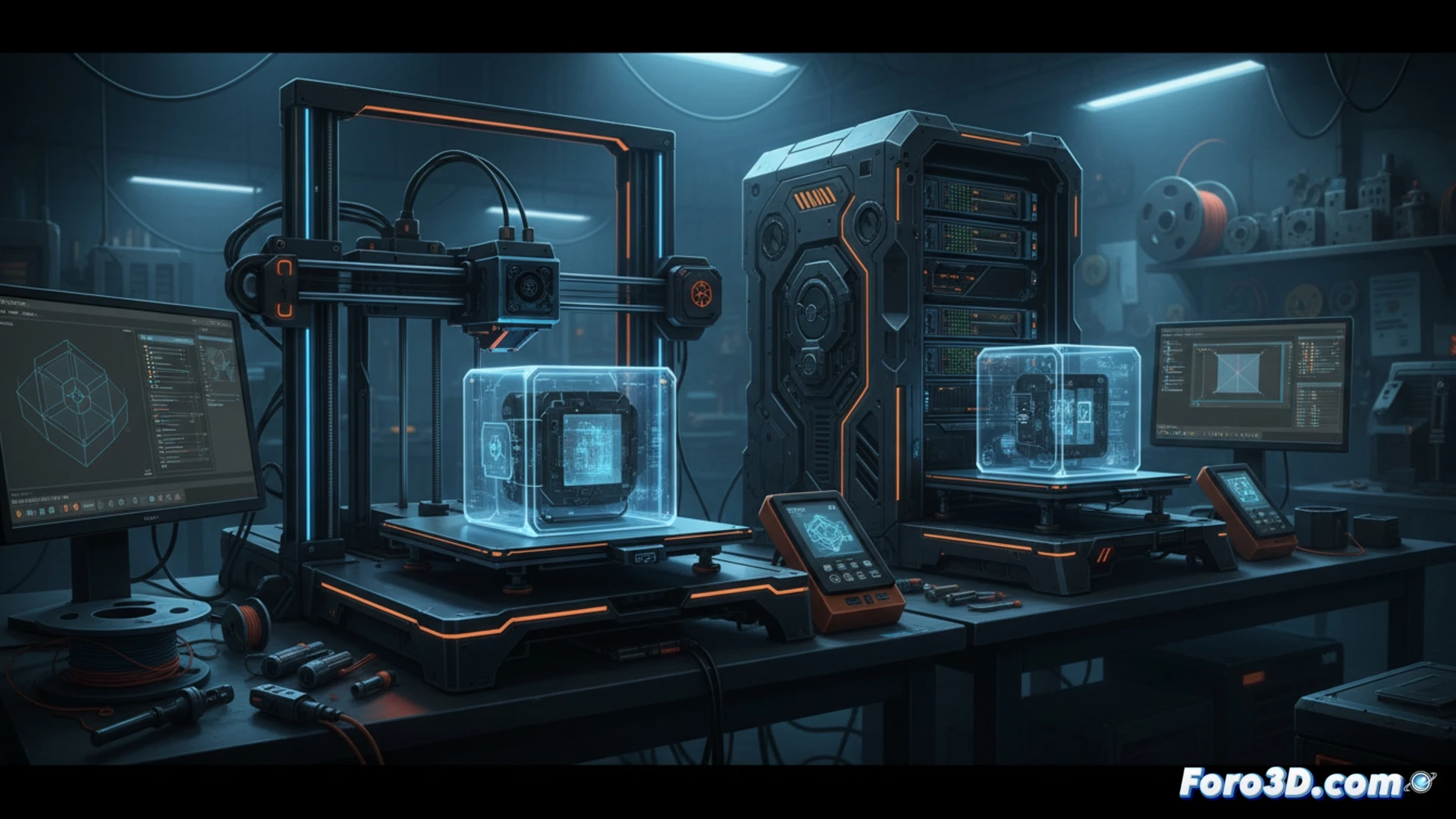
3D modeling to simulate secure environments 🔒
The specialist can recreate an office layout in 3D to identify visual or acoustic blind spots. Using software like SketchUp or Rhino 3D, acoustic panels or partitions are designed to prevent screens from being captured by external cameras. Supports for RFID signal blockers are also printed, all measured with millimeter precision from a prior scan using a mobile phone's LiDAR sensor.
When you print a bunker for your router 🛡️
Because there's nothing more modern than protecting your data with a printed case that looks like a brick. Forget about webcam stickers; now you can print a ventilated box for the WiFi router that, besides hiding the blinking light, makes your neighbor think you're storing a nuclear reactor. All very serious, until someone asks you if you also print the coffee.