3D technology allows fitness trainers to personalize training like never before. Body scanners capture the exact morphology of the athlete, detecting asymmetries or imbalances. For example, a runner with pronation can get 3D-printed insoles that correct their stride, preventing injuries. Programs like Blender for modeling and Slic3r for printing are accessible.
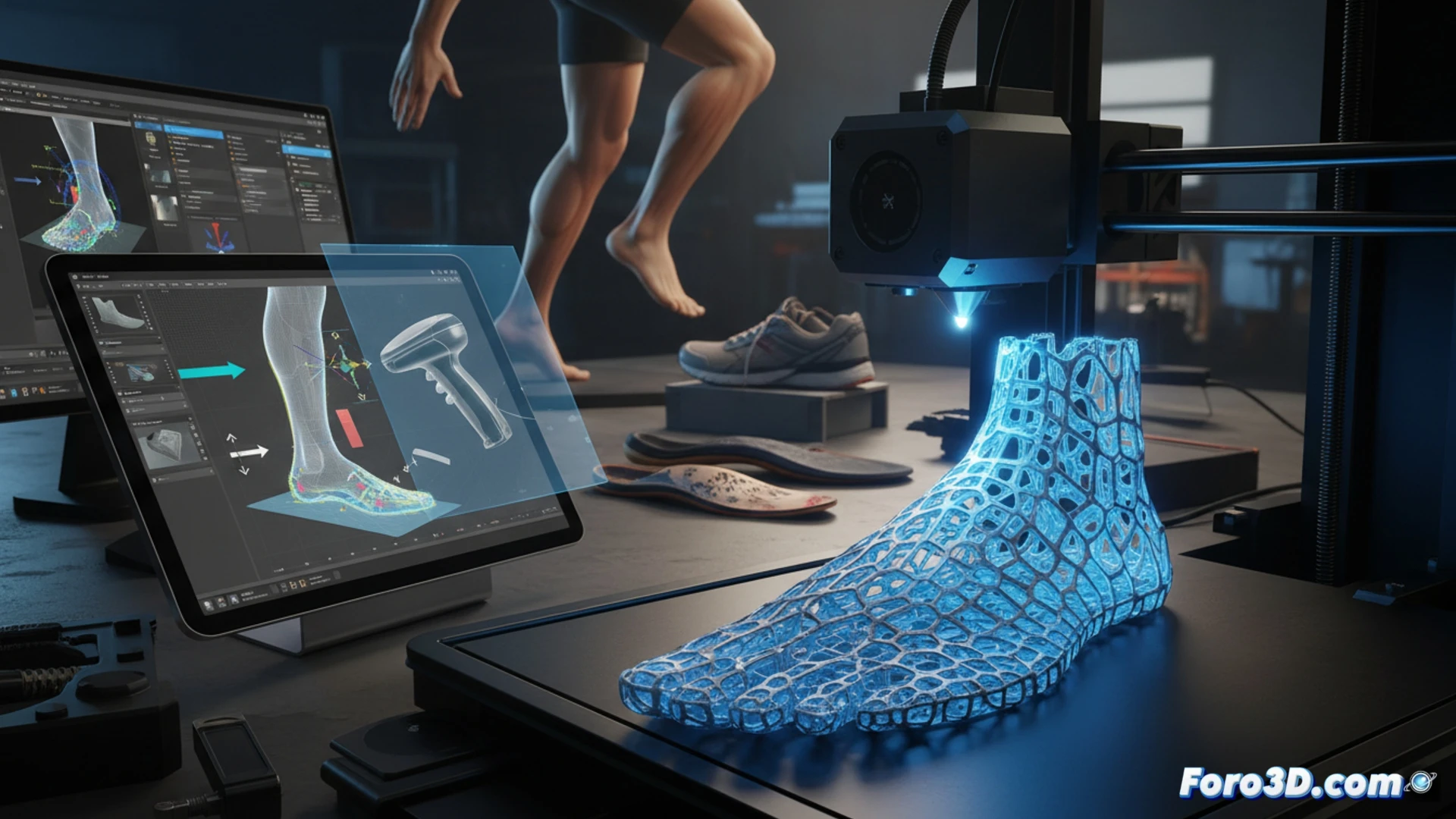
3D Scanner and Custom Support Design 🦶
The workflow begins with a handheld 3D scanner (like Einscan or Revopoint) to capture the geometry of the foot or joint. Then, CAD software such as Fusion 360 allows designing supports or splints that fit the user's biomechanics. The STL file is processed in a slicer like PrusaSlicer for printing with flexible (TPU) or rigid (PLA) filaments. This reduces trial and error time in selecting sports equipment.
When the Trainer Prints Their Own Gym 💪
Of course, you can also print kettlebells. But if you use cheap PLA, get ready for them to break mid-swing and end up explaining in the ER that a plastic kettlebell wasn't the best idea. Sure, the physio will thank you for the steady work. Good thing you can redesign the part in 10 minutes and blame the filament's humidity.