3D technology offers musicians tools to design and manufacture instrument parts, accessories, or modifications not found in stores. A clear example: creating a custom pick with an ergonomic grip. Programs like Blender or Tinkercad allow modeling, and an FDM or resin printer materializes the design. You save money and gain control over ergonomics.
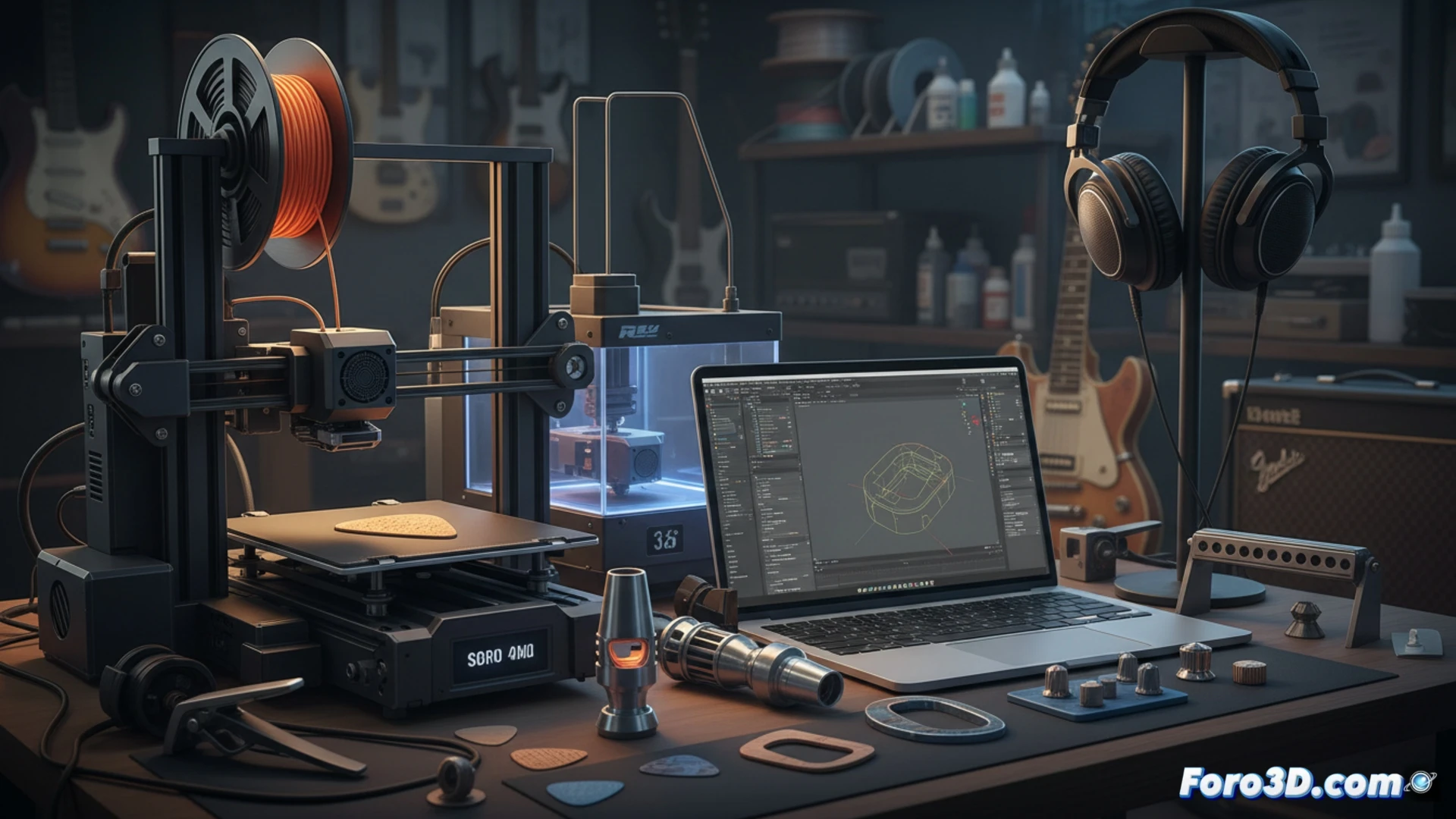
From digital model to functional part on your instrument 🎸
The process begins by measuring the actual instrument with a caliper. Then, in Fusion 360 or FreeCAD, the part is modeled adjusting tolerances of 0.2 mm. For example, a nut for an acoustic guitar can be printed in PLA or PETG. Slicers like Cura or PrusaSlicer are required to configure layers and infill. The result is a part that replaces factory components with acceptable durability, without needing stock.
Tuning with the wrong filament and a hammer 🔧
The problem comes when you print a nut and put it on the guitar. It sounds like rusty tin because PLA doesn't vibrate like wood. Then you try to sand it and break the fillet. Then you use superglue to stick the pieces together and get your fingers stained. In the end, the part ends up crooked and you go out of tune every three chords. But hey, at least you have a spare pick that melted from the heat in your pocket.