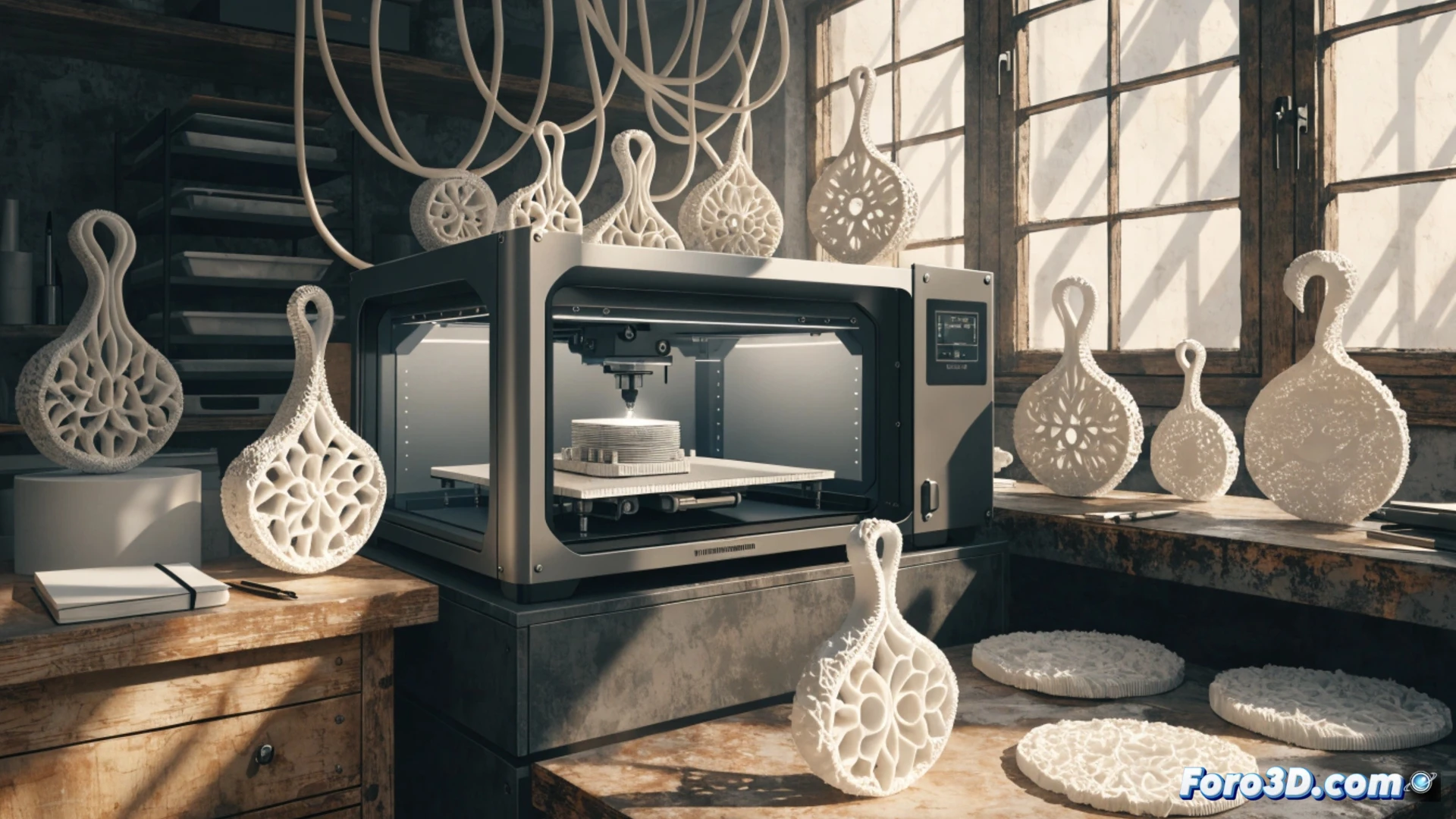
3D technology is transforming the textile operator's craft by enabling the rapid and cost-effective creation of prototypes for parts, accessories, and molds. For example, an operator can design and print a custom button or fastener for a broken sewing machine, avoiding long waits for spare parts. Programs like Blender or Fusion 360 are ideal for modeling these parts.
From physical pattern to parametric design 🧵
The key lies in digitizing components. With software like TinkerCAD or FreeCAD, the textile operator can measure a broken part, model it in 3D, and adjust it digitally before printing it in materials like PLA or PETG. This reduces machine downtime and enables precise repairs. Additionally, stops, guides, or sewing templates that are impossible to find in commercial catalogs can be manufactured.
The end of the hunt for the lost button 🧶
Tired of searching for that button or spare part that only exists in the manufacturer's mind? With 3D printing, the textile operator becomes a McGyver of machinery. Now you can print that crazy gear you've been waiting three months for, or make an adapter so your 1985 sewing machine works with modern thread. That said, don't try to print a thimble with flexible filament, or you'll end up with sticky fingers and no sewing done.