3D technology can assist gravediggers in planning and executing excavations. A clear example is the use of 3D scanners to map the terrain and avoid hitting pipes or previous coffins. This reduces errors and speeds up manual work, although it does not replace the shovel. ⚰️
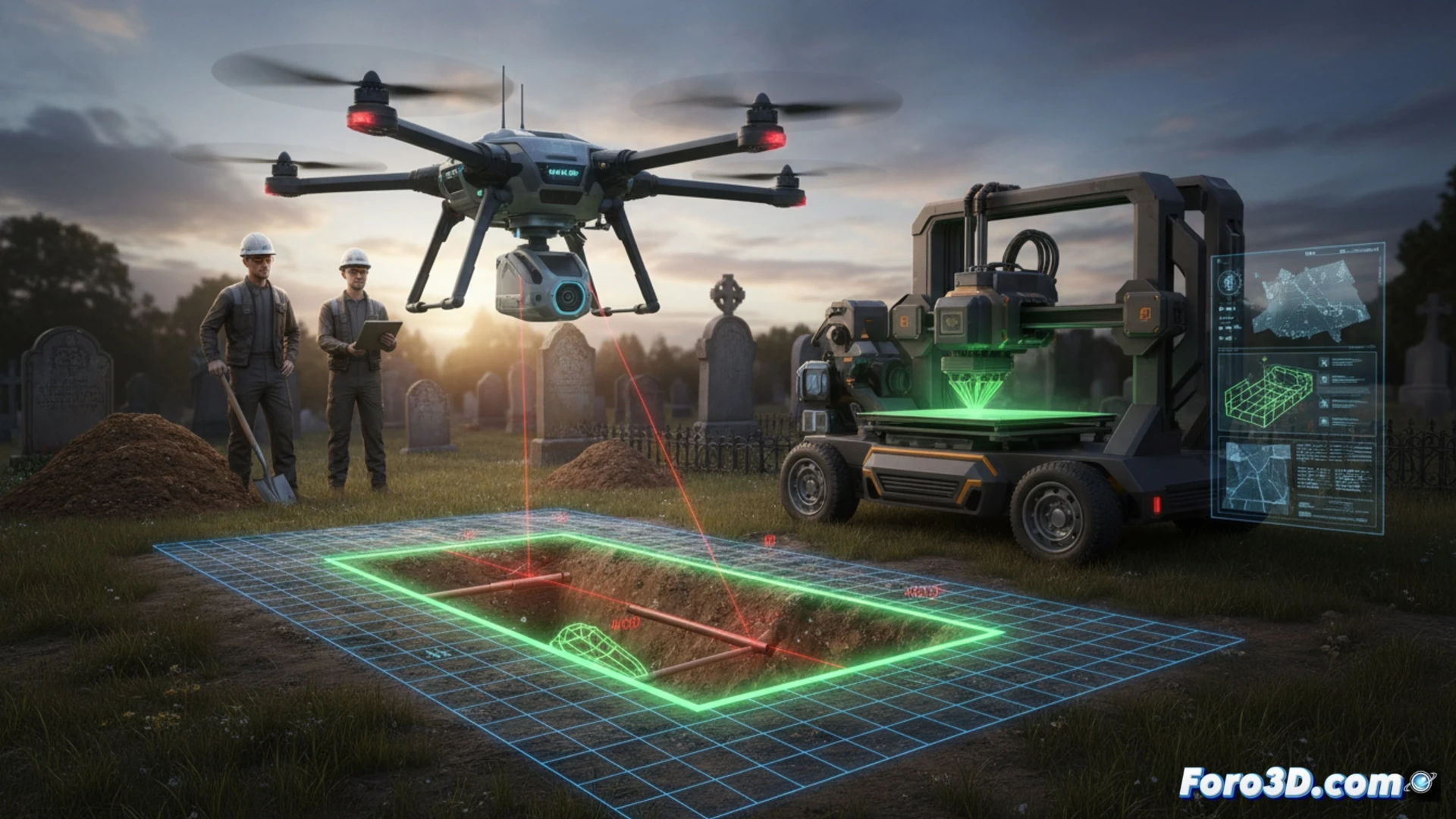
Topographic scanning and grave modeling 🗺️
To apply this technology, a 3D scanner such as the Leica BLK360 or FARO Focus is needed. With software like Autodesk ReCap or MeshLab, point clouds are processed to obtain a digital model of the subsoil. Then, design programs like SketchUp or Blender allow simulating the excavation and locating the grave with minimal margin of error. This is useful in cemeteries with a high density of burials.
When the drone helps you avoid digging twice 🚁
Imagine arriving at the cemetery with a drone equipped with LiDAR. Instead of blindly thrusting the shovel, you get a 3D map on your tablet. If you detect a coffin 20 cm away, you avoid a shock and a possible shared eternal rest. Of course, the client won't thank you, but your back will. Technology doesn't bury, but it prevents you from being buried in paperwork.