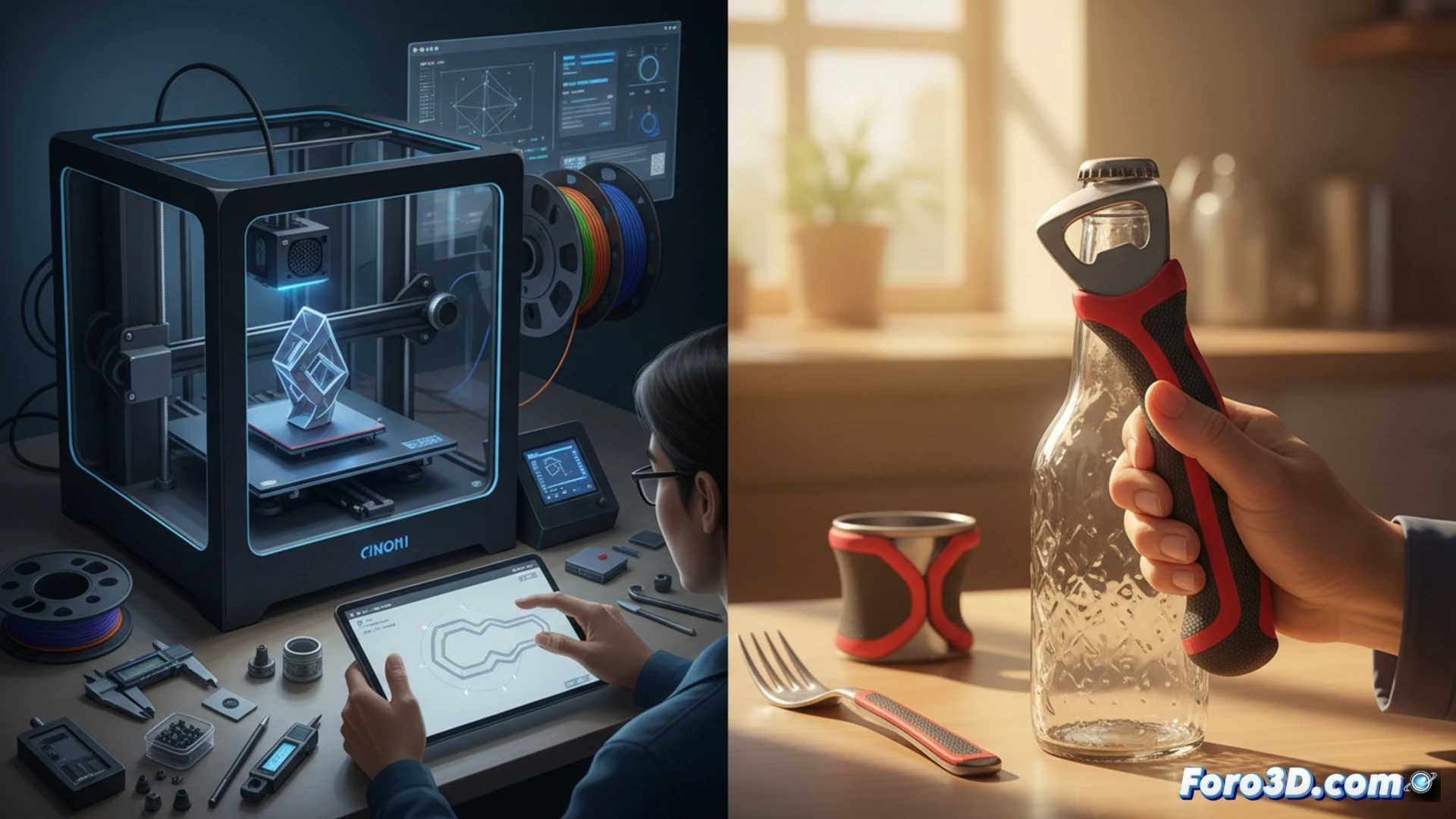
3D technology offers caregivers solutions to customize everyday objects. From adapting utensils to creating ergonomic supports, modeling and printing allow solving specific problems without relying on expensive commercial products. A clear example: manufacturing a bottle opener with an enlarged grip for people with arthritis.
Required software and basic workflow 🛠️
To design parts, use Tinkercad (free, online) or Fusion 360 (more professional). The model is exported in STL format and processed with a slicer like Cura or PrusaSlicer, which generates the G-code for the printer. A basic FDM printer (like the Ender 3) is sufficient for prototypes. The process: measure the need, design, slice, and print. Recommended material: PLA, easy to use and non-toxic.
When the caregiver becomes an engineer in the wee hours 😅
Because yes, nothing beats being at 3 a.m. calibrating the printer bed while the user sleeps peacefully. The real drama isn't that the parts fail, but that the filament runs out just when you need it most. But hey, at least you learn to curse in G-code and justify buying another printer as a health investment. The most productive hobby for not sleeping.