3D technology offers practical tools to optimize the work of orderlies in healthcare environments. From manufacturing stretcher supports to file organizers, three-dimensional printing allows for customizing solutions that improve daily routines. A clear example is the creation of non-slip stops for transport carts, adapted to narrow hallways. Programs like Tinkercad or Fusion 360 are useful for designing these parts without requiring an excessive learning curve.
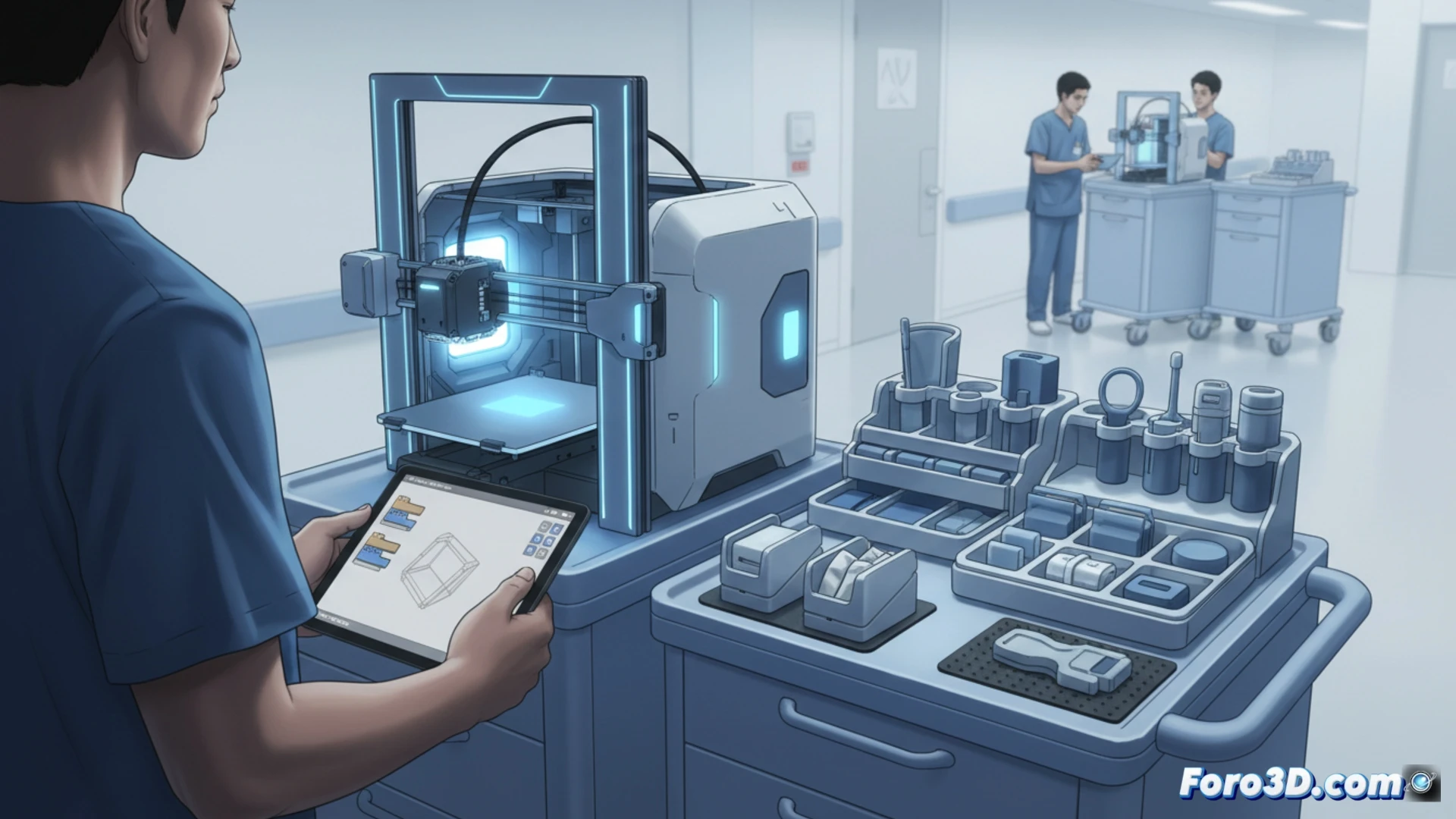
Design of 3D accessories for patient transport 🏥
The orderly can use parametric modeling software like FreeCAD to create adapters that secure monitors or infusion pumps to stretchers. These designs are printed in PLA filament, an economical material resistant to hospital disinfectants. With a basic 3D scanner, it is possible to capture measurements of specific spaces, such as elevator shafts, and generate custom parts. Precision prevents sudden movements during transport and reduces the risk of tripping over loose cables.
When the orderly becomes a hallway engineer 😅
If your boss asks you for an organizer for locker keys and you have no budget, 3D printing saves your skin. You design a support with a smiling face in Tinkercad and suddenly you are the hero of the night shift. Of course, don't try to print a replacement for the broken stretcher wheel; PLA doesn't forgive a sharp turn at 3 km/h. Better leave that to the real engineers and keep moving beds.