3D technology offers the blockchain specialist a tangible way to represent abstract concepts. By printing physical models of node or block structures, explaining consensus mechanisms to non-technical teams is made easier. A clear example is printing a chain of interconnected cubes that symbolize transactions, helping to visualize the immutability of the ledger.
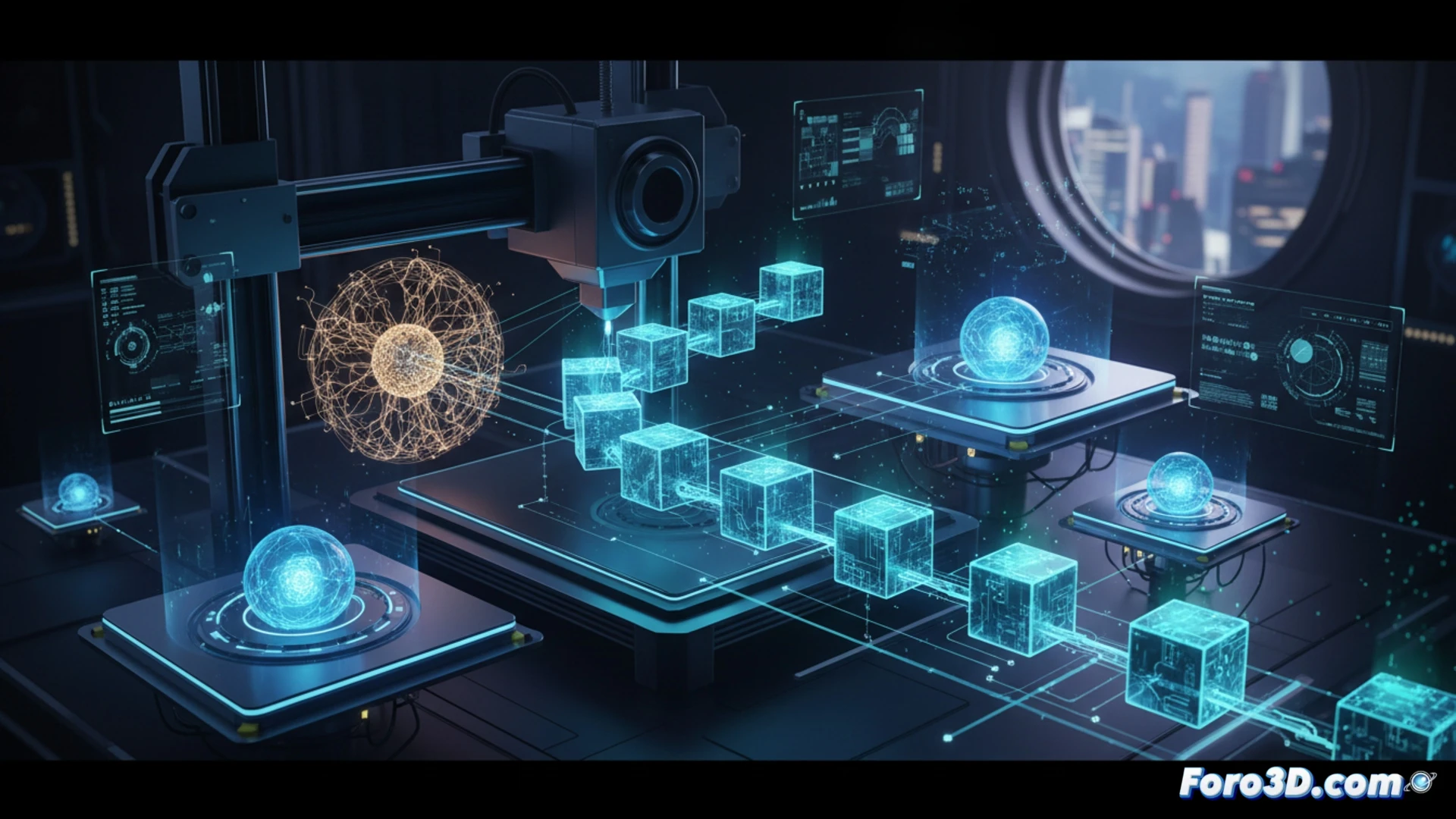
3D Modeling to Simulate Decentralized Network Architectures 🖨️
To apply this, modeling software like Blender or Fusion 360 is required to design representations of distributed nodes. Then, an FDM or SLA printer materializes those designs. The specialist can create mockups that show the topology of a blockchain network, identifying points of failure or data propagation paths. This is useful in presentations or when teaching concepts like sharding or forking, where a physical object clarifies what a 2D diagram fails to convey.
When Your Blockchain Gets Printed and the Support Fails 😅
I tried to explain proof of work to my boss with a printed mockup. The hash cube came off mid-meeting and rolled across the table. My boss picked it up, looked at it, and said: This is more stable than your network. At least the physical model of an orphan block served to justify the budget for more filament. The irony of trying to make the digital tangible.