Researchers at the CU Anschutz School of Dental Medicine are exploring multimaterial 3D inkjet printing to manufacture dentures. The method aims to improve the precision and durability of prosthetics, overcoming the limitations of traditional techniques that require multiple manual steps and rigid materials.
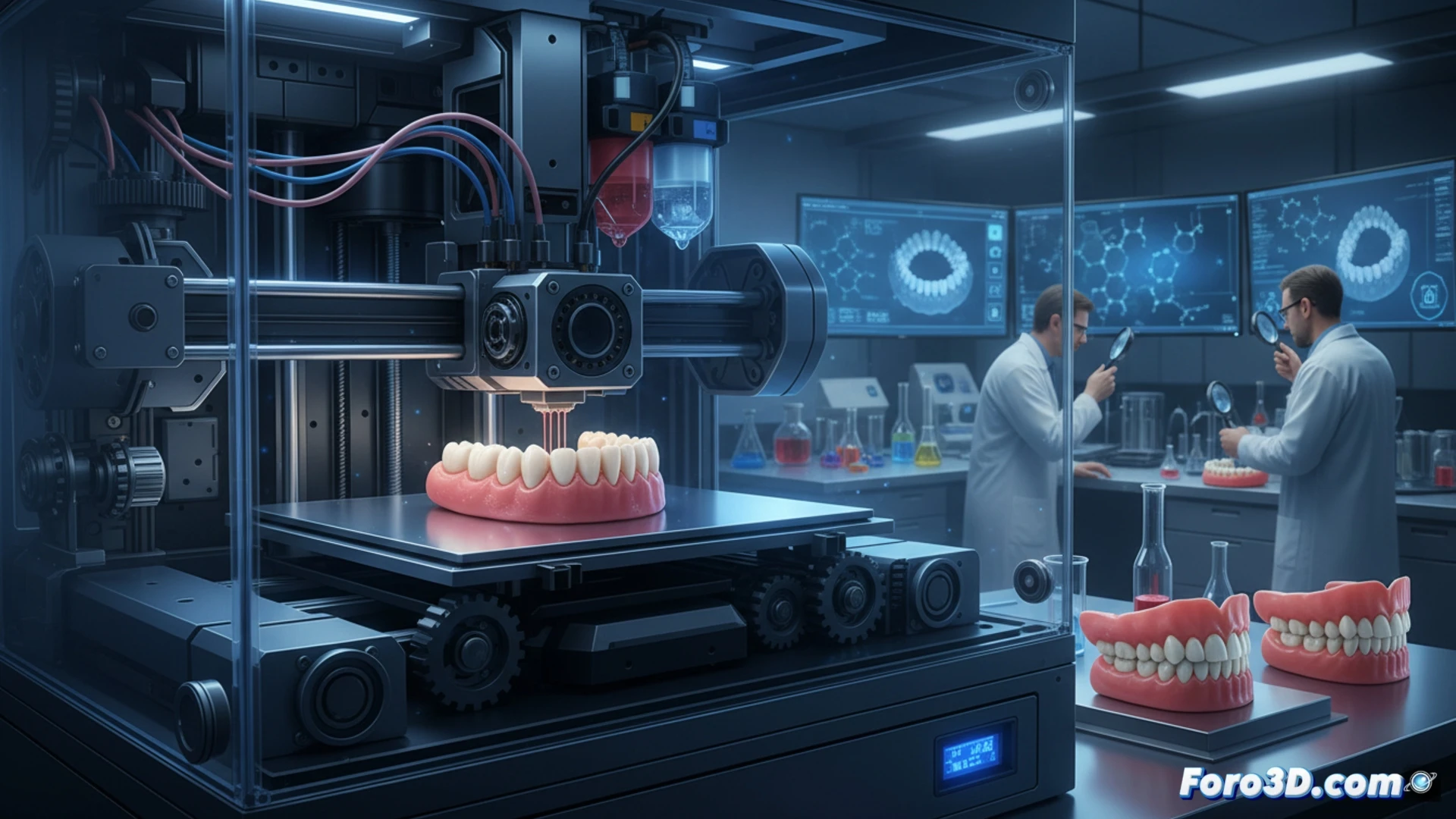
How multimaterial inkjet printing works 🦷
The technology combines different resins in a single print, depositing layers that mimic the texture of the gum and the hardness of the tooth. This eliminates the need to join separate pieces. The process allows controlling porosity and color in specific areas, achieving a more natural fit. Researchers state that the method reduces production time and common human errors in manual modeling.
Goodbye to the bite test 😁
Patients who have tried traditional molds know that biting into a plaster paste tastes like punishment. With this technique, the dentist only needs a digital scan and the printer does the rest. Of course: if the machine jams, the patient will have to wait for their denture while the technician reboots the system. At least they won't have to spit out pieces of plaster during the process.