Engineers in the United States have created large-scale turbines using 3D printing, designed to capture hydroelectric energy that is currently wasted in dams and canals. This technology allows for the manufacturing of larger, more adaptable components for existing infrastructure, with the potential to harness up to 29 GW. The process reduces costs and time, facilitating installations that were previously unfeasible.
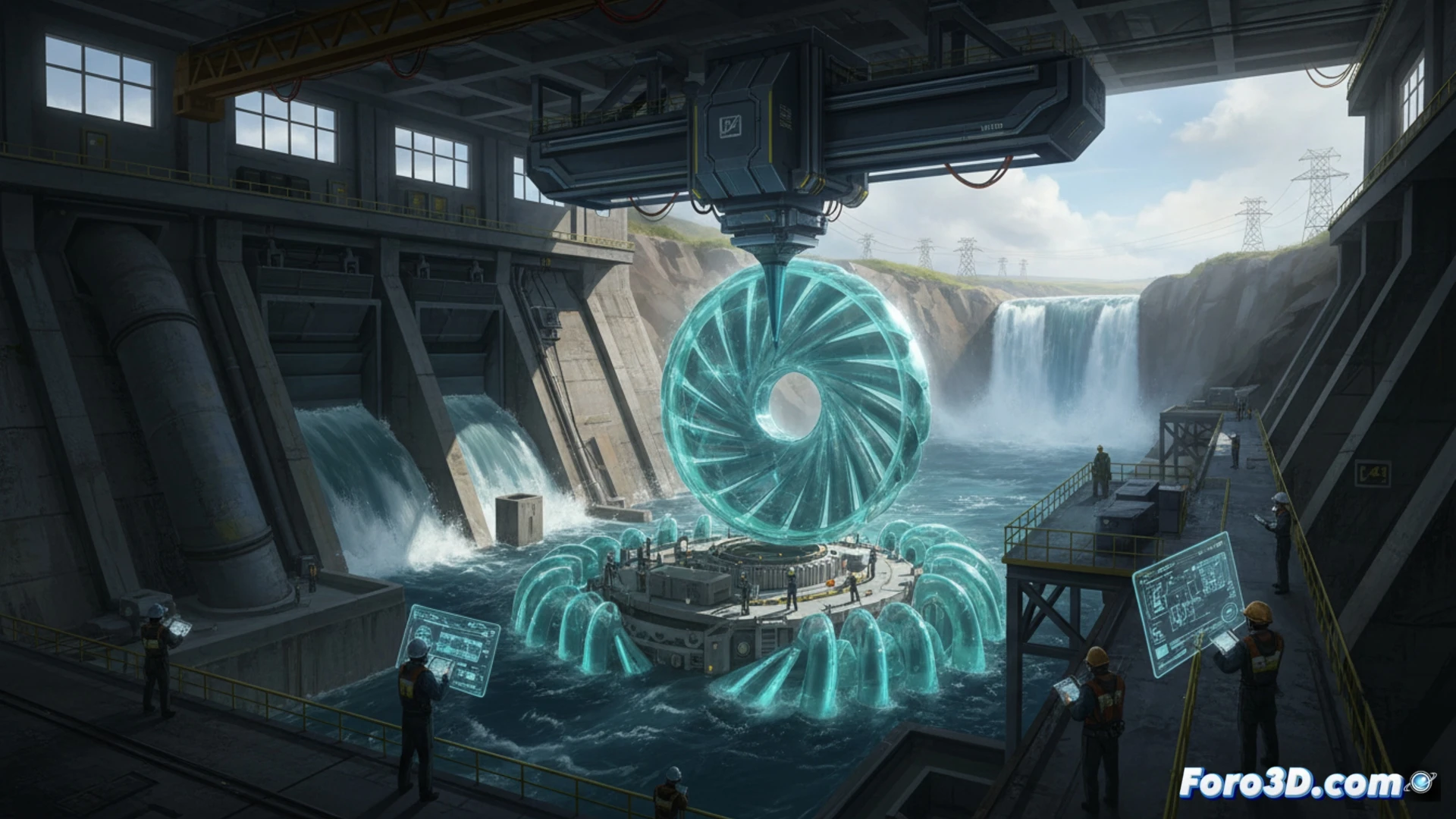
Additive manufacturing that pushes the limits of conventional turbines ⚙️
3D printing allows for the construction of turbine blades and rotors with complex shapes that traditional methods cannot achieve, optimizing water flow. Made from composite materials, these components withstand high pressures and integrate into dams without major structural modifications. Each turbine is specifically designed for the site's flow rate and head, maximizing efficiency. By eliminating molds and castings, the cost per unit is reduced, and production timelines go from months to weeks. This opens the door to harnessing small waterfalls or irrigation canals that previously did not justify an investment.
When your next electricity bill depends on a giant piece of plastic 💡
Now it turns out that the energy solution of the future is manufactured on a printer that looks like a toy, but is the size of a truck. While some argue about whether solar panels are ugly, these engineers are printing river propellers to turn every irrigation canal into a mini power plant. The only thing missing is for someone to also print a giant plug to connect everything to the grid. And watch out, if the printer jams, the town will be left in the dark watching Netflix on their phones.