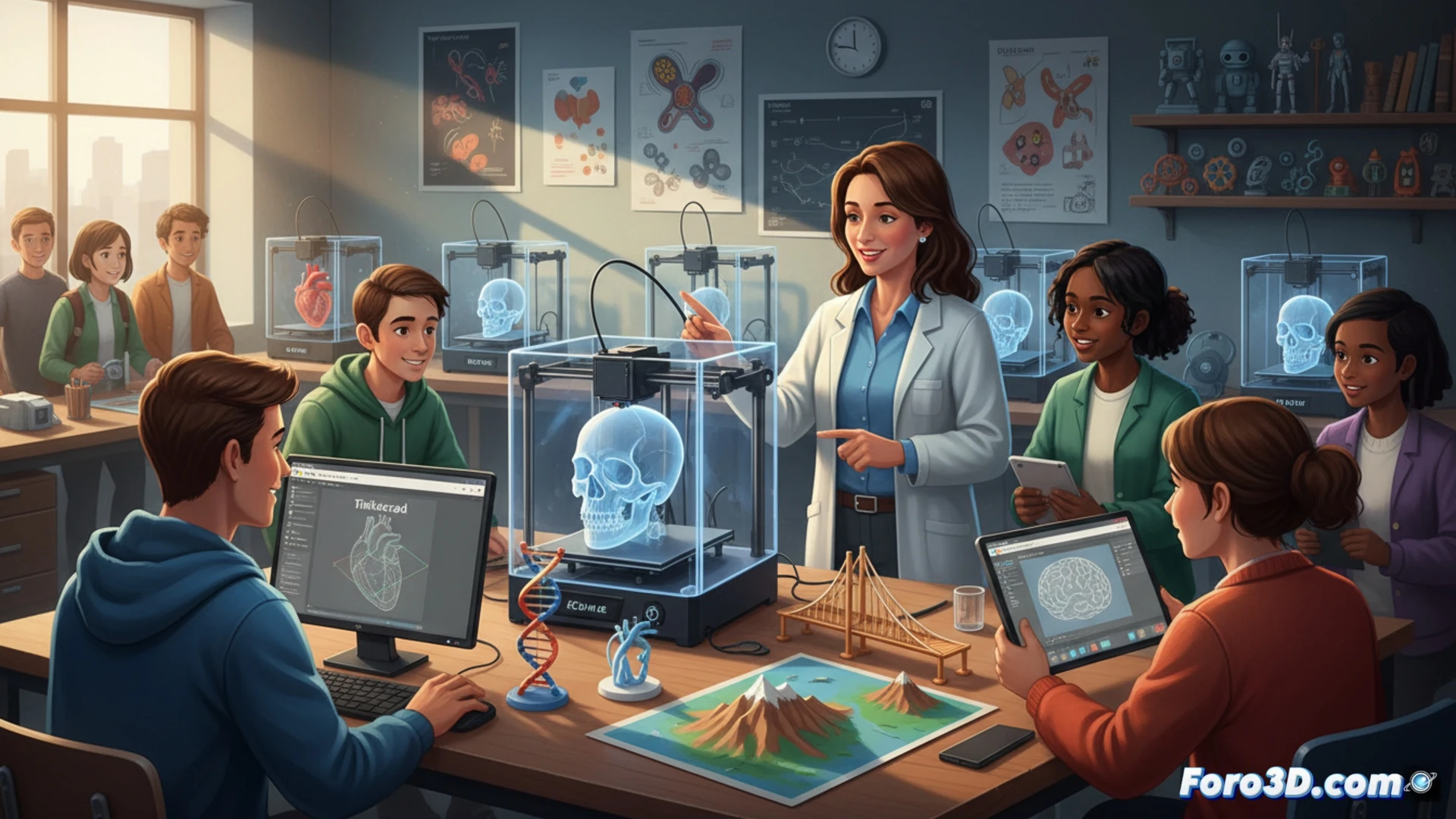
3D technology allows high school teachers to transform abstract concepts into physical models. A clear example: in biology class, a teacher can print a human skull to study its parts without relying on donations or plastic pieces from a catalog. Required software: Tinkercad for basic design, Cura to prepare the print, and Blender for more complex models.
Technical workflow for the classroom 🛠️
The process starts with Tinkercad, where the teacher designs the piece in 15 minutes. It is then exported to STL format and opened in Cura to adjust parameters such as a 0.2 mm layer height and 15% infill. The printer, a common Ender 3, takes about 4 hours to complete the skull. PLA filaments are used, which are cheap and safe. The result is a tangible object that students touch, measure, and rotate, improving spatial understanding.
When the printer decides to go on strike in the middle of class 😅
Everything goes smoothly until the filament jams just as you are explaining the temporal bone. The students look at you as if you had summoned a plastic demon. You grab the pliers, disassemble the hotend, and pray it doesn't break. Meanwhile, a student suggests you should just use playdough instead. You have two options: pretend it's part of the lesson plan or promise that next class you'll bring cookies to sweeten the chaos.