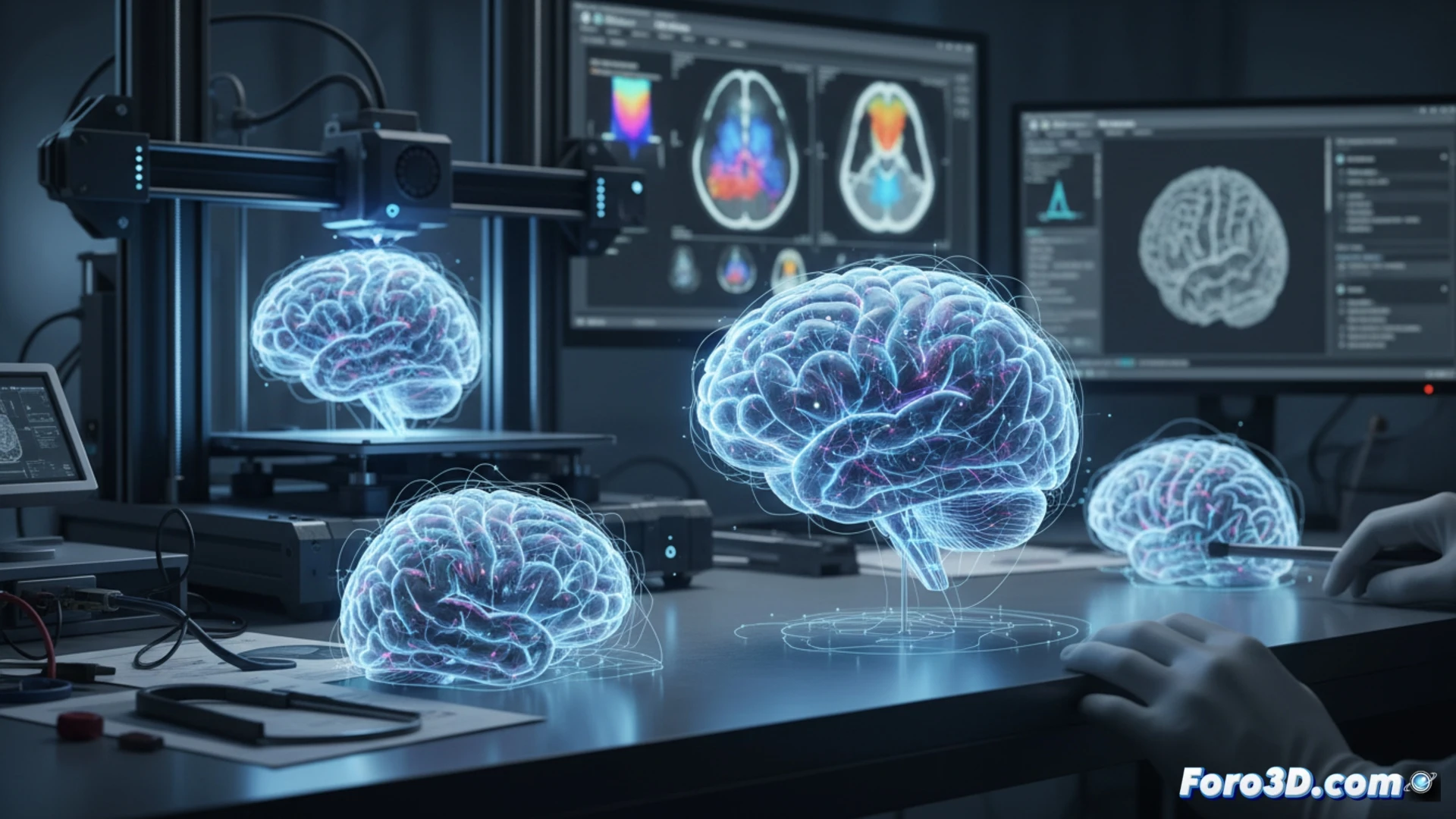
3D technology provides psychiatrists with visual tools to explain neurological disorders. For example, printing anatomical brain models allows them to point out areas affected by schizophrenia or OCD. An MRI scanner and segmentation software like 3D Slicer are needed to convert medical data into printable files.
How to create brain models from patient data 🧠
The process begins with an MRI scan of the patient. The psychiatrist uses free software like FreeSurfer to segment structures such as the amygdala or hippocampus. Then, with Meshmixer, the mesh is cleaned and exported to STL. The FDM 3D printer, using colored PLA, materializes the pathological areas. This helps in therapy to show the patient the physical origin of their symptoms.
The couch becomes tangible (and doesn't break when it falls) 🛋️
Now the psychiatrist not only listens to their obsessions but hands them a plastic brain. The patient touches it and says: Wow, here's the disorder. The downside is that if they don't like the diagnosis, they might try to bite the piece. But at least, unlike a couch, this model doesn't collect dust or require you to lie down to feel judged.