3D technology has transformed the biomedical engineering profession by enabling the manufacture of customized devices for each patient. Using scanners and 3D modeling, prosthetics, implants, and surgical guides are designed to fit with anatomical precision, reducing surgery times and improving recovery. A clear example is cranial helmets for babies with plagiocephaly.
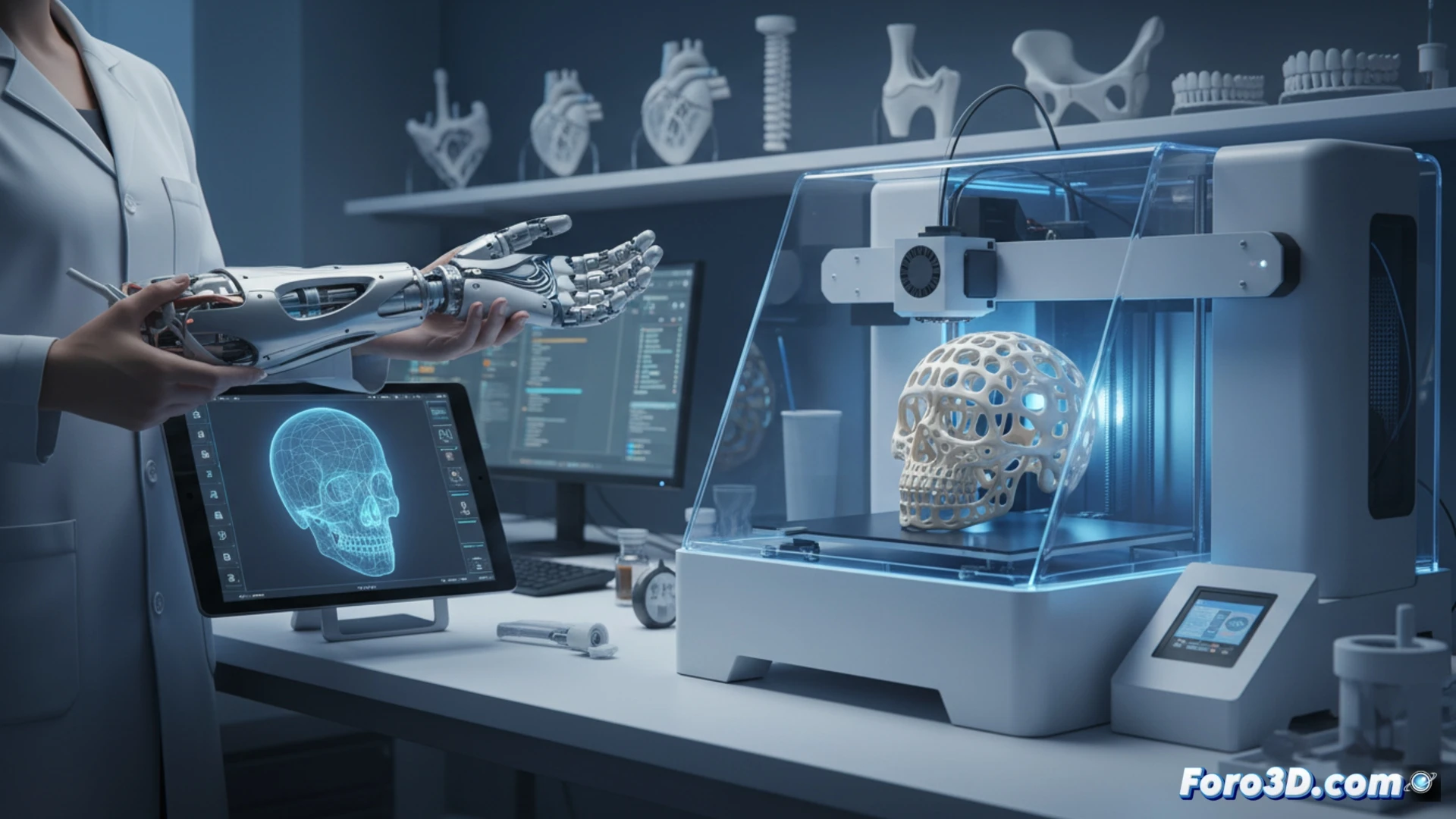
From scanner to operating room: digital workflow 🏥
The process begins with a 3D scanner (such as Artec Eva) to capture the patient's morphology. Using CAD software like Blender or SolidWorks, the implant or prosthesis is modeled. Then, stress simulation is performed in Ansys or Abaqus to verify strength. Finally, it is 3D printed with biocompatible materials such as titanium or PEEK. Programs like Mimics or 3D Slicer help segment medical images to create accurate models.
And you used a shoehorn to put on your brace 😅
Before, if you were lucky, they would give you a generic prosthesis that looked like a clown shoe. Now the biomedical engineer scans you, models you, and prints an exact replica of your bone. The downside is that if you lose the piece, you won't find a replacement at the corner hardware store. And forget about blaming the shoehorn: now the error is always the software's fault.