3D technology is transforming applied genetics. It enables the creation of customized cellular scaffolds for tissue cultures. A technician can replicate a patient's bone structure to test gene therapies before implanting them. Programs like Blender are used for modeling and Cura for slicing STL files.
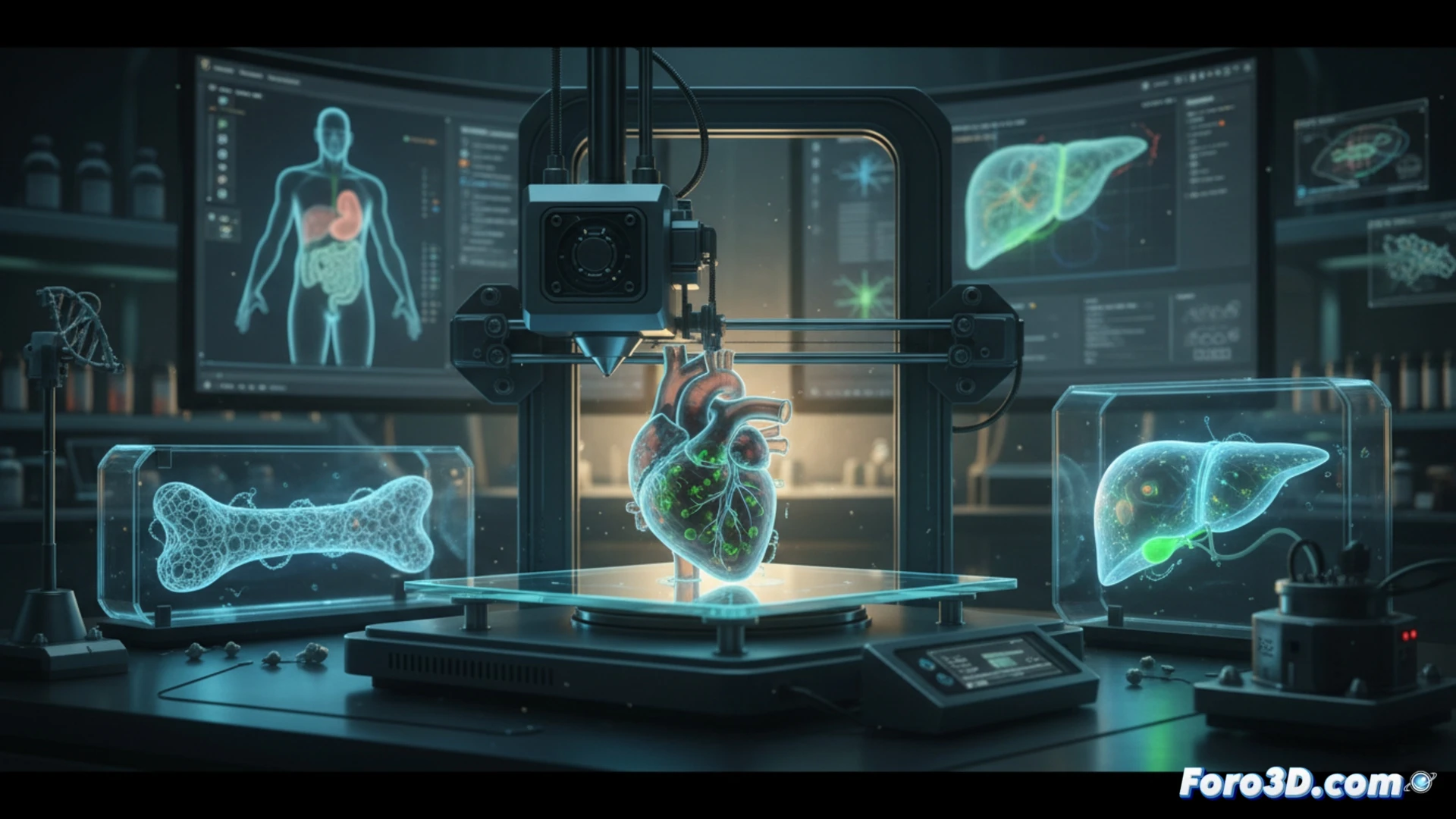
Molecular modeling and bioprinting step by step 🧬
The workflow begins with data from CT scans or MRIs. Those DICOM files are converted to STL using software like 3D Slicer or InVesalius. They are then edited in MeshMixer to clean up imperfections. Bioprinting uses hydrogel inks with living cells. Printers like the CELLINK BIO X allow depositing layers with micrometric precision, creating matrices where cells differentiate according to genetic instructions.
When your replacement kidney is printed before your coffee ☕
The genetics technician now faces a dilemma: explaining that the spare kidney didn't come from the organ bank, but from a printer that also makes dragon figurines. And of course, if the bioprinter jams, the patient is left waiting while you clean the print head with alcohol. But hey, at least the organ comes in whatever color you choose, as long as it's flesh red.