Traditional pharmacy relies on magistral formulas and generic tablets, but 3D technology allows for the personalization of each medication. With a printer and appropriate software, a pharmacist can manufacture exact doses for each patient, adjusting shape and flavor. This improves treatment adherence, especially in children or people with difficulty swallowing pills. A clear example: creating a tablet with controlled release of three different drugs in a single dose.
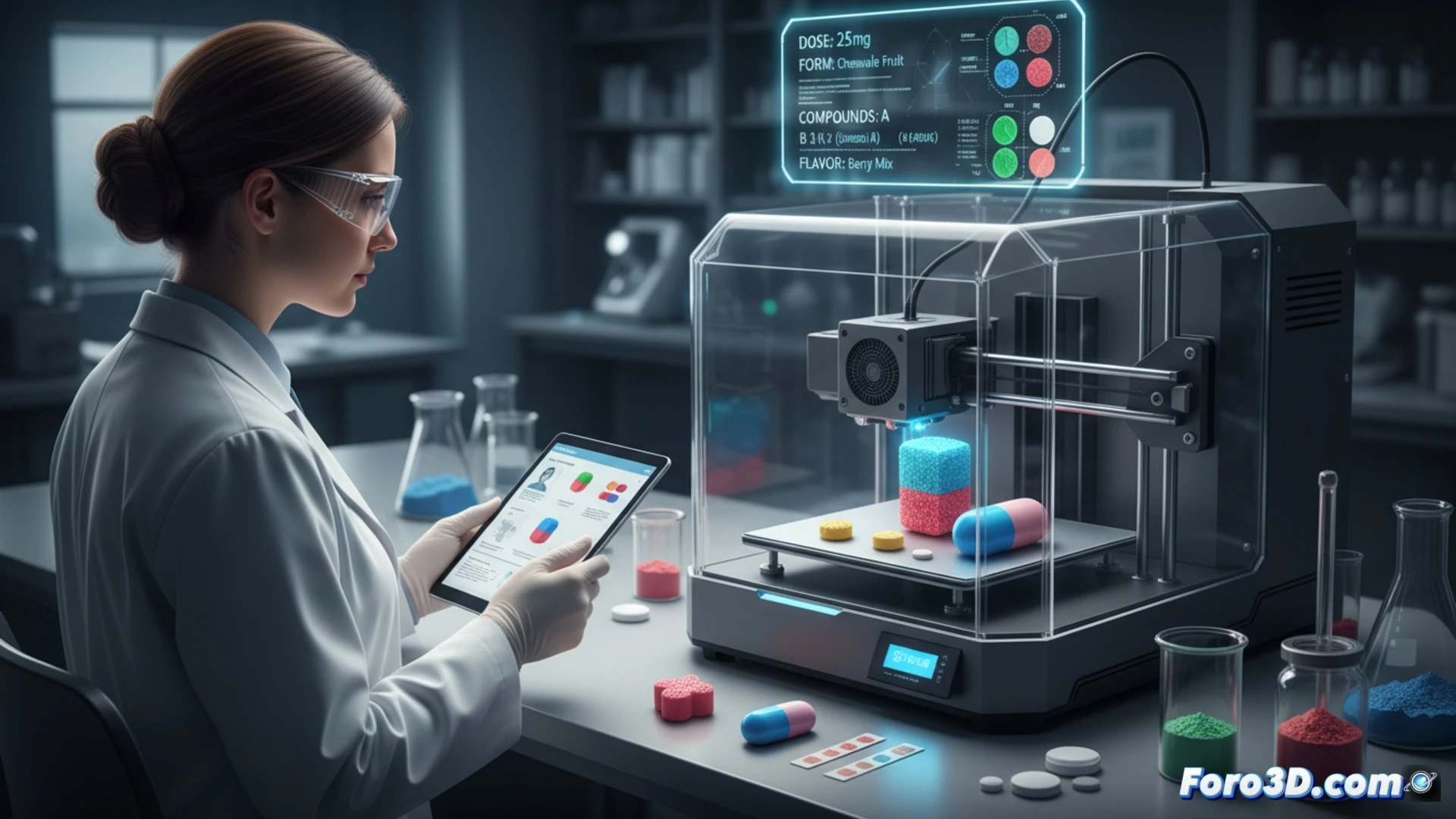
Digital workflow for the pharmaceutical laboratory 🧪
The process begins with the 3D design of the tablet in programs like Blender or Fusion 360, where the geometry and porous structure are defined. Then, a slicer (Cura or PrusaSlicer) is used to generate the printing layers. The printer, ideally extrusion-based (FDM) with an interchangeable nozzle, deposits pharmaceutical filaments loaded with the active ingredient. Quality control requires a precision scale and a dissolution analyzer. No space laboratory is needed, just an orderly workflow and approved materials.
Goodbye to pills that look like bricks 🦖
Tired of patients telling you their medication looks like a chalk suppository? With 3D printing, you can design dinosaur or star-shaped pills. Of course, you'll then have to explain they're not candy, but that's the pediatrician's problem. The fun part comes when the patient asks if they can order their dose in the shape of a spaceship. The answer is yes, but with a prescription and no piloting.