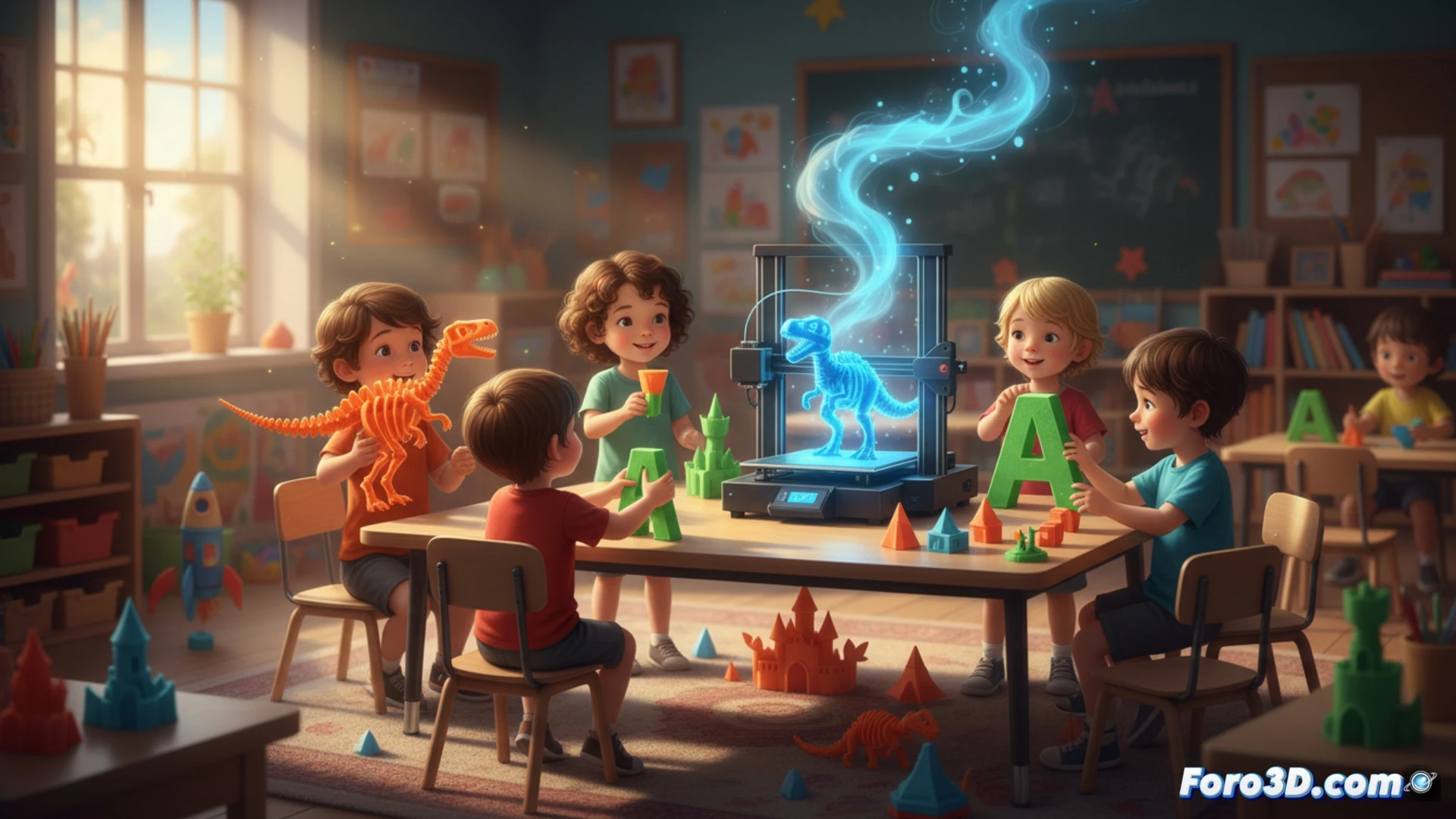
3D technology offers early childhood educators a way to turn abstract concepts into tangible objects. A child can touch a dinosaur, a planet, or a letter of the alphabet that comes out of the printer. This facilitates sensory understanding and motivates learning. It's not about replacing play, but about expanding teaching resources with tools that the teacher can customize according to the group's needs.
Basic workflow: from design to the classroom 🖨️
The process starts with simple modeling software like Tinkercad, ideal for creating basic shapes without complex curves. It is then exported in STL format and prepared with a slicer like Ultimaker Cura, which calculates layers and print times. An FDM printer using PLA filament (safe and without strong odors) is the standard choice. To scan real objects, the Structure Sensor or apps like Qlone allow digitizing existing toys. The printing time for a small piece is around 30 minutes.
The day I printed a desk and ran out of ink 😅
I tried to model a scale chair for the little ones' class. After two hours of printing, the result was a wobbly stool that was only good for a Lego figure to sit on carefully. The kids used it as a catapult. The moral is that not everything you design on the screen works in reality, but at least you learn not to underestimate the law of gravity or the patience of a filament that gets jammed.