A team from the University of Colorado Boulder has achieved a milestone in biofabrication by 3D printing structures capable of emitting cyan blue light for 25 minutes. The secret lies in the unicellular algae Pyrocystis lunula, encapsulated in hydrogel. Researcher Giulia Brachi discovered that a slightly acidic solution activates bioluminescence in a sustained manner, overcoming the limitations of mechanical stress used in previous attempts. This breakthrough allows for creating shapes like crescent moons that glow without electricity. 🌙
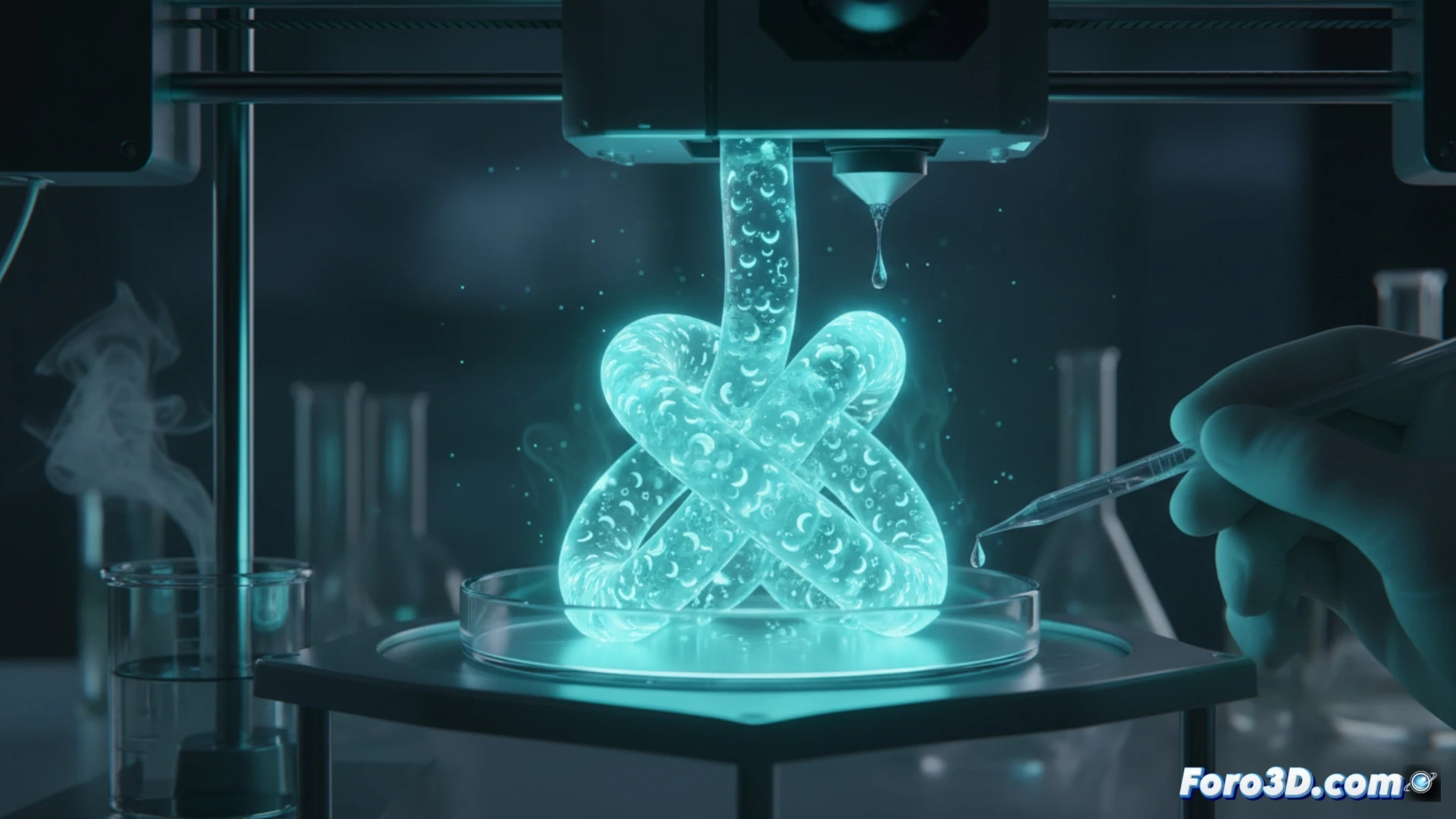
Chemical activation mechanism and hydrogel encapsulation 🧪
The technical process is based on the enzymatic reaction between luciferase and luciferin within the algae. By adding an acidic solution, the pH of the hydrogel is altered, triggering a biochemical cascade that continuously produces photons. 3D printing allows for homogeneous distribution of the algae within the polymer matrix, maintaining their cell viability. This contrasts with previous methods where the light was brief and erratic. The printed structure acts as a passive bioreactor, where the hydrogel protects the cells while allowing nutrient exchange and chemical stimulation. 3D diagrams of the luciferase-luciferin mechanism show the molecular interaction in real-time, facilitating understanding in educational settings.
Future applications in biological signaling and sensors 🔬
This method opens the door to environmental sensors that glow upon detecting pollutants or pH changes in water. It could also be used in biological signaling to mark tissues in cell cultures or as ephemeral lighting in medical devices. The key advantage is sustainability: the algae are renewable and require no batteries. However, the challenge remains to extend the light duration beyond the current 25 minutes. Scientific visualization of this phenomenon through 3D models helps disseminate it both in laboratories and classrooms.
What implications does the use of 3D-printed hydrogels containing living algae capable of sustained light emission have for real-time biological data visualization?
(PS: if your manta ray animation doesn't excite, you can always add documentary music from channel 2)