3D technology offers tools for customizing adaptations and splints in occupational therapy. It allows for designing custom objects that facilitate daily tasks for patients with reduced mobility. A clear example is the creation of an ergonomic handle for a toothbrush, adapted to the user's hand. Necessary programs include Tinkercad for basic design and modeling software like Fusion 360 for more complex parts.
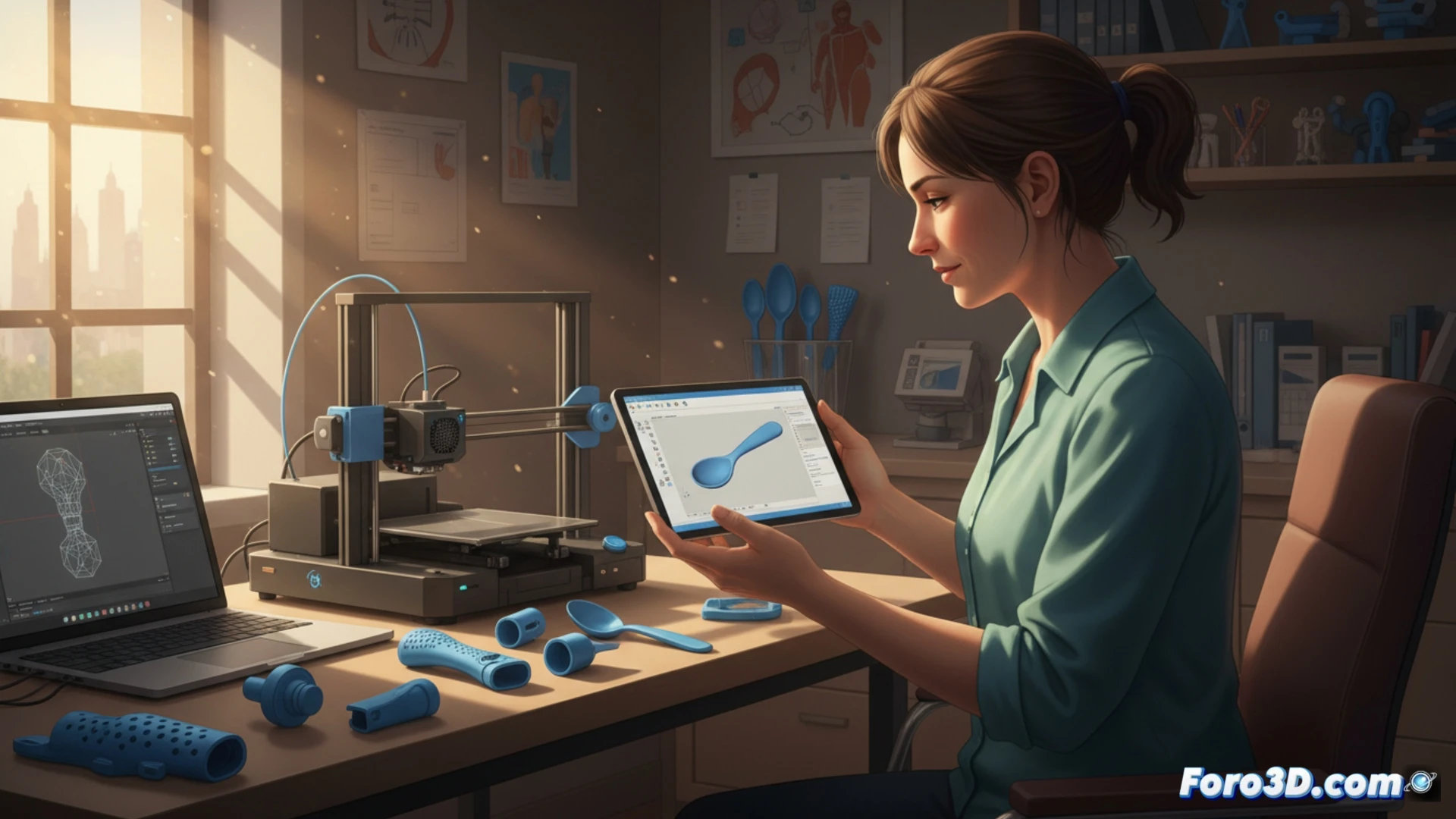
Software and design of functional splints 🛠️
The workflow begins with capturing measurements through 3D scanning or photogrammetry. The splint or adaptation is then modeled in programs like Blender or Meshmixer, which allow adjusting curvatures and thicknesses. Printing is done with filaments such as PLA or PETG, materials that offer rigidity and lightness. The therapist can quickly iterate designs, testing prototypes without relying on external workshops, reducing costs and delivery times.
When the printer decides to do yoga 🤸
Sure, it all sounds great until the 3D printer, in the middle of a thumb splint, decides it's a good time to make a layer of plastic spaghetti. The patient looks at you with a puzzled expression while you pretend it was part of the creative process. But hey, between restarting the print and explaining that the layer error is a design feature, at least you buy yourself time to grab a coffee.