3D technology does not replace the classic printer, but rather gives them tools to expand their craft. Where before only ink on paper was used, now matrices, rollers, and spare parts for old presses can be created. A clear example: manufacturing a worn-out ink roller with an FDM 3D printer using flexible filament, avoiding months of waiting for an original spare part.
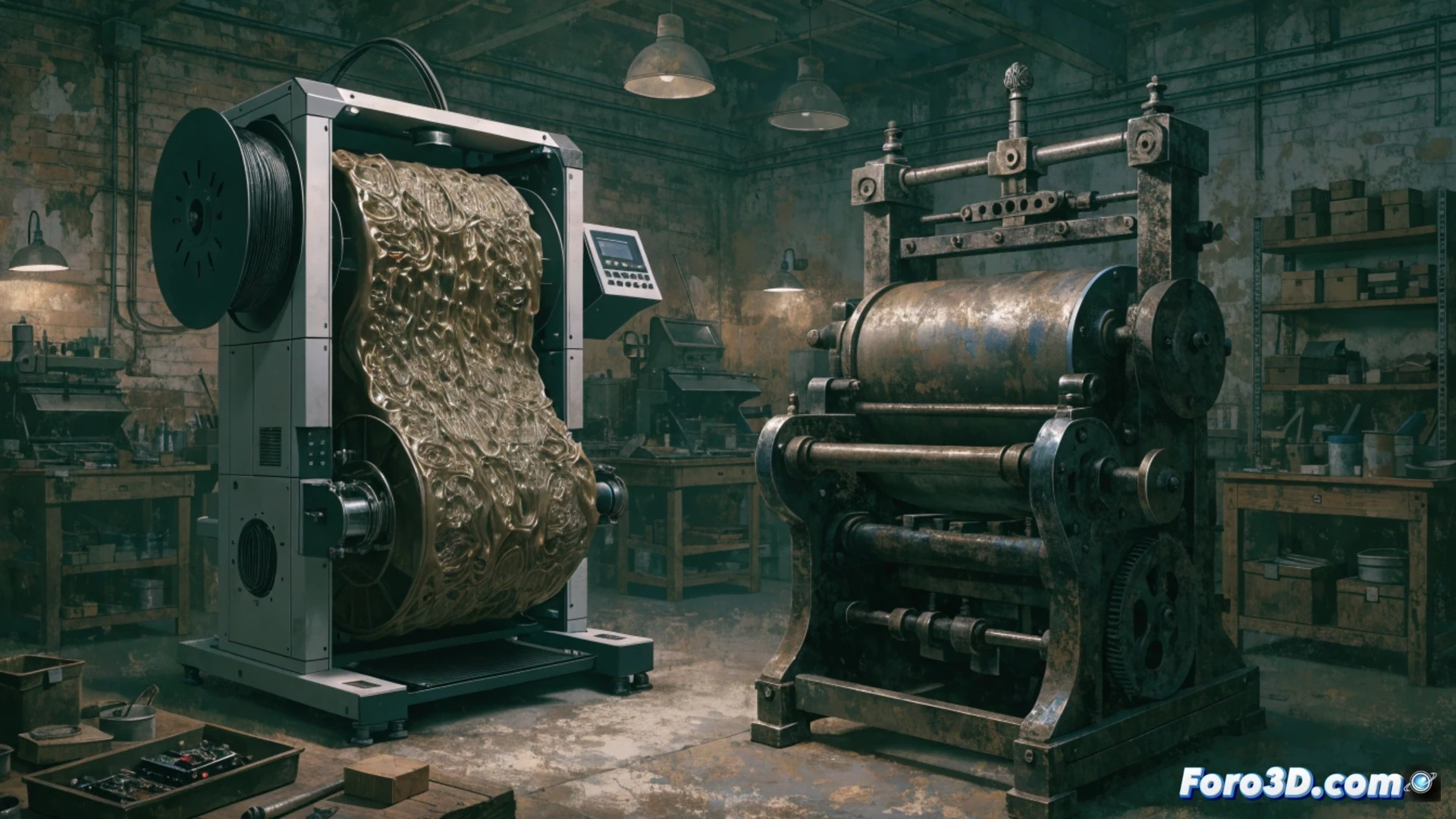
From the galley proof to the 3D model: technical workflow 🛠️
To integrate additive manufacturing, the printer needs parametric modeling programs like Fusion 360 or FreeCAD to design the parts. Then, a slicer like PrusaSlicer or Cura converts the design into printable layers. The printer, whether FDM with PLA or PETG for functional parts, or resin for fine details, materializes the object. The process requires measuring the original parts with a caliper and adjusting tolerances of 0.2 mm for a precise fit in the press.
Goodbye to the spare parts workshop, hello to recycled filament ♻️
Before, when a press part broke, the printer would call a supplier, wait three weeks, and pay an arm and a leg for the replacement. Now, with a 3D printer and a spool of filament, they become their own supplier. The only risk is that, after printing a support for the platen, the boss might mistake it for a modernist paperweight and auction it on eBay. But hey, at least the ink roller works.