Life at sea requires solving problems with what you have on hand. A broken plastic piece in the bilge pump or a lost valve handle can become a headache. 3D technology allows sailors to manufacture these spare parts directly on the ship, using digital models and a filament printer. Dependence on ports and warehouses is reduced.
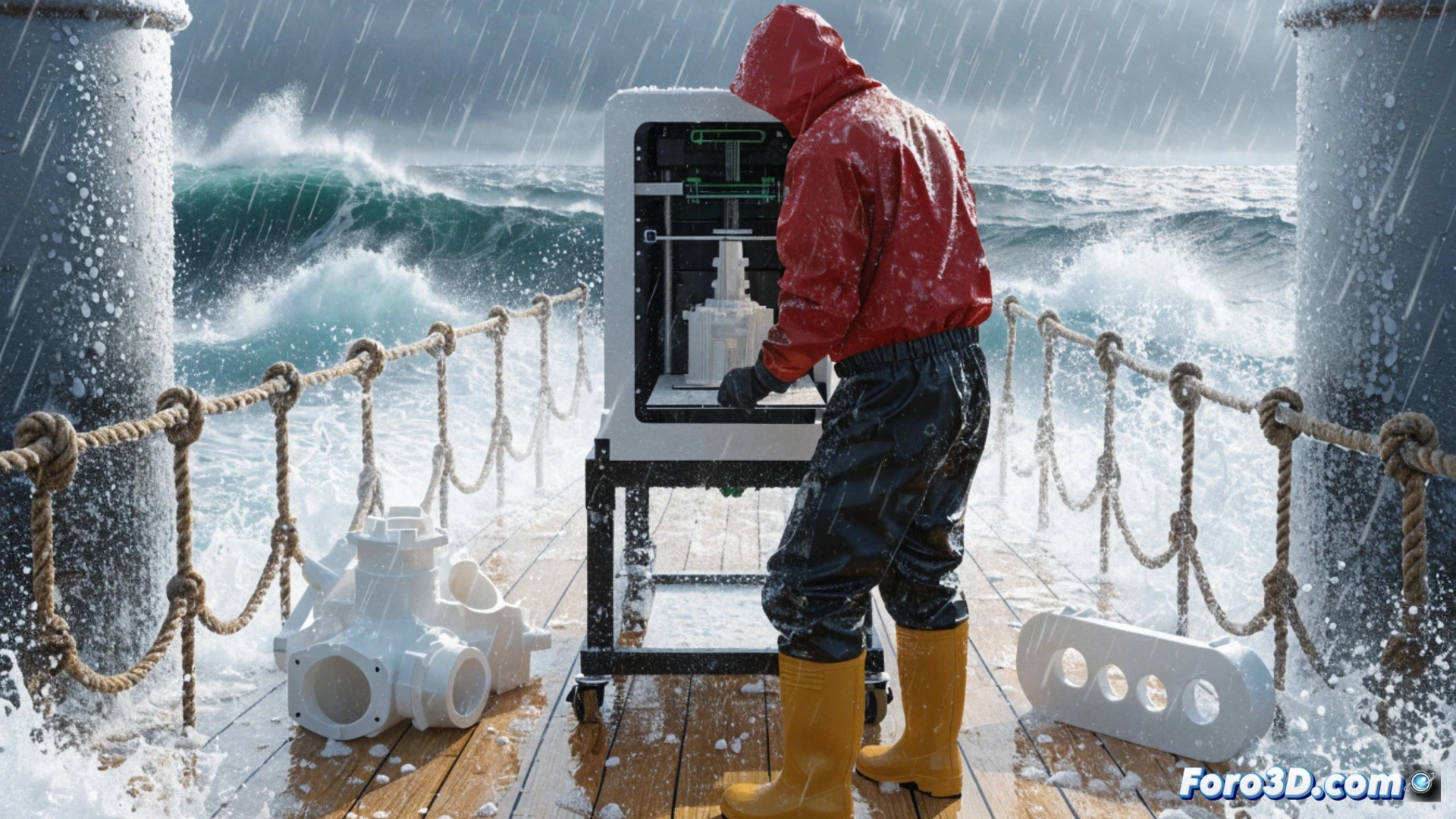
From STL file to the bridge: naval design and manufacturing 🛠️
To start, you need a portable 3D scanner or modeling software like Fusion 360 or Blender to capture the geometry of the original part. Then the STL file is adjusted in a slicer like Cura or PrusaSlicer, defining layers, infill, and material (PETG or ASA for outdoors). The printer, a Creality Ender or Bambu Lab X1, is placed in a dry, ventilated cabin. The process takes hours, but allows you to have a functional spare part without waiting weeks for the next port.
The maker sailor: when you print the faucet and get a buoy 😅
Of course, not everything is smooth sailing. The first attempt to print a steering wheel handle can end up with a piece that looks like a melted octopus. And if the printer decides to lose calibration during a storm, you'll have more entertainment than an episode of The Simpsons in the engine room. But hey, between having a functional part and spending the rest of the trip tying knots with duct tape, I prefer arguing with the slicer.