In the world of orthopedics, the best implant is not the strongest, but the one the body decides to ignore. Matthew Shomper, founder of Not a Robot Engineering, made it clear at the AMA: Healthcare 2025 event: the technology to create implants that mimic bone biomechanics already exists, but regulatory bureaucracy is slowing its arrival to patients. The key is understanding that bone thrives on mechanical load; if an implant is too rigid, the bone resorbs.
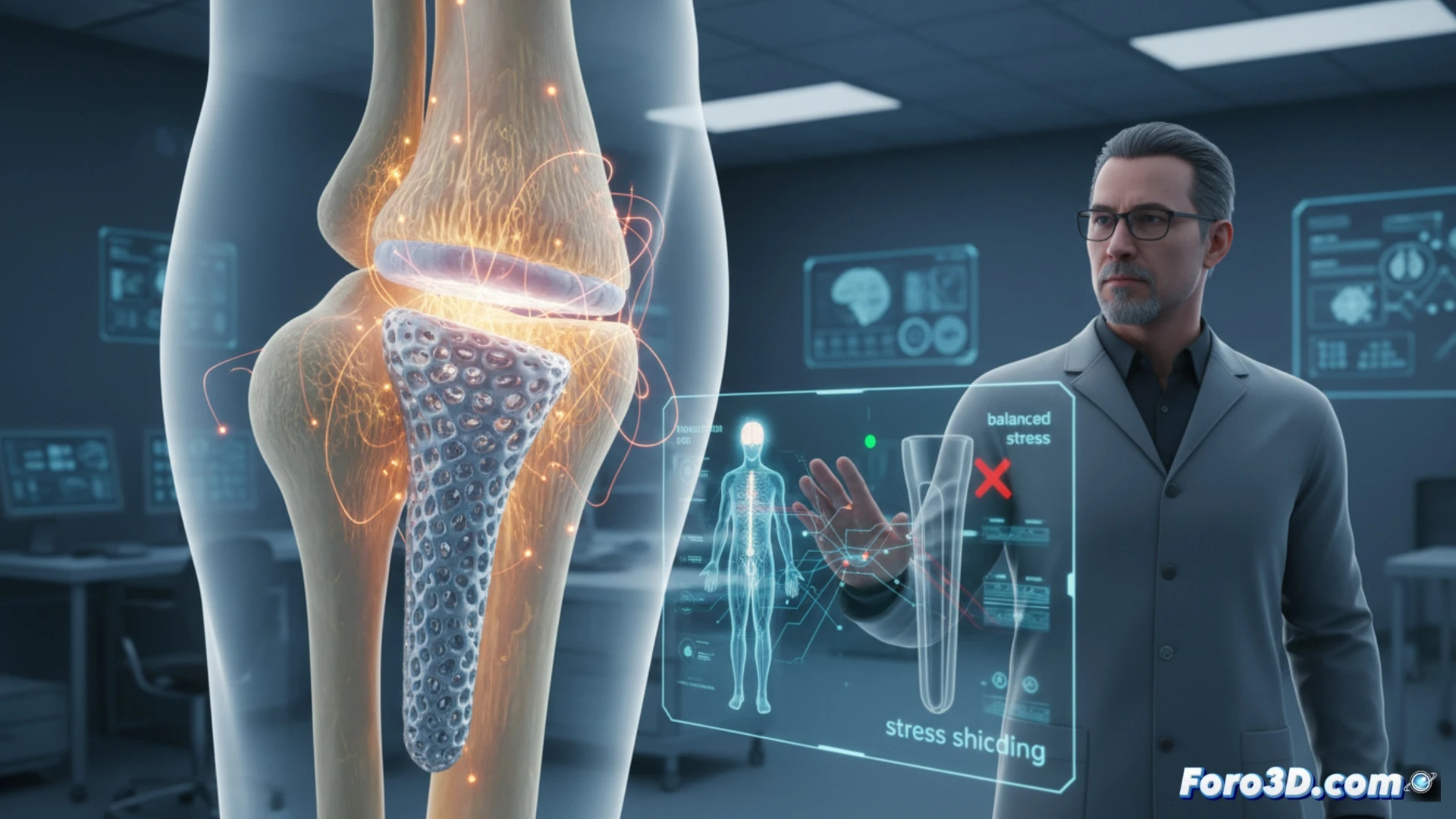
Trabecular structures and the end of stress shielding 🦴
The classic problem of aseptic loosening in hip, knee, and spine prostheses originates from stress shielding. Solid titanium implants, although biocompatible, are so rigid that they absorb all the load, leaving the surrounding bone without mechanical stimulus. This causes its resorption and, eventually, implant failure. 3D printing in titanium solves this through porous trabecular structures that adjust the implant's stiffness to that of the host bone. Unlike PEEK, which is too flexible, and solid titanium, which is excessively rigid, these cellular geometries allow physiological load transmission, preserving bone density and improving osseointegration.
The regulatory trap that hinders innovation ⚖️
Despite 3D printing technology enabling customized and biomechanically superior designs, the path to the patient is blocked by outdated regulatory processes. Shomper, with experience in 510(k) submissions to the FDA, denounces that bureaucracy treats these advanced implants as if they were traditional devices, ignoring that their true value lies in their dynamic behavior, not their static rigidity. For patients to benefit from these advances, it is urgent to simplify approval pathways. The AMA: Healthcare 2025 conference will be the stage to debate how to accelerate this transition towards smarter and biologically active orthopedics.
How can 3D implants designed with porous biomaterials overcome the limitations of traditional implants to achieve complete osseointegration and prevent bone rejection?
(PS: and if the printed organ doesn't beat, you can always add a little motor... just kidding!)