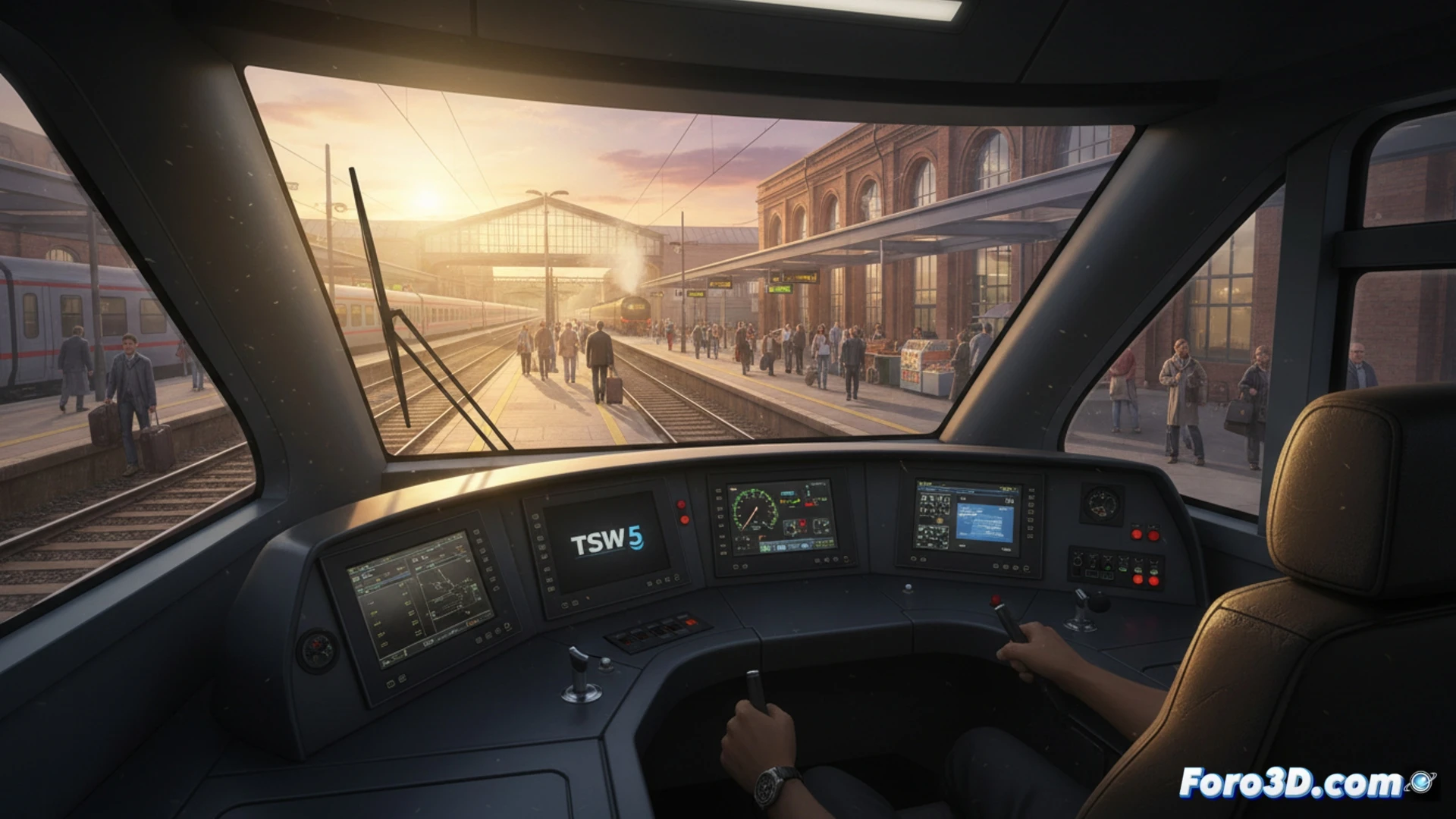
Train Sim World 5 represents a milestone in railway simulation by fully exploiting the capabilities of Unreal Engine 4. The Dovetail Games team has implemented real-time volumetric lighting for train cabs, creating dynamic atmospheres that change with the time of day. This system, combined with the use of Maya for high-precision modeling and Substance Painter for PBR textures, allows every metal surface and glass panel to react realistically to ambient and directional light.
Technical Workflow: From Maya to Real-Time Simulation 🚂
The production pipeline for this title relies on robust integration between tools. In Maya, artists build locomotive and wagon models with high polygon density, adhering to real engineering blueprints. Subsequently, these assets are exported to Substance Painter, where multilayer materials simulating wear, rust, and accumulated dirt are applied. The real technical challenge lies in optimization for Unreal Engine 4: aggressive LODs (Level of Detail) and texture atlases are used to maintain performance in scenarios with stations full of passengers. Volumetric lighting, affecting both the cab and the exterior, is partially precomputed using lightmaps but retains a dynamic component for headlights and signal lights.
The Challenge of Living Stations and Passenger Systems 🚉
Beyond the trains, the living station system is where the technical maturity of the engine is evident. Passengers are not simple sprites; they are skeletal characters with basic procedural animations that load based on the time of day and route demand. To avoid CPU bottlenecks, the team applies occlusion culling on platforms and reduces the update rate of pedestrian AI when they are not in the player's direct field of view. This demonstrates that detailed simulation is not at odds with stable performance on consoles and mid-range PCs.
As a developer, what specific technical challenges did you face when implementing dynamic volumetric lighting to simulate seasonal changes in Train Sim World 5, and how did you resolve the impact on the performance of the Unreal Engine 4 graphics engine?
(PS: game jams are like weddings: everyone is happy, nobody sleeps, and you end up crying)