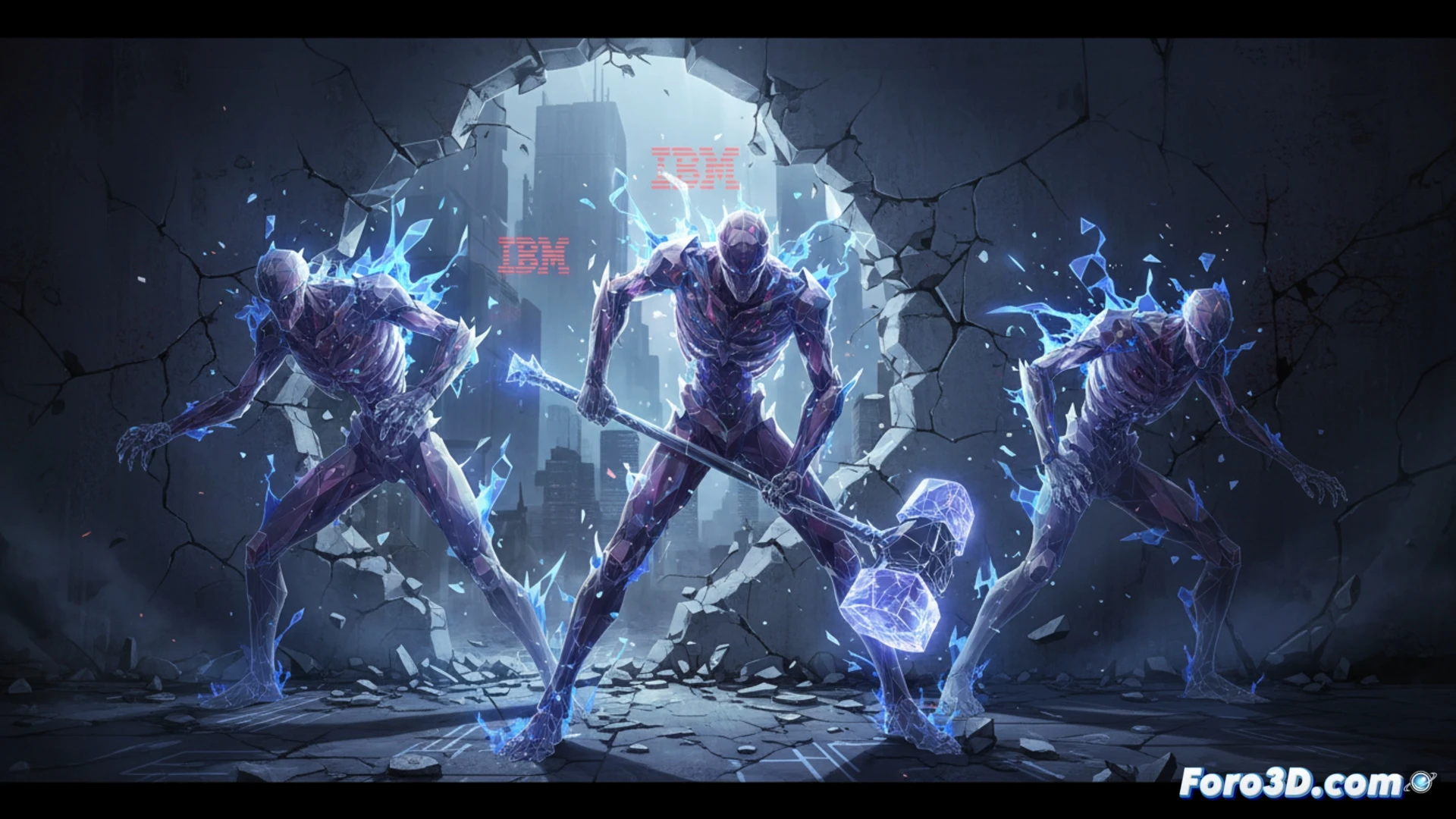
In the universe of Gamon Sakurai, Ajin are immortal beings pursued by a State that seeks to dissect them. However, the true technical marvel of the work lies in the IBM, those black matter ghosts that emerge as an extension of the character's will. Far from being simple enemies, these creatures represent a milestone in digital design: a blend of polygonal modeling and fluid animation that achieves an ethereal and terrifying aesthetic, perfect for symbolizing the struggle against oppression.
Kinetic modeling and textures of emptiness: the technique behind the terror 🎭
The design of the IBM breaks with manga tradition by adopting an almost architectural approach. Sakurai uses construction lines and shading reminiscent of a 3D wireframe, giving these entities a voluminous yet unstable presence. In the animated adaptation, Polygondirect studios used 3D computer animation techniques to render the IBM, creating a deliberate contrast with the 2D characters. This technical decision generates a visual texture of active emptiness, where the ghosts seem made of digital smoke and charcoal. Volumetric lighting and opacity maps allow these creatures to dissolve into the air, reinforcing the feeling of an invisible and omnipresent power that only the Ajin can control. It is a design exercise that demonstrates how 3D can narrate fragility and threat simultaneously.
The IBM as a digital metaphor for citizen resistance ✊
Beyond the technique, the visual representation of the IBM is an act of symbolic activism. Each black matter ghost is the manifestation of an individual will that rebels against a system that classifies and exterminates. By modeling these entities as semi-abstract and changing forms, the digital art of Ajin suggests that resistance has no fixed form; it is malleable, unpredictable, and capable of materializing from nothing. In a context of state surveillance and biopolitical control, the 3D design of the IBM becomes an icon of the struggle for autonomy, demonstrating that digital tools can be the perfect vehicle to denounce oppression and celebrate silent insurrection.
How can the 3D design of the ghosts in Ajin, with its aesthetic of resistance and symbolism of state control, be interpreted as a tool of visual activism in the fight against technological surveillance and institutional oppression?
(PS: at Foro3D we believe that all art is political, especially when the computer freezes)