Researchers from POSTECH and the Korea Institute of Materials Science have created an artificial intelligence system capable of predicting the strength of metal parts manufactured with 3D printing in seconds. The tool works even when the parts have internal defects, a common problem in this technology. The system analyzes data from computed tomography scans and fatigue models to deliver fast and reliable results.
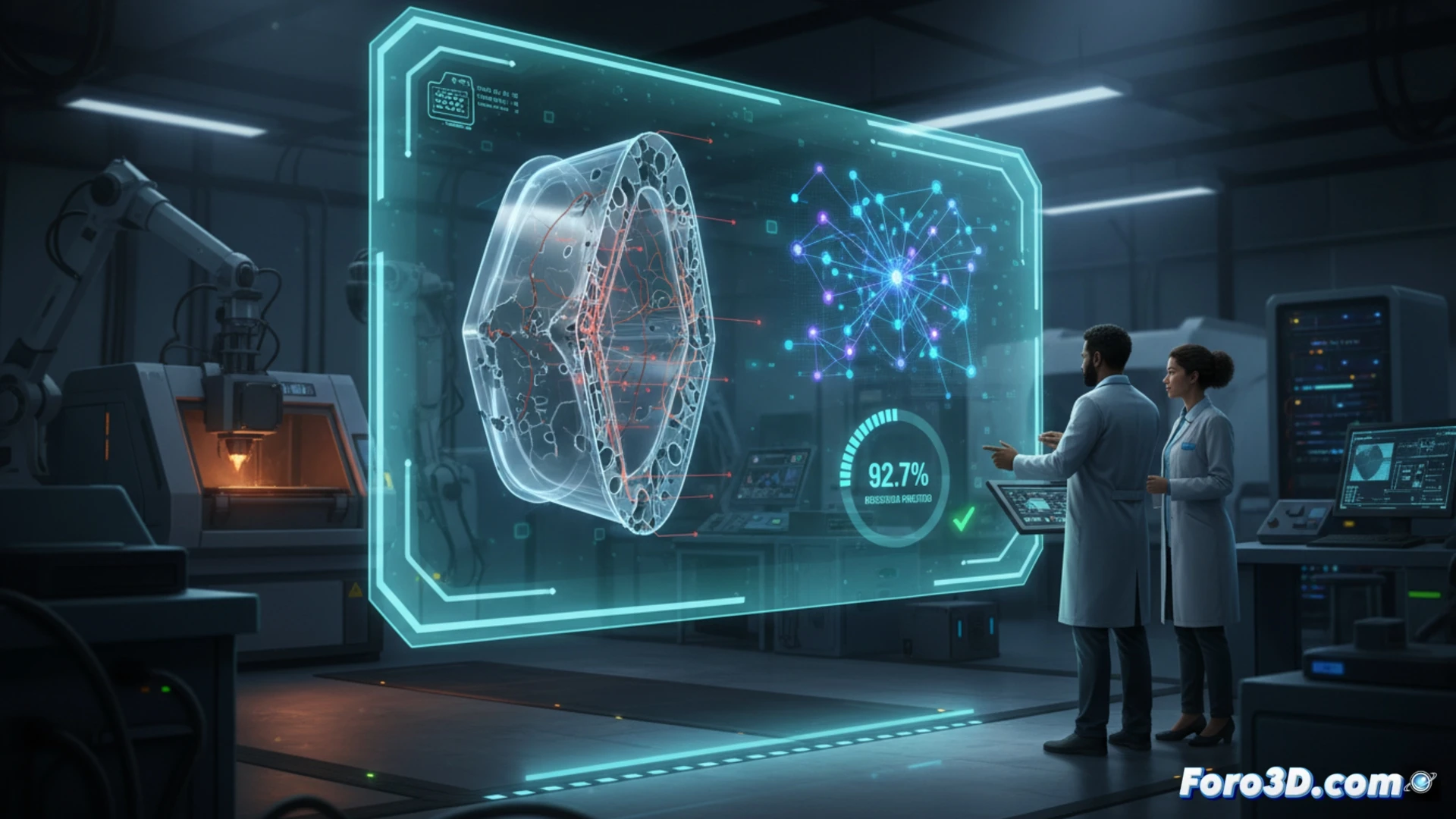
How AI Detects Hidden Flaws in Printed Metals 🔬
The development combines neural networks with finite element simulations. First, the software scans the part with X-rays to identify porosities or microscopic cracks. Then, the AI cross-references that data with previous failure patterns to calculate the component's lifespan. The process, which previously required days of destructive mechanical testing, is now completed in less than ten seconds. The team tested the system with titanium and stainless steel alloys, achieving accuracies above 95 percent.
Goodbye to Praying the Part Doesn't Break 😅
Until now, engineers relied on luck or manufacturing everything with triple the material to avoid surprises. With this AI, there will no longer be a need to light candles to Saint Pancras, patron saint of desperate mechanics. The system tells you if your part will last or if it's better to use it as a paperweight before it fails. And all without having to hit it with a hammer, which was the favorite testing method of the more technical folks.