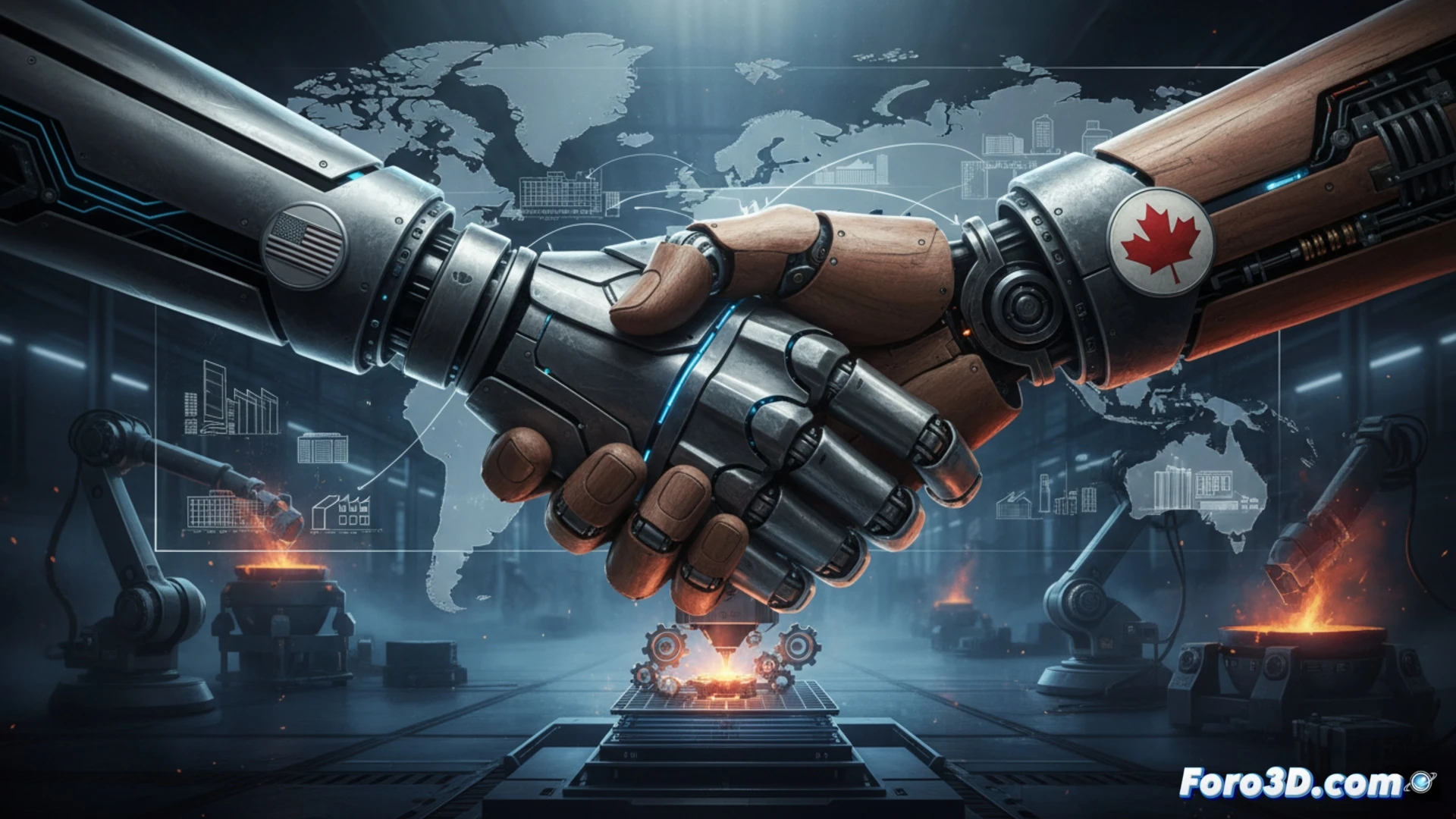
i3D Manufacturing has acquired Burloak Technologies, a Canadian firm specialized in manufacturing metal parts through 3D printing. Burloak will retain its name, management team, and operations, but will now have more resources to scale its production. This operation marks i3D's first international expansion, adding Burloak's expertise in machining and metal heat treatments.
Technical synergy: metal powder fusion and traditional processes 🔧
The acquisition combines i3D's expertise in additive manufacturing with Burloak's mastery of subtractive processes such as CNC machining and surface treatments. Burloak has the capacity to produce aerospace and medical components in titanium and aluminum, integrating post-processing to meet demanding tolerances. The union allows offering a complete flow: design, printing, and final finishing under one roof. i3D aims to replicate this model in its US plants.
The forced marriage between 3D printing and machining 🤖
In the end, 3D printing cannot live alone: it needs machining so those parts don't look like they were made by a child with playdough. Burloak, which knows how to smooth rough edges, gives i3D the perfect excuse to cross the border without having to learn to say sorry in Canadian. The good thing is that now they will have more resources to argue whether it is better to sinter or mill. The bad thing: meetings will get longer.